

More work needed to address lessons from N.S. mass shooting, says committee chair
Advertisement
Read this article for free:
or
Already have an account? Log in here »
To continue reading, please subscribe:

Digital Subscription
One year of digital access for only $205*
- Enjoy unlimited reading on winnipegfreepress.com
- Read the E-Edition, our digital replica newspaper
- Access News Break, our award-winning app
- Play interactive puzzles
*First annual payment billed as $205.00 + GST for one year. This annual subscription will automatically renew at $233.00 + GST every 52 weeks (10% off the regular annual price of $259.35). Offer available to new and qualified returning subscribers only. Cancel any time.
To continue reading, please subscribe:
Add Free Press access to your Brandon Sun subscription for only an additional
$1 for the first 4 weeks*
- Enjoy unlimited reading on winnipegfreepress.com
- Read the E-Edition, our digital replica newspaper
- Access News Break, our award-winning app
- Play interactive puzzles
*Your next Brandon Sun subscription payment will increase by $1.00 and you will be charged $17.95 plus GST for four weeks. After four weeks, your payment will increase to $24.95 plus GST every four weeks.
Read unlimited articles for free today:
or
Already have an account? Log in here »
HALIFAX – A committee reviewing government and police progress responding to recommendations from the 2020 Nova Scotia mass shooting inquiry has finished its work, but its chair says there is still much to be done.
The progress committee chaired by Myra Freeman released its third and final annual report Monday. The group was given three years to monitor efforts by the RCMP and the governments of Canada and Nova Scotia to address the 130 recommendations issued in 2023 on gender-based violence, police reform and community safety.
“A lot of work has happened in that time, and at the same time, we must acknowledge that much more work lies ahead,” Freeman said during a news conference Monday in Halifax.
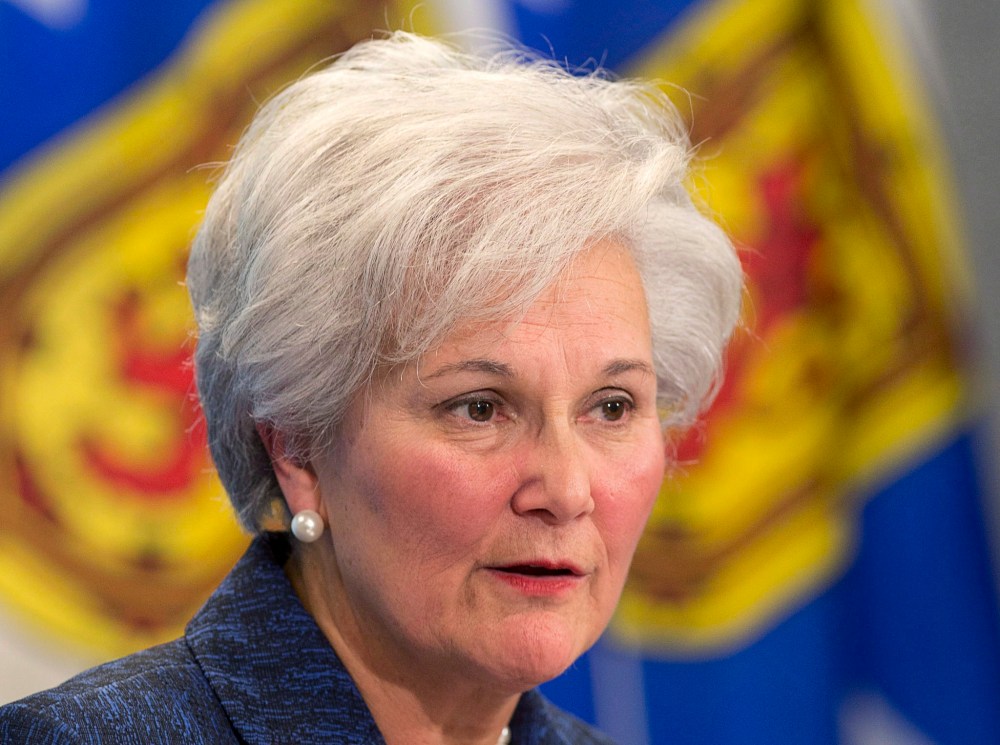
Freeman said authorities made progress improving public alert systems, emergency preparedness and inter-agency police co-operation. However, she said, “issues such as gender-based violence, institutional trust, misogyny and broader social and economic inequities that can perpetuate violence will require efforts extending well beyond our three-year mandate.”
Gender-based violence was a key theme for the commission of inquiry that investigated the worst mass shooting in modern Canadian history. The rampage claimed 22 lives on April 18-19, 2020 and began with the gunman’s violent assault on his common-law spouse. The inquiry known as the Mass Casualty Commission filed a 3,000-page report with 130 non-binding recommendations in March 2023.
“Gender-based violence and intimate partner violence is at an epidemic level. There’s no question that there is a need for meaningful progress to address these recommendations, but we know that change takes time,” Freeman said.
Freeman acknowledged that some members of the committee, which includes relatives of the victims, believe its mandate should be extended so it can continue monitoring progress.
“Like many members of the committee, I would have liked the opportunity to see and report on the long-term impacts of the work to address the recommendations. However, we knew going in that the mandate was meant to be a starting point – not an end point – in the work that needs to be done to see meaningful, societal change,” she said in a statement following the news conference.
Freeman said she was pleased with the committee’s work bringing attention to progress on the recommendations.
“It is now incumbent on all of us to continue to hold the governments of Nova Scotia and Canada and the RCMP to account and ensure progress continues,” she said.
Kristina Fifield, a trauma therapist who specializes in gender-based violence, said the end of the committee’s term cannot be the end of society-wide efforts to address the lessons that came from the mass casualty inquiry.
“We all have a part in this, in holding ourselves and each other accountable, and again, the government needs to carry this forward … This work is vital,” she said.
Fifield, who spoke as a trauma therapist, and not in her capacity as a member of the progress monitoring committee, said among her clients it would appear little has changed for victims of gender-based violence over the past three years.
“In my work day-to-day with survivors, working in community and working with families that are impacted by violence, I would say I’m seeing the same things happening, the same harm coming from the systems that are supposed to protect them,” she said.
Many of these survivors of violence continue to struggle to access key resources and are faced with police and justice officials who may not believe them, Fifield said.
“The culture of violence and misogyny has not changed,” she said.
Fifield said the mandate for the monitoring committee should have been at least five years, and both levels of government should institute accountability mechanisms to ensure this important long-term work is completed.
Gary Anandasangaree, Canada’s minister of public safety, and Sean Fraser, the federal minister of justice, issued a statement Monday saying the committee’s mandate may have ended, the government’s work has not.
“Canada remains steadfast in its commitment to advancing the lessons and recommendations of the Mass Casualty Commission, supporting those affected by the events of April 18 and 19 (2020) and working with all partners to build safer communities across the country,” reads the statement.
Nova Scotia Premier Tim Houston issued a statement Monday thanking the committee and families of victims for their contributions to this work.
“We will not settle for mere progress. We want to make real, meaningful change. We accept the responsibility of carrying this work forward to make our communities safer,” he said.
“Real change is how we honour and remember those who lost their lives on April 18 and 19, 2020, and those we have lost since the mass casualty. We will never forget them and everyone whose lives have been changed by devastating acts of violence,” the premier added.
This report by The Canadian Press was first published Aug. 31, 2026.
Related Articles
N.S. mass shooting survivor dies by suicide after years-long mental health struggle
Advertisement Advertise With Us
Advertisement Advertise With Us