

Canada ends Indigenous rights talks with unrecognized Inuit group in Labrador
Advertisement
Read this article for free:
or
Already have an account? Log in here »
To continue reading, please subscribe:

Digital Subscription
One year of digital access for only $205*
- Enjoy unlimited reading on winnipegfreepress.com
- Read the E-Edition, our digital replica newspaper
- Access News Break, our award-winning app
- Play interactive puzzles
*First annual payment billed as $205.00 + GST for one year. This annual subscription will automatically renew at $233.00 + GST every 52 weeks (10% off the regular annual price of $259.35). Offer available to new and qualified returning subscribers only. Cancel any time.
To continue reading, please subscribe:
Add Free Press access to your Brandon Sun subscription for only an additional
$1 for the first 4 weeks*
- Enjoy unlimited reading on winnipegfreepress.com
- Read the E-Edition, our digital replica newspaper
- Access News Break, our award-winning app
- Play interactive puzzles
*Your next Brandon Sun subscription payment will increase by $1.00 and you will be charged $17.95 plus GST for four weeks. After four weeks, your payment will increase to $24.95 plus GST every four weeks.
Read unlimited articles for free today:
or
Already have an account? Log in here »
ST. JOHN’S – A group that says it represents thousands of Inuit in Labrador has failed in its bid to persuade Ottawa that it should receive Indigenous rights and recognition under the Constitution Act.
The Crown-Indigenous Relations Department said Wednesday that documentation filed by the NunatuKavut Community Council did not meet court-established tests for recognition of Indigenous and treaty rights under Section 35 of the act.
Spokesman James Sinclair said the department considered updated submissions, internal historical and legal analysis, expert reviews and discussions with the council.
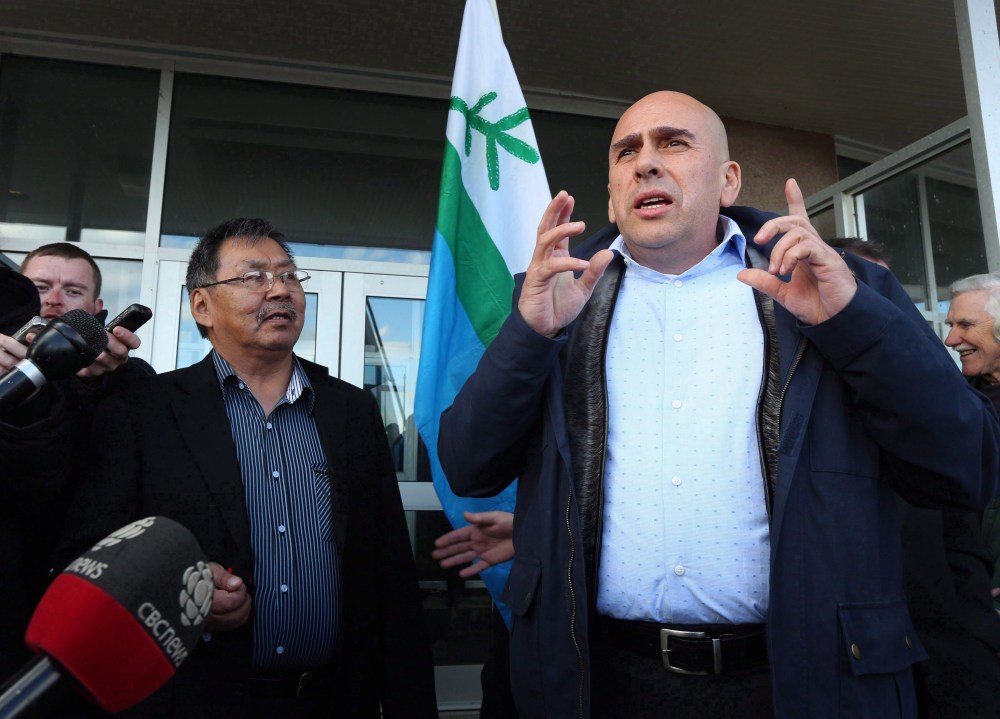
“We have offered to meet with NunatuKavut Community Council to discuss Canada’s findings in greater detail,” Sinclair said in an email.
In response, the council accused the federal government of bowing to pressure from other Indigenous groups.
“NCC has not been treated fairly throughout this process, and the honour of the Crown has not been upheld,” the council said Wednesday in a news release. “NCC will continue its important work and will pursue all avenues, including legal action, to ensure that NunatuKavut Inuit are seen, heard and respected.”
Formed as the Labrador Métis Association in the early 1980s, the NunatuKavut Community Council describes itself as representing about 6,000 Inuit people in southern and central Labrador. But it is not recognized by the Inuit Nunatsiavut government in northern Labrador, nor by Inuit Tapiriit Kanatami, which represents Inuit in their traditional homelands across northern Canada.
Canada began discussions with the council in 2018. The following year, Carolyn Bennett, then the Liberal minister of Crown-Indigenous relations, signed a memorandum of understanding with the council to “move forward together to … advance reconciliation,” according to a federal news release at the time.
Those discussions and the memorandum of understanding will be terminated, Sinclair said Wednesday.
The Nunatsiavut government in northern Labrador applauded the decision.
“This decision brings long-needed clarity,” Johannes Lampe, president of the Nunatsiavut government, said in a statement released Wednesday. “Inuit identity is not something that can be self-declared — it is affirmed by Inuit, grounded in our culture and history.”
Meanwhile, the Innu Nation in Labrador also backed the decision, calling it “necessary and responsible.”
“We view this as an important step toward protecting the integrity of Indigenous rights recognition and reconciliation,” Grand Chief Jodie Ashini said in a news release.
This report by The Canadian Press was first published Sept. 9, 2026.