

B.C. wildfires hit Indigenous reserves harder, human rights report says
Advertisement
Read this article for free:
or
Already have an account? Log in here »
To continue reading, please subscribe:

Digital Subscription
One year of digital access for only $205*
- Enjoy unlimited reading on winnipegfreepress.com
- Read the E-Edition, our digital replica newspaper
- Access News Break, our award-winning app
- Play interactive puzzles
*First annual payment billed as $205.00 + GST for one year. This annual subscription will automatically renew at $233.00 + GST every 52 weeks (10% off the regular annual price of $259.35). Offer available to new and qualified returning subscribers only. Cancel any time.
To continue reading, please subscribe:
Add Free Press access to your Brandon Sun subscription for only an additional
$1 for the first 4 weeks*
- Enjoy unlimited reading on winnipegfreepress.com
- Read the E-Edition, our digital replica newspaper
- Access News Break, our award-winning app
- Play interactive puzzles
*Your next Brandon Sun subscription payment will increase by $1.00 and you will be charged $17.95 plus GST for four weeks. After four weeks, your payment will increase to $24.95 plus GST every four weeks.
Read unlimited articles for free today:
or
Already have an account? Log in here »
VANCOUVER – A new report from British Columbia’s Human Rights Commissioner says Indigenous reserves are four times more likely to face wildfires than non-reserve communities in the province.
The report, released Tuesday from the office of Kasari Govender, looks into the impact of wildfires on vulnerable communities such as Indigenous groups, the elderly and those experiencing poverty.
It found that the groups are disproportionately impacted by wildfires, with infrastructure gaps present in vulnerable communities.
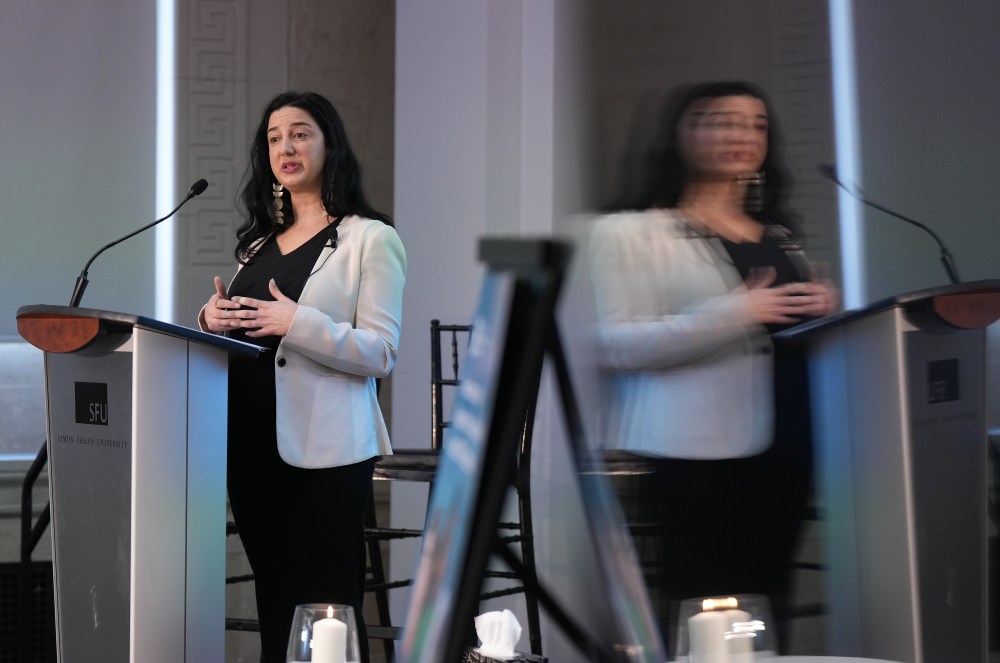
“While wildfires impact us all, it is important to recognize that there are people and communities that are more exposed, less able to protect themselves and slower to recover,” Govender said in a statement.
“As the threat of wildfire increases, these unequal impacts become more pronounced.”
The report found that between 2000 and 2024, Indigenous reserves comprised all but one of the 37 B.C. communities where at least half of their total land area was burned by wildfires.
“Concerningly, the number of communities affected has been increasing over this period,” the report said. “Two communities experienced wildfires this significant in the first five years of this period compared to 17 in the final five years.”
Lytton, B.C., which was largely destroyed in the 2021 heat dome wildfire, was the exception, but Govender noted that more than 30 per cent of the community’s population was Indigenous.
The report also found that 42 per cent of all evacuations happened in majority Indigenous communities between 2000 and 2024.
Govender said the report shows the impact of wildfires across communities in B.C. is “unequal” and must be recognized.
She said other contributing factors for the inequality on Indigenous communities include distance from urban centres and “failure to recognize First Nations’ jurisdiction” that can limit emergency response.
“Decision-makers must ensure preparedness and mitigation strategies do not leave those most vulnerable behind,” Govender said in a statement.
“Mixed severity wildfires will always be a natural feature of many ecosystems, and something we need to coexist with.
“What decision-makers can control, however, is how they respond and whether they meaningfully account for the ways that marginalized people are disproportionately made vulnerable to displacement and disruption of community, supports and livelihoods.”
B.C.’s wildfire seasons have intensified dramatically in recent years, with the annual average of the area burned skyrocketing from 867 square kilometres between 2000 and 2004 to more than 9,800 square kilometres between 2020 and 2024.
More than 4,750 square kilometres have burned so far in B.C.’s current wildfire season, with hundreds of homes damaged or destroyed after major blazes near Okanagan Lake, Boston Bar and Clinton.
That area burned is down significantly from the record-breaking wildfire season of 2023, where almost 29,000 square kilometres of land was burned in what the Insurance Bureau of Canada called the costliest insured event in the province’s history.
The B.C. Forests Ministry did not provide a response to the report on Tuesday.
This report by The Canadian Press was first published Sept. 15, 2026.