

Proposed remedy for workers affected by Bill 148 could cost N.S. $470 million
Advertisement
Read this article for free:
or
Already have an account? Log in here »
To continue reading, please subscribe:
Digital Subscription
One year of digital access for only $1.44 a week*
- Enjoy unlimited reading on winnipegfreepress.com
- Read the E-Edition, our digital replica newspaper
- Access News Break, our award-winning app
- Play interactive puzzles
*Billed as $5.77 plus GST every four weeks. After 52 weeks, price increases to the regular rate of $19.95 plus GST every four weeks. Offer available to new and qualified returning subscribers only. Cancel any time.
To continue reading, please subscribe:
Add Free Press access to your Brandon Sun subscription for only an additional
$1 for the first 4 weeks*
- Enjoy unlimited reading on winnipegfreepress.com
- Read the E-Edition, our digital replica newspaper
- Access News Break, our award-winning app
- Play interactive puzzles
*Your next Brandon Sun subscription payment will increase by $1.00 and you will be charged $17.95 plus GST for four weeks. After four weeks, your payment will increase to $24.95 plus GST every four weeks.
Read unlimited articles for free today:
or
Already have an account? Log in here »
HALIFAX – The Nova Scotia government has agreed to pay public sector employees an estimated $470 million in compensation over legislation introduced in 2015 to restrict their wages.
Nova Scotia’s Minister of Finance, John Lohr said the government has reflected the cost of this settlement in its 2025-26 budget.
The government was ordered to compensate public sector employees after provincial Supreme Court Justice Ann Smith ruled in February that Bill 148 was unconstitutional and substantially interfered with the rights of several unions in the province.
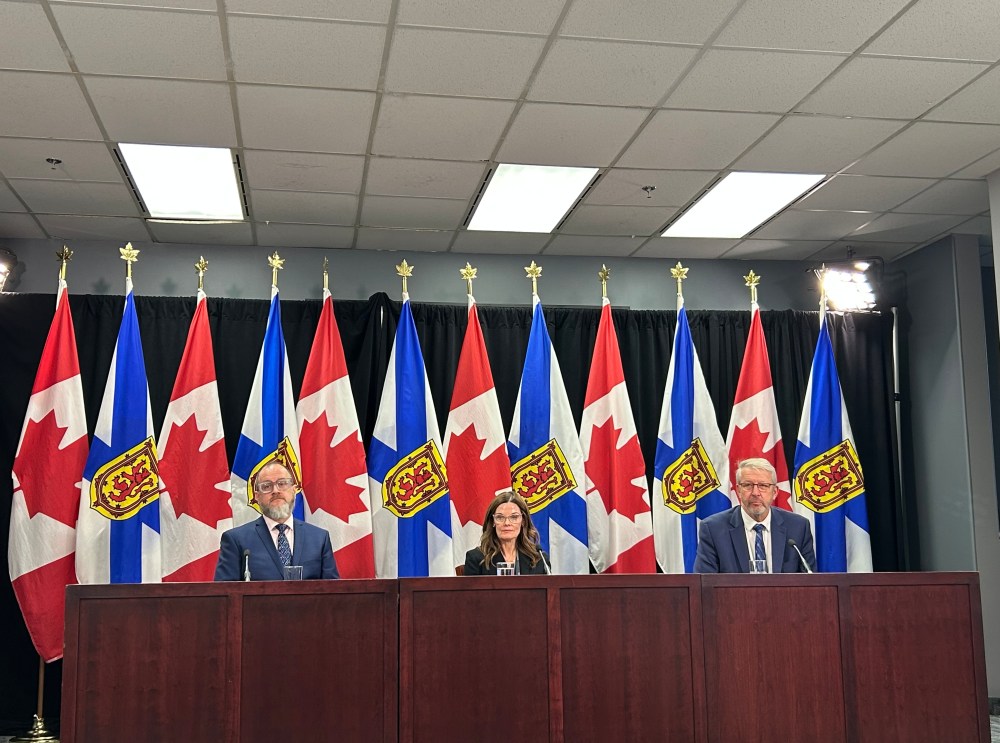
“Even though this is a big fiscal lift … we’re happy to have this behind us,” Lohr told reporters at a technical briefing in Halifax Monday.
Justice Smith must sign-off on the proposed remedy before it can go into effect.
The former Liberal government, led by then premier Stephen McNeil, introduced Bill 148 in December 2015 and enacted it in August 2017.
The legislation, also known as the Public Services Sustainability Act, imposed wage restrictions for almost all public servants over a four-year period and eliminated awards for long-term service.
At the time, the government said wage restrictions were necessary to deal with the province’s finances, which it said was being dragged down by declining economic growth and a deficit of over $200 million.
Public sector unions challenged the law in court, saying the government was undermining the collective bargaining process. The Nova Scotia Federation of Labour also called the law unconstitutional, saying it infringed on the rights of workers.
The proposed remedy will see an estimated 81,000 public servants receive payouts to compensate for an infringement of their Charter rights that resulted from Bill 148, said Kevin Kindred, lawyer for the Nova Scotia Justice Department.
The wage restrictions included a two-year wage freeze, followed by a one per cent raise in the third year, 1.5 per cent at the start of the fourth year and 0.5 per cent at the end.
Those who worked during the two-year wage freeze are entitled to a payout of $1,250 for each of those years, Kindred said. As well, employees who worked during the third year are entitled to $750 and those who worked in the fourth year are entitled to $500.
Additionally, some employees will also be eligible for a lump-sum payment of $1,250 as a result of the elimination of long-term service awards.
Kindred said the payouts are not meant to make up for the value of lost wages and instead reflect damages for the infringement of Charter rights.
Lawyers representing the province and the public sector unions submitted a joint draft order detailing the proposed remedy to Justice Smith last week.
She suggested revisions to their proposal in Nova Scotia Supreme Court on Monday.
Among her suggestions was that the parties decide on a deadline for when the payouts must be made to eligible employees.
Smith said she would not sign the order until a deadline is agreed upon.
Kindred told reporters Monday that the province needs to consult with the unions before providing any indication of what the deadline might be.
This report by The Canadian Press was first published Oct. 19, 2026.