Swedish PM loses confidence vote, sparking uncertainty
Advertisement
Read this article for free:
or
Already have an account? Log in here »
To continue reading, please subscribe:
Monthly Digital Subscription
$1 per week for 24 weeks*
- Enjoy unlimited reading on winnipegfreepress.com
- Read the E-Edition, our digital replica newspaper
- Access News Break, our award-winning app
- Play interactive puzzles
*Billed as $4.00 plus GST every four weeks. After 24 weeks, price increases to the regular rate of $19.95 plus GST every four weeks. Offer available to new and qualified returning subscribers only. Cancel any time.
Monthly Digital Subscription
$4.99/week*
- Enjoy unlimited reading on winnipegfreepress.com
- Read the E-Edition, our digital replica newspaper
- Access News Break, our award-winning app
- Play interactive puzzles
*Billed as $19.95 plus GST every four weeks. Cancel any time.
To continue reading, please subscribe:
Add Free Press access to your Brandon Sun subscription for only an additional
$1 for the first 4 weeks*
*Your next subscription payment will increase by $1.00 and you will be charged $16.99 plus GST for four weeks. After four weeks, your payment will increase to $23.99 plus GST every four weeks.
Read unlimited articles for free today:
or
Already have an account? Log in here »
Hey there, time traveller!
This article was published 21/06/2021 (1732 days ago), so information in it may no longer be current.
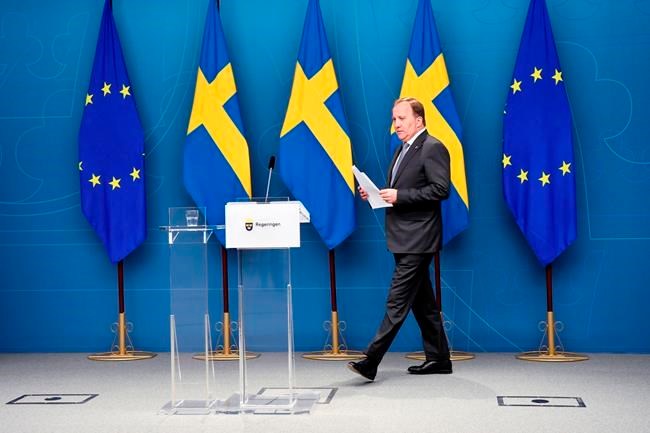
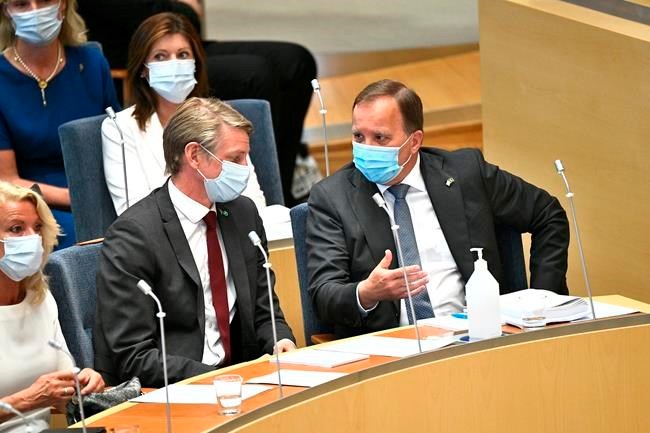
STOCKHOLM (AP) — Stefan Lofven, Sweden’s Social Democratic prime minister since 2014, lost a confidence vote in parliament on Monday, making him the first Swedish government leader ever to lose such a motion.
The development creates new political uncertainty in the Scandinavian nation after the last election in 2018 created a deadlocked parliament and months of negotiations to produce a government.
Under a timeline dictated by the Swedish Constitution, the prime minister now has one week to decide whether to call a new election or ask the parliament speaker to find a new government.
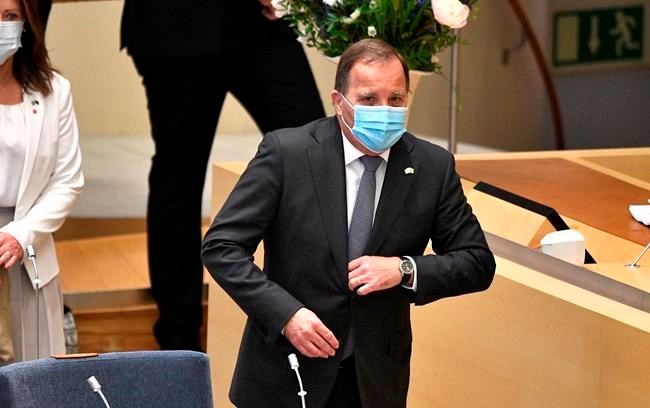
Lofven said he wants “to take some time” though “not necessarily the whole week” to decide on his next step.
That government, a Social Democratic-Green coalition, is a minority government that has relied on votes from the small Left Party to pass laws.
The no-confidence motion in Lofven’s government was called by the nationalist Sweden Democrats party, but it ultimately succeeded because the Left Party had withdrawn its support from the government over proposed legislation to tackle a housing shortage.
Lawmakers voted 181-109 against Lofven, with 51 abstentions.
The Left Party said it lost confidence in Lofven over a proposal to abolish rent controls on newly built properties.

Sweden has strict regulations on rents aimed at maintaining affordable prices in larger cities. However, this makes property developers less willing to invest in building new homes for the rental market. People needing to rent a home can find themselves waiting for years for a contract, and buying property is increasingly hard amid soaring home prices.
However, the Left Party fears that deregulating the rental market will lead to rapid price increases and deeper segregation between rich and poor.
After the vote, Lofven, 63, said that “regardless of what happens, I and my party will be available to shoulder the responsibility for leading the country.”
“My focus has and will always be to do the best for Sweden,” he added.
Over the weekend, Lofven held last-minute meetings seeking to secure a majority in parliament for his proposed rent reforms. On Sunday, he sought to soften the reforms by inviting landlords and tenant organizations for talks.
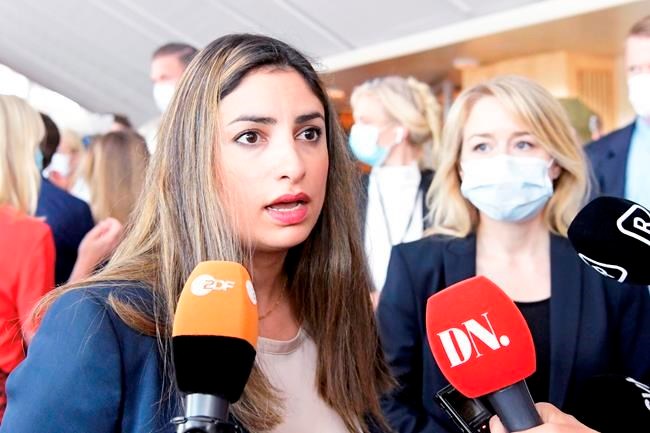
However, Left Party leader Nooshi Dadgostar said the party was standing by its decision to oppose Lofven and said his effort was “a political show.”
“We have done something that is perceived as unusual in politics … kept our word,” she said.
The Left Party’s initiative was supported by three other parties, including the Sweden Democrats, a right-wing populist party which the mainstream parties generally refuse to cooperate with because they consider it extreme.
The Sweden Democrats make huge gains in an election in September 2018 to become the country’s third-largest party — a showing that was attributed to a backlash against largescale migration. In 2015, Sweden, with a population of 10 million, took in a record 163,000 refugees – the highest per capita of any European country.
That election produced a hung parliament, with parties on the left and the center-right bloc securing about 40 percent of the vote each, leaving neither with a majority.

In January 2019, Swedish lawmakers approved Lofven’s minority government, ending a four-month political deadlock when he won support from two center-right parties and the Left to form a minority government.