

Rebounding from a bouncing
Few complain to liquor commission about nightclub-security violence
Advertisement
Read this article for free:
or
Already have an account? Log in here »
To continue reading, please subscribe:
Monthly Digital Subscription
$0 for the first 4 weeks*
- Enjoy unlimited reading on winnipegfreepress.com
- Read the E-Edition, our digital replica newspaper
- Access News Break, our award-winning app
- Play interactive puzzles
*No charge for 4 weeks then price increases to the regular rate of $19.00 plus GST every four weeks. Offer available to new and qualified returning subscribers only. Cancel any time.
Monthly Digital Subscription
$4.75/week*
- Enjoy unlimited reading on winnipegfreepress.com
- Read the E-Edition, our digital replica newspaper
- Access News Break, our award-winning app
- Play interactive puzzles
*Billed as $19 plus GST every four weeks. Cancel any time.
To continue reading, please subscribe:
Add Free Press access to your Brandon Sun subscription for only an additional
$1 for the first 4 weeks*
*Your next subscription payment will increase by $1.00 and you will be charged $16.99 plus GST for four weeks. After four weeks, your payment will increase to $23.99 plus GST every four weeks.
Read unlimited articles for free today:
or
Already have an account? Log in here »
Hey there, time traveller!
This article was published 26/12/2010 (5463 days ago), so information in it may no longer be current.
After Mark Anderson was beaten outside a Winnipeg nightclub, he did what few victims do: He filed a formal complaint.
According to documents received through access-to-information legislation, only 16 formal complaints about bar security were filed with the Manitoba Liquor Control Commission over nearly seven years. During the same period — 2004 to 2010 — there were four deaths involving nightclub security, several other incidents that made the news and lingering controversy about security training.
“I just figured I’d call anyone who had anything to do with it,” Anderson said. “We got in touch with the club, we got in touch with the MLCC and the police and my lawyer. The end (result) was that I wasn’t supposed to say anything about the incident.”
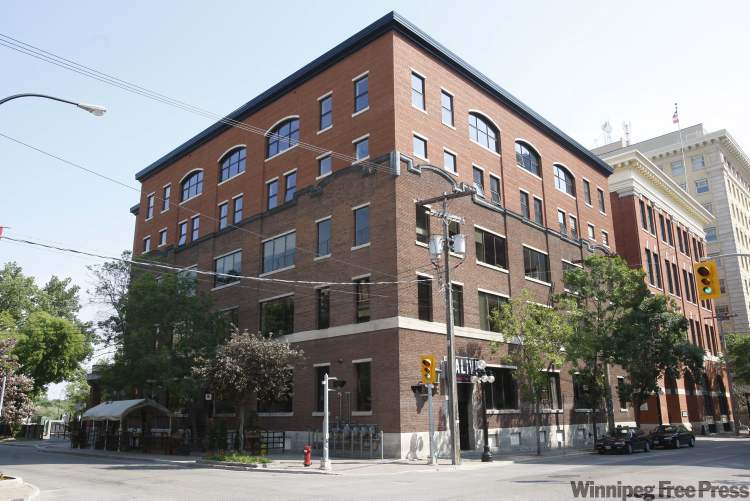
Mark Anderson is not his real name. The Free Press spoke to him on the understanding he would not be identified, in order to comply with a confidentiality agreement he signed with the nightclub. Anderson’s formal complaint appeared in the MLCC tally of complaints, which matched Anderson’s account of the assault.
Anderson said he was having his first drink of the night when he was approached by a bouncer who told him to leave the bar immediately. When Anderson refused, saying he had done nothing wrong, two bouncers picked him up, dragged him through the bar and threw him out the door.
“The one bouncer threw me down on the ground a couple of times,” Anderson said. “He lay on me and put me in a choke hold. He must have been 300 pounds and I almost couldn’t breathe. Then finally he got off and I was pretty beat up and cut up. None of the other bouncers did anything.”
In Manitoba, nightclub security staff are required to pass a one-hour online course, the same course taken by bartenders or anyone working in a licensed premises. In January, the MLCC added an additional security component to the training about the dangers of restraining a person inappropriately.
The new component came one month after the release of an inquest report into the death of a man at the St Regis Hotel in 2006.
Among the judge’s recommendations was reconsidering whether security guards working in bars and nightclubs should be subject to the rigorous training requirements of the Private Investigators and Security Guards Act.
Those requirements include 40 hours of training using a 400-page training manual.
Styn Sam, 30, has been a bouncer for more than a decade, but only took the licensed security guard training course a year-and-a-half ago. He said the most relevant part of the 40-hour course was learning how far bouncers can go when restraining someone.
“I definitely used that as my boundary line as to how far I would go at the club and what I would try and handle myself before we called the cops,” Sam said. “You’re not necessarily thinking about policy and procedure when there is a guy trying to rip your head off.”
Sam said bar security staff need better training so more bouncers know their limits with patrons.
A committee of stakeholders is still looking into the inquest report’s recommendations, including ones related to increased security training.
“The whole thing is being forwarded to the minister any time now,” said Gary Shewchuk, MLCC’s manager of inspection services.

MLCC spokeswoman Diana Soroka said people will often complain to the bar or hospitality industry instead of calling the liquor commission. Or patrons will fail to leave their contact information when they call.
“We follow up on every complaint,” Soroka said. “But I know we’ve had people call and leave voice mails, but we have nobody to follow up with, so there is frustration on our end in having the inability to follow up on complaints.”
Sam said he’s seen both sides. Bouncers need to be trained to know their limits, but he said it isn’t so simple when dealing with an aggressive, intoxicated person.
“It’s a fine line to walk and it’s going to be a while till we get it right.”
jesscable11@gmail.com keithmccullough8@gmail.com
View a map showing allegations of abuse filed against Winnipeg nightclub security staff between 2004 and 2010.
Green icons indicate the establishment was absolved of blame, yellow icons show unknown or pending outcomes, and red icons indicate establishments where changes were made.
With the help of Free Press staff, students at Red River College’s Creative Communications program learned how to mine freedom of information legislation for stories governments might not want told. At the start of the school year, students submitted access to information requests about everything from funeral homes to nightclub bouncers. Over the next several weeks, the Free Press will publish some of the stories they uncovered.
BOUNCER COMPLAINTS2010: Three complaints against Whiskey Dix, the Hi-fi Lounge and Alive.
2009: Four complaints against the Palomino Club, Whiskey Dix, the Windsor Hotel and the Stock Exchange Hotel.
2008: Three complaints against Whiskey Dix, the Woodbine Hotel, and Blush Ultraclub.
2007: No complaints
2006: Two complaints against the Northern Hotel and the St. Boniface Hotel.
2005: One complaint against Club Desire.
2004: Two complaints against the McLaren Hotel and the Merchants Hotel.

Advertisement Advertise With Us
Advertisement Advertise With Us