

Harper explores new Latin American trade bloc
While some question if membership matters
Advertisement
Read this article for free:
or
Already have an account? Log in here »
To continue reading, please subscribe:
Digital Subscription
One year of digital access for only $1.44 a week*
- Enjoy unlimited reading on winnipegfreepress.com
- Read the E-Edition, our digital replica newspaper
- Access News Break, our award-winning app
- Play interactive puzzles
*Billed as $5.77 plus GST every four weeks. After 52 weeks, price increases to the regular rate of $19.95 plus GST every four weeks. Offer available to new and qualified returning subscribers only. Cancel any time.
To continue reading, please subscribe:
Add Free Press access to your Brandon Sun subscription for only an additional
$1 for the first 4 weeks*
- Enjoy unlimited reading on winnipegfreepress.com
- Read the E-Edition, our digital replica newspaper
- Access News Break, our award-winning app
- Play interactive puzzles
*Your next Brandon Sun subscription payment will increase by $1.00 and you will be charged $17.95 plus GST for four weeks. After four weeks, your payment will increase to $24.95 plus GST every four weeks.
Read unlimited articles for free today:
or
Already have an account? Log in here »
Hey there, time traveller!
This article was published 21/05/2013 (4898 days ago), so information in it may no longer be current.
OTTAWA — The prime minister heads to South America this week to suss out membership in a new trading bloc many aren’t sure Canada ought to join.
The Pacific Alliance was formed by Chile, Colombia, Mexico and Peru in 2011 and Canada took a spot on the sidelines the next year, along with several other countries, as observers.
This week, alliance leaders will meet in Cali, Colombia, and be joined by Prime Minister Stephen Harper, as well as leaders from other observer nations.
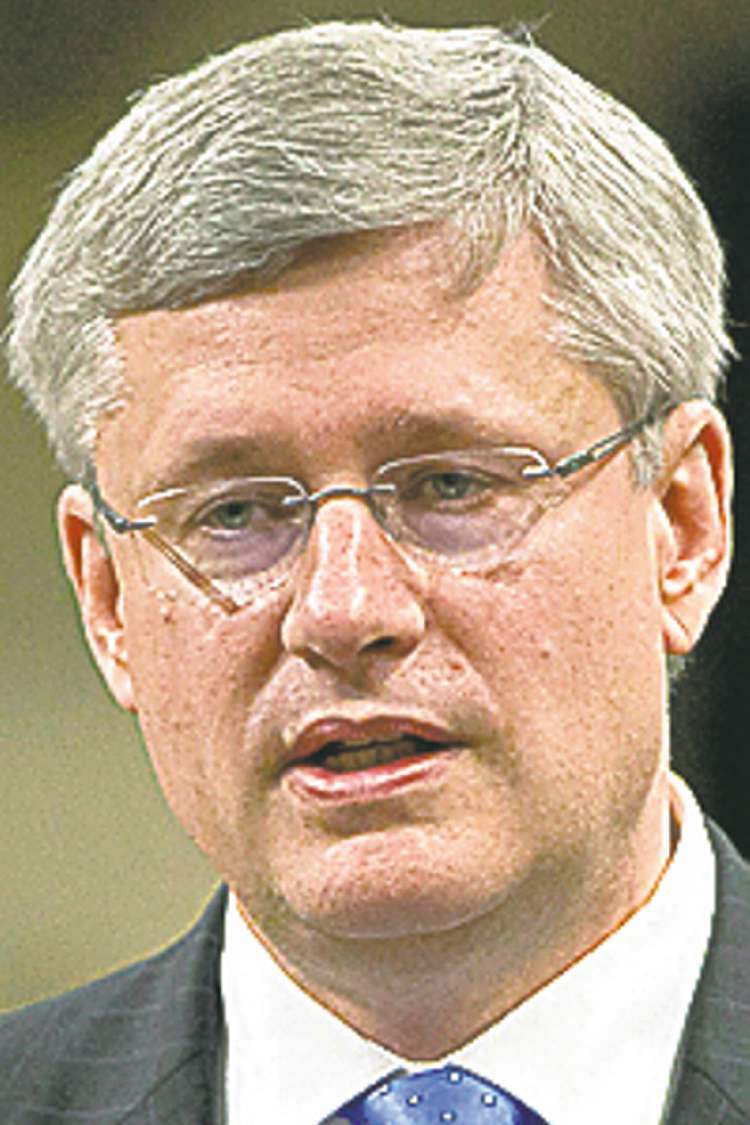
“This will be the first time the prime minister has had the opportunity to participate in this forum, to experience the forum, to see what it has to offer,” said Andrew MacDougall, a spokesman for the prime minister.
The goal of the nascent alliance is to tear down what economic borders remain between their countries, creating an integrated market to rival and compete both internationally and regionally with that of Mercosur, the trading bloc created in 1991 by Argentina, Brazil, Paraguay and Uruguay.
Alliance countries are already an economic powerhouse: According to the World Trade Organization, together they exported about $534 billion in 2011, compared to about $355 billion from Mercosur.
Bilateral merchandise trade between Canada and the four alliance countries totalled $39 billion in 2012, compared with $9.7 billion the year before in trade with Mercosur.
The Conservative government declared a stronger relationship with the Americas as a foreign-policy priority in 2007 and has been wooing them ever since, ramping up its enthusiasm for ties with the region since its economies sailed through the global economic downturn in 2008.
But Canada already has free trade agreements with all four alliance countries and is involved in negotiations for the much broader Trans Pacific Partnership, which includes them as well as Asian countries, New Zealand and the United States.
That’s raised questions about why joining this new alliance is something Canada needs and has the resources to tackle.
Even pro-trade Tories raised this question at recent hearings on the alliance in the House of Commons.
“Where I’m coming from is that we already have relationships with all of these countries,” said Tory MP Ed Holder in March.
“We don’t need to do this, but maybe we do. What I’m looking for is the argument for Canada to do more than just sit at the table and watch.”
Harper’s participation in the meeting is about figuring that out, said MacDougall.
“From our perspective, there is no point picking one over the other; it’s a question of pursuing on all avenues and all fronts,” MacDougall said.
“We do have strong relationships with the four original members and with some of the other observer countries, so it makes sense for us to explore more ways to further strengthen that relationship while we’re also pressing on the Trans Pacific Partnership, which includes another set of countries.”
Among the issues being explored by the alliance are the removal of visa requirements for its members, something that would pose a challenge to Canada’s ongoing efforts to tighten up borders by imposing visa restrictions on many countries, including those in the alliance. The alliance also wants to strengthen security co-operation.
Prior to arriving in Colombia, Harper will travel to Peru for bilateral meetings with that country’s president.
— The Canadian Press