

Burundi’s worrisome lead for elections in Africa
Advertisement
Read this article for free:
or
Already have an account? Log in here »
To continue reading, please subscribe:
Monthly Digital Subscription
$1 per week for 24 weeks*
- Enjoy unlimited reading on winnipegfreepress.com
- Read the E-Edition, our digital replica newspaper
- Access News Break, our award-winning app
- Play interactive puzzles
*Billed as $4.00 plus GST every four weeks. After 24 weeks, price increases to the regular rate of $19.95 plus GST every four weeks. Offer available to new and qualified returning subscribers only. Cancel any time.
Monthly Digital Subscription
$4.99/week*
- Enjoy unlimited reading on winnipegfreepress.com
- Read the E-Edition, our digital replica newspaper
- Access News Break, our award-winning app
- Play interactive puzzles
*Billed as $19.95 plus GST every four weeks. Cancel any time.
To continue reading, please subscribe:
Add Free Press access to your Brandon Sun subscription for only an additional
$1 for the first 4 weeks*
*Your next subscription payment will increase by $1.00 and you will be charged $16.99 plus GST for four weeks. After four weeks, your payment will increase to $23.99 plus GST every four weeks.
Read unlimited articles for free today:
or
Already have an account? Log in here »
Hey there, time traveller!
This article was published 24/05/2015 (3982 days ago), so information in it may no longer be current.
The recent case of Nigeria has shown that one of the key signs of a vibrant democracy is the peaceful transfer of power. In the Great Lakes region of Africa, neighboring and intrinsically linked countries such as Burundi, the Democratic Republic of the Congo (DRC) and Rwanda are all slated for state elections and are already showing cracks in the facade. How will this play out with political unrest already sparking deadly violence in Burundi, social media being intermittently banned in the DRC and Rwanda unceremoniously reconfiguring its election to 2017?
There is an opportunity here at the crossroads for these countries to not regress in terms of their development and spiral into conflict, but also for Canada to publicly support the call for transparency and the sanctity of constitutional law that adheres to a democratic international standard.
Burundi will be the first to come to the stage. Since September 2014, anecdotal rumblings from colleagues on the ground in the capital of Bujumbura acted as the first salvos of rumor that its current ruler for the last 10 years, President Nkurunziza was going to seek an unprecedented and technically illegal third term. This attack on the country’s constitution served as the lighting of the touch paper, first manifesting itself in demonstrations by the local populace on April 26, which eventually fanned itself into deadly violence.
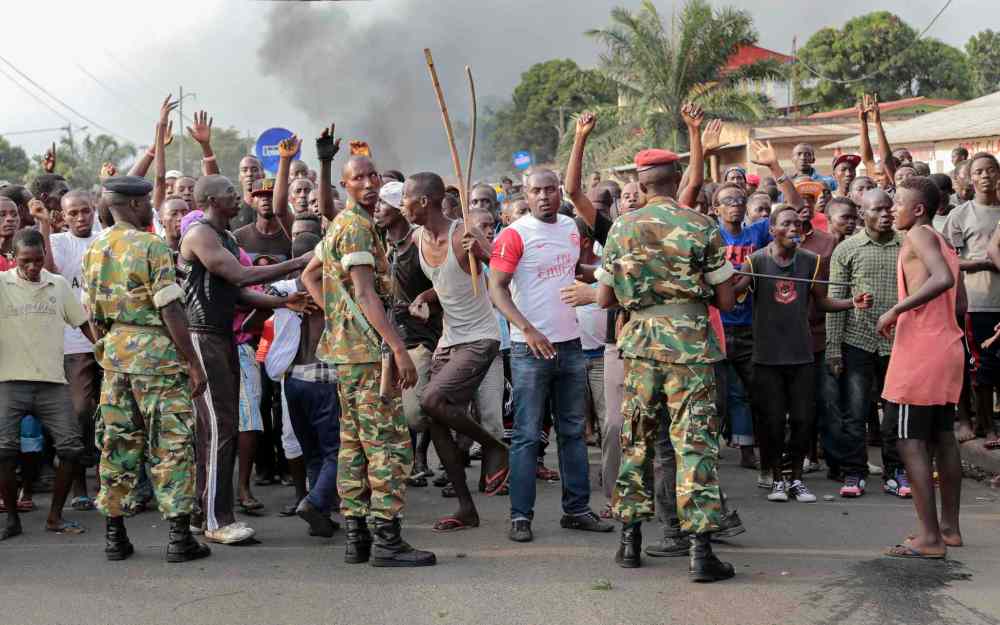
After surviving a recent coup from a disgruntled/now ex-general, President Nkurunziza rejected both U.S. and EU calls to delay the national vote in June. Since his call, mysterious attacks have been seen on radio stations to destroy its transmission equipment. Additionally, reports of the formation of a youth militia by Nkurunziza’s increasingly embedded government have not only acted as bread crumbs leading back to Burundi’s last civil war, but is also echoing the 1994 Rwandan Genocide. In fear of further pre-election violence, 50,000 people have fled to neighbouring countries such as the DRC, putting further pressure on their host’s delicate systems and increasingly porous borders.
President Kabila has been in power in the DRC since the assassination of his father in 2001. He subsequently won two loosely penned democratic elections in 2006 and 2011 and has bullied a constitutional amendment into law in order to be eligible again on Nov. 27, 2016.
Protests began to bubble in January when this was first proposed and in one of the major telltale signs of an impeding military dictatorship, all Internet and cell phone networks were shut down in order to impede news spreading to the wider world. During my last six-week stint to the area, regular access to social media just resumed near the end of March.
In a country that at times mirrors a failed state with little government provisions in the East, where countless militia groups battle each other in collusion with foreign nationals for the vast mineral wealth, the DRC rests on a precipice.
One of the DRC’s most petulant rebel groups happen to be Rwandan exiles called the FDLR, comprising of Hutu militias who were largely responsible for the massacres of the 1994 Rwandan Genocide. President Kagame has been rightfully heralded in leading the country to substantial economic growth, lifting vast amounts of rural subsistence farmers and urban dwellers out of poverty.

While both Burundi and the DRC’s current governments have seen their leaders strong-arm their way with defiance and impunity into seeking another term in office, Kagame has been far more coy and presented his possible third, seven-year term as a direct statement from the people.
There is no doubt Rwanda has seen real and tangible growth in key factors such as GDP, life expectancy, access to education and the inclusion of women in the political process, but there has also been an ever increasing suffocation of its media.
One of the key signs of a healthy democracy is the peaceful transfer of power and reasonable assurance that one’s vote matters. Burundi is in danger of setting a negative precedent to its neighbours, and provoking the possibility of its regional conflict spilling over into a multi-national quagmire. As Canadians, it is our duty to actively keep informed and demonstrate that the abuse of trusted power should never be for private gain.
Darcy Ataman is the Founder and CEO of Make Music Matter, a music producer and a founder and instructor of the social media section of the Human Rights UniverCity summer intensive at the University of Winnipeg.