

Oh, those ‘poor’ presidential candidates
Advertisement
Read this article for free:
or
Already have an account? Log in here »
To continue reading, please subscribe:

Digital Subscription
One year of digital access for only $205*
- Enjoy unlimited reading on winnipegfreepress.com
- Read the E-Edition, our digital replica newspaper
- Access News Break, our award-winning app
- Play interactive puzzles
*First annual payment billed as $205.00 + GST for one year. This annual subscription will automatically renew at $233.00 + GST every 52 weeks (10% off the regular annual price of $259.35). Offer available to new and qualified returning subscribers only. Cancel any time.
To continue reading, please subscribe:
Add Free Press access to your Brandon Sun subscription for only an additional
$1 for the first 4 weeks*
- Enjoy unlimited reading on winnipegfreepress.com
- Read the E-Edition, our digital replica newspaper
- Access News Break, our award-winning app
- Play interactive puzzles
*Your next Brandon Sun subscription payment will increase by $1.00 and you will be charged $17.95 plus GST for four weeks. After four weeks, your payment will increase to $24.95 plus GST every four weeks.
Read unlimited articles for free today:
or
Already have an account? Log in here »
Hey there, time traveller!
This article was published 06/09/2012 (5078 days ago), so information in it may no longer be current.
Fox News analyst Brit Hume dubbed Tuesday night “destitution derby” at the Democratic National Convention.
Michelle Obama talked about her husband’s rusty car and worn-out shoes, and Julian Castro mentioned his orphaned grandmother, who dropped out of school to help her family.
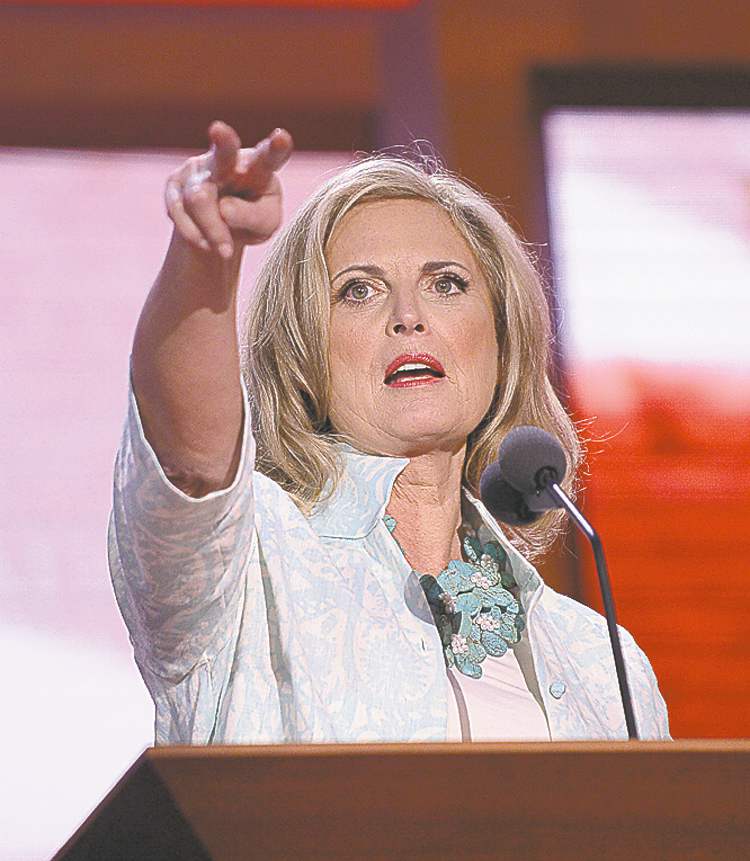
Republicans offered the same themes last week. Marco Rubio said his immigrant mother worked as a maid and a stock clerk. Ann Romney waxed nostalgic about the days when she and Mitt lived in a basement apartment and subsisted on pasta and tuna fish.
When did it become de rigueur for presidential candidates to play up their humble origins?
The first six American presidents didn’t have to sell themselves as men of the people, because only propertied white men could vote at the time. Expansion of the franchise led to the 1828 election of backwoodsman Andrew Jackson and a shift in presidential image-craft. Candidates suddenly had to appeal to the poor and uneducated masses.
William Henry Harrison, for example, ran the “log cabin and hard cider” campaign of 1840. Abraham Lincoln’s near deification after his 1865 assassination cemented the ideal of the log-cabin president. The Lincoln log cabin became so sacred that a replica stands inside a Greek-style temple on the 16th president’s birth site.
Presidential candidates campaigned on their humble origins to varying degrees over the next century or so, depending on the national zeitgeist and whether it was a potent political weapon against a more fortunate opponent. Dwight Eisenhower sold himself as the man from “a small framed house in Abilene, Kansas” in 1952 to emphasize Adlai Stevenson’s relatively privileged background.
But Jimmy Carter barely mentioned his peanut-farm childhood in his acceptance speech at the 1976 Democratic National Convention, possibly because his humble roots had been used against him in the past. When he ran for Georgia governor in 1970, the Atlanta Constitution called him an “ignorant, racist, backward, ultra-conservative, red-necked South Georgia peanut farmer.” (Carter did, however, emphasize his rural upbringing in a biographical video.)
In the 1980 campaign, Ronald Reagan rarely spoke of his alcoholic father and largely uneducated mother.
Although log cabins and humble beginnings are long-running themes in American politics, the significance of those themes has changed over time. The log cabin was originally 19th-century shorthand for “outside the beltway.”
By the latter part of the 1800s, however, the log cabin symbolized America’s new xenophobia. The Know Nothing party and their allies warned Americans that immigrants were taking over the United States. When a candidate emphasized his roots in a log cabin on the prairie, he was drawing a contrast to the Catholic immigrants streaming into Eastern cities.

In modern campaigns, humble origins are used almost exclusively to prove to voters that the candidate understands the problems of ordinary people. Bill Clinton, more than anyone else, is responsible for this trend. In his autobiographical 1992 convention speech, Clinton described how his widowed mother tearfully put three-year-old Bill on a train to move in with his grandmother, and he mentioned his grandfather, who ran a country store in the town of Hope, Ark. The speech showed successive candidates how to weave personal struggle and tragedy to policy positions in a way that few candidates had before.
This “Explainer” column thanks for their assistance Carol Berkin of Baruch College, Jeffrey Engel of the Center for Presidential History at Southern Methodist University, John Geer of Vanderbilt University, Allan Lichtman of American University, and Barbara Perry and Russell Riley of the Miller Center at the University of Virginia.
—Slate