

Black still pushing for greatness
Advertisement
Read this article for free:
or
Already have an account? Log in here »
To continue reading, please subscribe:
Monthly Digital Subscription
$0 for the first 4 weeks*
- Enjoy unlimited reading on winnipegfreepress.com
- Read the E-Edition, our digital replica newspaper
- Access News Break, our award-winning app
- Play interactive puzzles
*No charge for 4 weeks then price increases to the regular rate of $19.95 plus GST every four weeks. Offer available to new and qualified returning subscribers only. Cancel any time.
Monthly Digital Subscription
$4.99/week*
- Enjoy unlimited reading on winnipegfreepress.com
- Read the E-Edition, our digital replica newspaper
- Access News Break, our award-winning app
- Play interactive puzzles
*Billed as $19.95 plus GST every four weeks. Cancel any time.
To continue reading, please subscribe:
Add Free Press access to your Brandon Sun subscription for only an additional
$1 for the first 4 weeks*
*Your next subscription payment will increase by $1.00 and you will be charged $16.99 plus GST for four weeks. After four weeks, your payment will increase to $23.99 plus GST every four weeks.
Read unlimited articles for free today:
or
Already have an account? Log in here »
Hey there, time traveller!
This article was published 04/12/2014 (4048 days ago), so information in it may no longer be current.
He looks, sounds and conducts himself like a British lord and baron, which of course he is. If anyone was ever to the manor born, it’s Conrad Black.
With regal bearing and aristocratic confidence, Black drifted into the Free Press newsroom Wednesday, some of the attending journalists all aflutter.
For others, he’s still a crook in a frock coat. He’s a polarizing figure and people either love him or hate him.
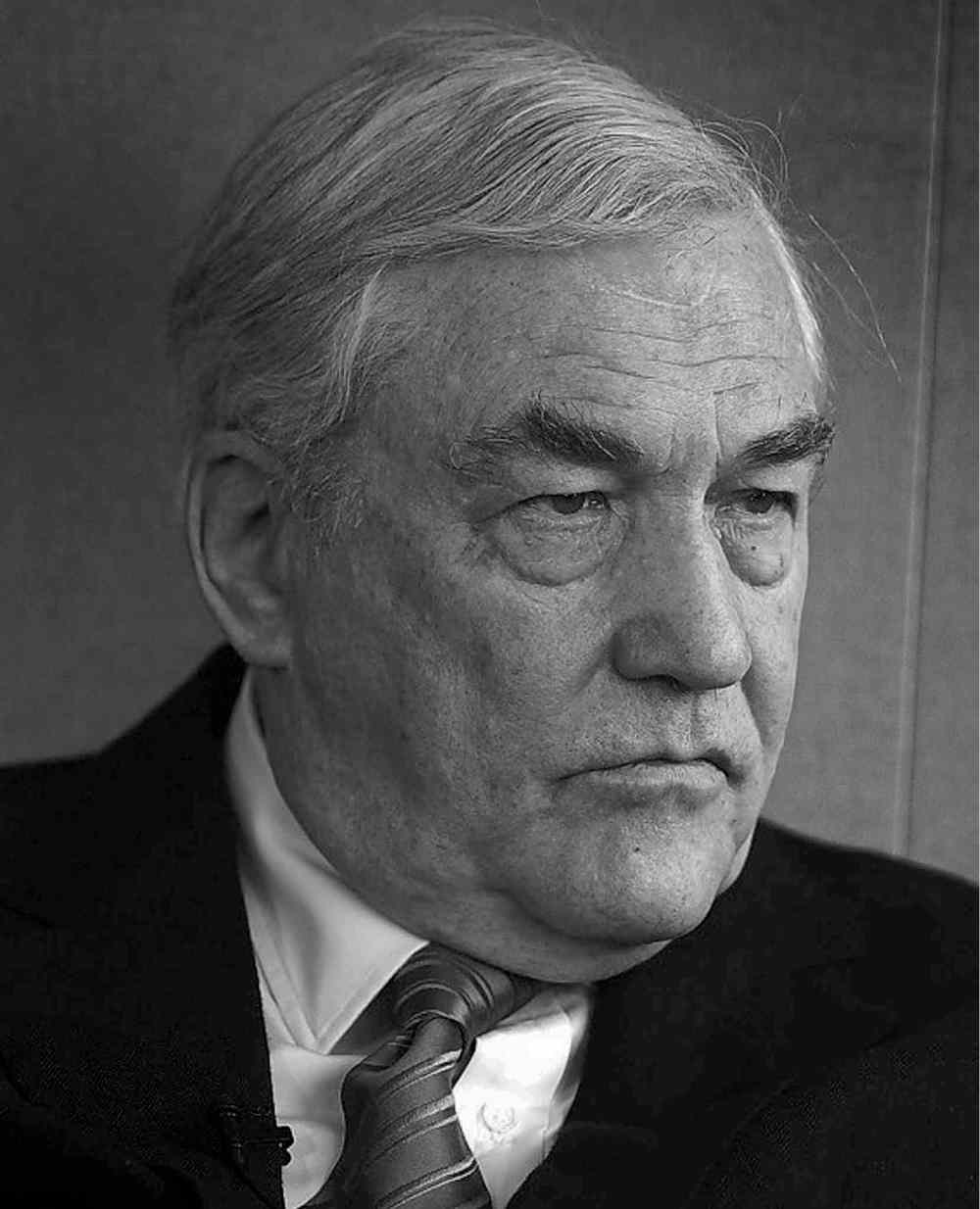
I have no idea if Black was a corporate criminal. Tens of millions of dollars were spent on the prosecution and defence, and much more lost in share value for the companies he directed following his demise. Yet he stands today convicted of just two offences, one for obstruction of justice and one for fraud involving less than $300,000.
For that, this public intellectual was jailed for almost three years. Muggers don’t do that kind of time. Some rapists get off with less.
Black came to Winnipeg, where his parents were born and family connections are still strong, to promote his latest book, the 1,100-page Rise to Greatness: The History of Canada.
It’s the latest in a series of significant history books by Black, including well-reviewed biographies of U.S. presidents Franklin Delano Roosevelt and Richard Nixon.
He also penned a strategic history of the United States, Flight of the Eagle. That’s on top of a book on his legal travails and a regular column in the National Post, which he founded.
Is this feverish activity an exercise in rehabilitation? “Not at all,” Black says. “I don’t need rehabilitation.”
Later, however, he concedes writing has been a way of “sending a message I hadn’t been immobilized.”
He said it helps to be historically minded because the past teaches “people do come back.”
He described his time in jail as an interesting experience. A Mafia don greeted him warmly on his arrival, saying he had nothing to fear from the other inmates.
“If you catch a cold, let me know from who and we’ll take care of it,” Black says he was told.
He remains friends with many of the people he met in prison.
People with an exaggerated sense of social position don’t do that kind of thing, yet Black is routinely dismissed as a snob. Big words — you can’t read his tomes without an equally large dictionary — and a natural imperious comportment will do that.
In Rise to Greatness, Black describes Canada as an unlikely, improbable country that was carried along by a magic thread of good luck and good judgment by its political leaders. A lot of things had to happen in just the right order to give Canada a chance, Black says.
The French had to establish a colony, the British had to conquer it, the American revolution had to send Loyalists north, Britain had to defend the sparse country from the expansionist Americans and the English and French had to find a way to get along.
The country/colony also needed great leadership, which Black says it has almost always enjoyed.
“I never realized how much real skill so many of our statesmen had,” he said.
His story marginalizes the contributions of aboriginal peoples, but Black says his book was about the rise of greatness.
He acknowledges that indigenous people weren’t treated well, although better than they were by the British-Americans or the Spanish. Still, he should have given more consideration to the role native peoples played in the political success of the entire country. They are part of that magic thread, but Black doesn’t seem to think so.
Some critics are upset about this lapse, but Black is not a public official who is obliged to offer an approved version of history. He says in the book it was ridiculous that aboriginal people tried to hijack the Charlottetown constitutional talks in 1992, where the focus should have been exclusively on federal-provincial relations and Quebec.

Black laments the fact Canadians do not seem to appreciate they live in a great country. He says the decline of America has created space for Canada to reach out and do something bold.
Perhaps it could be the first country in the world to stop jailing non-violent people. That’s a crusade Black is ready to lead, but he’s not prepared to stop there.
“Canada is uniquely equipped to lead the world out of what has become, especially in the United Sates, a sterile and uncivilized shrieking match between left and right, and into the exploration of sensible public policy in a liberal society devoted altogether to individual rights and dignity.”
Canada has grown up, Black says. We just need to realize it.
dave.obrien@freepress.mb.ca
History
Updated on Thursday, December 4, 2014 7:00 AM CST: Adds video