

China’s rulers try to cover up own corruption
Advertisement
Read this article for free:
or
Already have an account? Log in here »
To continue reading, please subscribe:

Digital Subscription
One year of digital access for only $205*
- Enjoy unlimited reading on winnipegfreepress.com
- Read the E-Edition, our digital replica newspaper
- Access News Break, our award-winning app
- Play interactive puzzles
*First annual payment billed as $205.00 + GST for one year. This annual subscription will automatically renew at $233.00 + GST every 52 weeks (10% off the regular annual price of $259.35). Offer available to new and qualified returning subscribers only. Cancel any time.
To continue reading, please subscribe:
Add Free Press access to your Brandon Sun subscription for only an additional
$1 for the first 4 weeks*
- Enjoy unlimited reading on winnipegfreepress.com
- Read the E-Edition, our digital replica newspaper
- Access News Break, our award-winning app
- Play interactive puzzles
*Your next Brandon Sun subscription payment will increase by $1.00 and you will be charged $17.95 plus GST for four weeks. After four weeks, your payment will increase to $24.95 plus GST every four weeks.
Read unlimited articles for free today:
or
Already have an account? Log in here »
Hey there, time traveller!
This article was published 07/08/2012 (5130 days ago), so information in it may no longer be current.
Thugs and bandits. Any day now, the world will hear the guilty verdict handed down by a Chinese court on Gu Kailai, the wife of Bo Xilai, a disgraced Chinese politician.
China’s rulers hope this will draw a line under an embarrassing, lurid murder trial. They may get away with it. The episode gives the lie, however, to many of the myths they foster: that despite being unelected, they are “meritocrats” in their jobs because they are good at them; that they are, if not entirely honest, then at least corrupt within forgivable bounds; and that the way a new generation of leaders is chosen every 10 years is orderly and consensual.
The Bo Xilai case has lifted a curtain on a world of thuggery, banditry and vicious, personalized power struggles reminiscent in some ways of the 10-year nightmare from which the country spent a generation trying to awaken — the Cultural Revolution.
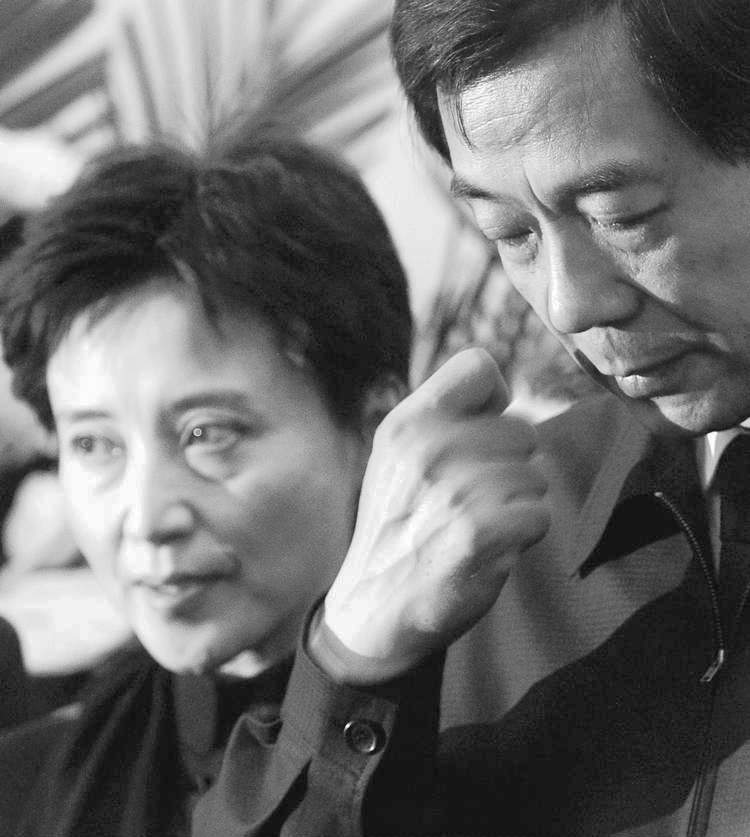
Gu and an employee are accused of poisoning Neil Heywood, a British businessman, last November. The case will be presented as a freak incident that has been dealt with: the crime solved, the perpetrators punished and the political repercussions contained with the dashing of Bo’s ambition to reach the pinnacle of power in China, the nine-member standing committee of the Communist Party’s Politburo. The party can get on with its autumn congress, which will name the people who will run the country for the next decade.
Thanks to the Internet and microblogs, however, Chinese citizens now know things about the Bo family that make the party look not quite the vanguard of the proletariat. Bo was a Politburo member until April and, until the previous month, was party secretary in the city of Chongqing. Tales have spread of the Bo family’s millions — or billions — in assets salted away overseas, of their son’s education in elite British and American institutions, of his mother’s access to the private jet of a tycoon buddy.
Of all her antics, however, it is the balloon that really hits home.
In 1999, having seen a nice one from the window of her penthouse in Bournemouth, on Britain’s south coast, Gu reportedly decided to buy passenger-carrying helium balloons to grace Dalian, the northeastern Chinese city her husband was running at the time. Gu apparently wanted the balloon-winch supplier to pad his price to cover her son’s school fees, however. Do high-flyers such as her really have to sweat the small stuff like that?
China’s leaders are highly sensitive to the notion that Bo and his wife are not freaks, but actually typical of the ruling class. The news agency Bloomberg has suffered sanctions for reporting on the wealth amassed by relations of Xi Jinping, China’s next leader. Xi, like Bo, is a revolutionary aristocrat, the son of a civil-war hero.
The transition this autumn will be the fourth the party has been through since the revolution in 1949. Only one — the most recent, in 2002 — has been smooth. Mao Zedong’s passing in 1976 led to the arrest of his widow and her “Gang of Four.” In 1989, the looming question of who would succeed Deng Xiaoping was fought out in part on the streets, before power passed to a generation of largely Soviet-trained technocrats.
Perhaps because Deng had endorsed them, the first Cultural Revolution generation that took over in 2002 did so without open dissension. Fear of the chaos between 1966 and 1976 demanded no less.
The Cultural Revolution, however, also must have warped the perceptions of those, like Bo, who took part. He is alleged to have joined “struggle” sessions against his own father, before spending five years in jail and labour camps. This taught him politics is as ruthless as war.
In power, he broke with tradition by campaigning more or less openly for his own promotion, using a crackdown on the mafia and, bizarrely, Maoist revivalism as populist tools. He might have succeeded had he not fallen out with his former chief of police, Wang Lijun, who is now also in Chinese custody after fleeing to a U.S. consulate. That made the murder allegations public, dooming the effort to portray Heywood’s death as an accident.
If the party looks corrupt and divided, the legal system, its pliant tool, is weak. The Gu trial will take place in Hefei in Anhui province, although there is nothing in China’s criminal-procedure law to suggest a court outside Chongqing should have jurisdiction. Presumably, however, Chongqing judges are untrustworthy.

Unusually, the announcement of the trial — which, calling the evidence “irrefutable,” anticipated the verdict — also attributed a motive to Gu: that Heywood was threatening her son. That may signal Gu will be allowed to avoid the death penalty. The courts are bit players in a party-scripted drama.
With a corrupt ruling party and a tame judiciary, power still grows out of the barrels of the guns held by the People’s Liberation Army. Even here, however, China’s leaders cannot be entirely confident. Ever since the army rescued them by cracking down in 1989, they have been haunted by doubts about whether, if asked again to mow down civilian protesters, soldiers would obey. Policy since then has been designed to ensure they never have to find out.
This year has seen a rash of press commentaries on the importance of the army being under the control not of the government, still less of any individual leader, but of the Communist Party. Bo’s visit, after Wang’s attempted defection, to old pals high up in the army fuelled fears he was planning some sort of coup.
China is such an economic success, such an emerging power, that it is easy to fall for its claims that politics is stable and that elections are unnecessary and probably harmful. Think a bit more about Bo and his wife, however, and the whole edifice begins to look rather brittle.