

We must work together to halt violence on aboriginal women and girls
Advertisement
Read this article for free:
or
Already have an account? Log in here »
To continue reading, please subscribe:
Monthly Digital Subscription
$1 per week for 24 weeks*
- Enjoy unlimited reading on winnipegfreepress.com
- Read the E-Edition, our digital replica newspaper
- Access News Break, our award-winning app
- Play interactive puzzles
*Billed as $4.00 plus GST every four weeks. After 24 weeks, price increases to the regular rate of $19.95 plus GST every four weeks. Offer available to new and qualified returning subscribers only. Cancel any time.
Monthly Digital Subscription
$4.99/week*
- Enjoy unlimited reading on winnipegfreepress.com
- Read the E-Edition, our digital replica newspaper
- Access News Break, our award-winning app
- Play interactive puzzles
*Billed as $19.95 plus GST every four weeks. Cancel any time.
To continue reading, please subscribe:
Add Free Press access to your Brandon Sun subscription for only an additional
$1 for the first 4 weeks*
*Your next subscription payment will increase by $1.00 and you will be charged $16.99 plus GST for four weeks. After four weeks, your payment will increase to $23.99 plus GST every four weeks.
Read unlimited articles for free today:
or
Already have an account? Log in here »
Hey there, time traveller!
This article was published 23/02/2015 (4074 days ago), so information in it may no longer be current.
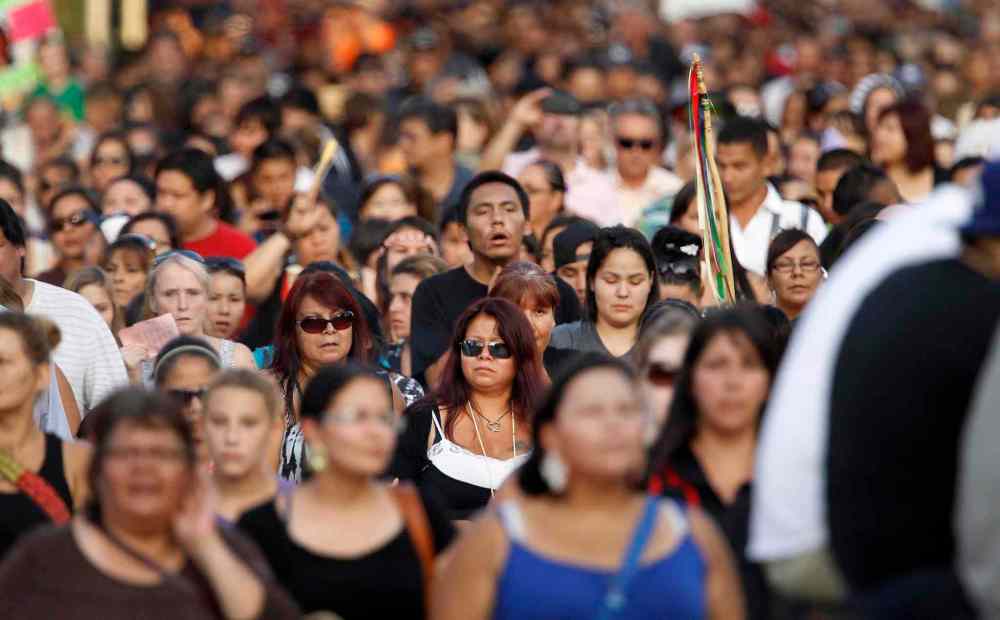
In August last year, more than a thousand Manitobans, indigenous and non-indigenous alike, joined a march to honour Tina Fontaine, our murdered, much-loved 15-year-old.
This, to me, showed there is no degree of separation between our loved ones, disappeared or murdered. We are all one. And we walked together in the hope that our prayers will lead to action to end this horror.
On Friday, provincial and territorial governments and five national aboriginal organizations will meet in Ottawa for the national roundtable on missing and murdered indigenous women and girls. This roundtable is an important first step in a series that must be taken to build public awareness and implement action to combat our national tragedy.
Many families of those missing and murdered repeatedly say they are not being heard and their concerns are not being addressed. These concerns range from insufficient resources for families searching for their loved ones, to inadequate funding for existing social agencies working to assist families of victims.
The Assembly of Manitoba Chiefs is listening to families first and laying a path to collaborative action.
Last fall, the AMC led a made-in-Manitoba approach in response to the call for a national inquiry into the missing and murdered, called Families First. Our approach is unique and has been supported by partnerships with the Manitoba Keewatinowi Okimakanak and the Southern Chiefs Organization in Manitoba, and by an Assembly of First Nations resolution in December.
Families First asserts that any process must ensure that: the voices of the families are listened to, heard and understood; families are supported and their loved ones honoured; immediate actions are identified; and the systemic realities of racism, poverty, exclusion and the wilful denial of rights protected under the Constitution’s Sec. 35 must be addressed.
Aided by the Public Interest Law Centre and a pro bono legal team, an examination of existing recommendations from inquiries, commissions, roundtables and non-governmental organizations revealed action can take place immediately.
Families want to share their stories. They want to tackle negative and racist assumptions about their loved ones and to be shown respect. Families of the women and girls who have been murdered or who disappeared also require co-ordinated supports to assist in their healing journeys. The inadequacy of supports is particularly apparent for families of victims in northern and remote First Nations, where little or nothing is available.
Many families feel a sense of frustration that immediate, concerted actions are not taking place to prevent future harm and support healing.
Families have also said greater communication with policing agencies and the justice system is crucial. Existing reports emphasize the need for building trust and transparency between authorities and citizens. Support persons or advocates must be made available immediately to assist families in navigating policing and justice systems.
Many families are also unaware of community safety plans and protocols. Since 2010, Public Safety Canada has administered a program enabling First Nations communities to develop community safety plans that are tailored to each community.
A closer examination of these programs reveals only one completed plan (with no name) and no information on implementation. The federal government could be addressing family concerns by releasing more information on this program and providing continued and sufficient funding for the implementation of community safety plans.
The AMC also heard that families of the missing and murdered women and girls want to prevent future crimes by reaching out to and empowering women and youth on the streets. Early education and awareness-building are key. They also identified the need for more 24-hour safe spaces and supports for people moving from First Nations communities to urban centres. Increased financial support for programs offered by urban transition centres is needed.

The critically important first step to enable immediate and ongoing action is to listen and attempt to understand those who are directly affected.
We all have a role in preventing future crimes and in supporting the families of the victims: governments, civil society, policing agencies, educators, media organizations and corporate Canada. We must work together to develop solutions that are community-based and lead to real change.
Families First will be engaging more and more people to co-operatively move for action to end this tragedy and to respect all indigenous peoples. The one-day roundtable on Friday is another step on the road — we have a long way to go, but we must go together.
Niibin Makwa Derek Nepinak is the grand chief of the Assembly of Manitoba Chiefs.
History
Updated on Monday, February 23, 2015 7:59 AM CST: Changes headline, replaces photo