

Election to resolve issues in Israel
Advertisement
Read this article for free:
or
Already have an account? Log in here »
To continue reading, please subscribe:
Monthly Digital Subscription
$0 for the first 4 weeks*
- Enjoy unlimited reading on winnipegfreepress.com
- Read the E-Edition, our digital replica newspaper
- Access News Break, our award-winning app
- Play interactive puzzles
*No charge for 4 weeks then price increases to the regular rate of $19.95 plus GST every four weeks. Offer available to new and qualified returning subscribers only. Cancel any time.
Monthly Digital Subscription
$4.99/week*
- Enjoy unlimited reading on winnipegfreepress.com
- Read the E-Edition, our digital replica newspaper
- Access News Break, our award-winning app
- Play interactive puzzles
*Billed as $19.95 plus GST every four weeks. Cancel any time.
To continue reading, please subscribe:
Add Free Press access to your Brandon Sun subscription for only an additional
$1 for the first 4 weeks*
*Your next subscription payment will increase by $1.00 and you will be charged $16.99 plus GST for four weeks. After four weeks, your payment will increase to $23.99 plus GST every four weeks.
Read unlimited articles for free today:
or
Already have an account? Log in here »
Hey there, time traveller!
This article was published 01/05/2012 (4997 days ago), so information in it may no longer be current.
TEL AVIV — Suddenly, and without any advance notice, the Israeli domestic scene was thrown into disarray Sunday. Talk about the dangers of a nuclear Iran or plans for the revival of the Israeli-Palestinian peace talks were pushed aside. Instead, all parties began talking about new parliamentary elections, possibly in August or mid-October.
Two issues brought about this sudden change: the abolition of Tal Law, which exempted thousands of ultra-religious Jews from military service or national civilian service; and the uncompromising position of most parties regarding necessary budget cuts in order to meet the requirements of the social unrest.
When the State of Israel was born in 1948, David Ben-Gurion agreed to exempt 400 Yeshiva students from military service. He thought that because many Orthodox Jews perished in the Holocaust, it was imperative for the revival of Jewish life to exempt from military service those students whose only “job” was the study of the Torah.
Since then, however, the number of those exempted from military service rose to tens of thousands. It is estimated that there are today more than 60,000 ultra-Orthodox youth who are not serving in the army or in any other national service. At the same time, all of them or their families receive generous social benefits from the state.
This has created a growing social tension in Israel because those who are not religious serve in the army, pay their taxes and finance the ultra-Orthodox.
About five years ago, the Tal Law was legislated. It increased the number of ultra-Orthodox in the army but still exempted the overwhelming majority of them from military service. The Tal Law is due to expire in August.
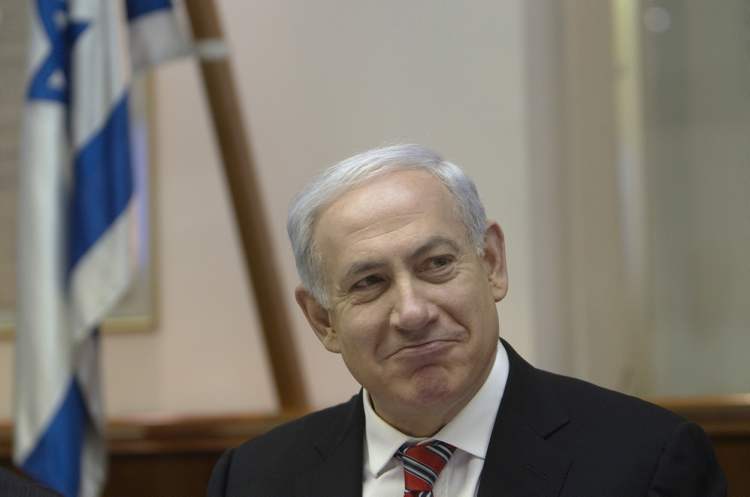
Abolition of the law became the battle cry of all secular parties in Israel. Prime Minister Benjamin Netanyahu tried, in vain, to find a compromise. His hands were tied by his ultra-Orthodox coalition partners. Sunday morning, however, he made up his mind. He promised that henceforth, nobody will be exempted from military or national service. His decision applies not only to the ultra-Orthodox parties but also to the Arab minority in Israel. Since 1948, only the Druzes and the Bedouins serve in the army, but the majority of Israeli Arabs don’t.
As expected, the Orthodox parties rejected Netanyahu’s decision and threatened to quit the coalition government and bring it down.
This time, however, Netanyahu was ready to face the challenge. His associates began exploring with the other parties possible dates for new elections — end of August or mid-October.
Netanyahu himself is not taking part in these discussions because of the death of his father, Prof. Benzion Netanyahu, Monday morning at the age of 102.
Despite its importance, however, the Tal Law alone would not have justified early elections. More important is the issue of the 2013 budget. Following last year’s social unrest and mass demonstrations all over the country, a government-appointed committee recommended a series of steps to help the middle class and the poor in Israel.
The government accepted all the recommendations of the Trachtenberg Committee. As a result, the 2013 annual budget is expected to appropriate the necessary funds for enhanced social services. The new budget is to be approved by the Knesset by August.
As expected, however, most cabinet ministers oppose any cuts in their budget.
Defence Minister Ehud Barak, for example, argues that when Israel is facing a nuclear Iran, which could lead to a military confrontation, his budget should be increased, not cut. Foreign Minister Avigdor Lieberman advances the same arguments. He, too, opposes any cuts in his ministry’s budget.
Netanyahu is aware of this problem. He knows that he cannot meet his ministers’ demands. Hence, and in order not to yield to pressures, Netanyahu judged that it’s better to call for elections.
This sudden domestic crisis came amid sharp debate over Iran. Addressing a small group of former security officials, the former head of the Internal Security Service, Yuval Diskin, threw a real political bomb.
He said he did not believe in the ability of both Netanyahu and Barak to lead a war against Iran and win it. He also told his audience, “Don’t believe what you are being told that there is no Palestinian partner. There is a Palestinian partner, and his name is Mahmoud Abbas.”
Diskin, former Mossad chief Meir Dagan and former chief of general staff Gen. Gabi Ashkenazi were always opposed to any adventure in Iran. They were joined Friday by the incumbent chief of staff, Gen. Benny Gantz. He described the Iranian leaders as “rational” and argued that the economic sanctions have begun to be felt in Iran. Gantz left no doubt that a military strike against Iran should be “last resort.” He thus came close to the American position that, for now, favours diplomacy over military operations.
Netanyahu and Barak find themselves cornered. Theoretically, they can ignore the army’s warning. Menachem Begin did it in 1981, when he ordered the destruction of the Iraqi nuclear reactor in Baghdad. But things have changed since then. Iran 2012 is not Iraq 1981.

Thus, the talk in Israel about early elections had pushed aside the Iranian subject and shifted to domestic issues.
A public poll published Monday showed that Netanyahu has nothing to fear — he currently has no serious challenger. He’ll return to power strengthened by new political forces, or the same partners with reduced political clout.
Samuel Segev is the Winnipeg Free
Press Middle East correspondent.