London mayor thumps tub as Olympics set to open
Advertisement
Read this article for free:
or
Already have an account? Log in here »
To continue reading, please subscribe:

Digital Subscription
One year of digital access for only $205*
- Enjoy unlimited reading on winnipegfreepress.com
- Read the E-Edition, our digital replica newspaper
- Access News Break, our award-winning app
- Play interactive puzzles
*First annual payment billed as $205.00 + GST for one year. This annual subscription will automatically renew at $233.00 + GST every 52 weeks (10% off the regular annual price of $259.35). Offer available to new and qualified returning subscribers only. Cancel any time.
To continue reading, please subscribe:
Add Free Press access to your Brandon Sun subscription for only an additional
$1 for the first 4 weeks*
- Enjoy unlimited reading on winnipegfreepress.com
- Read the E-Edition, our digital replica newspaper
- Access News Break, our award-winning app
- Play interactive puzzles
*Your next Brandon Sun subscription payment will increase by $1.00 and you will be charged $17.95 plus GST for four weeks. After four weeks, your payment will increase to $24.95 plus GST every four weeks.
Read unlimited articles for free today:
or
Already have an account? Log in here »
Hey there, time traveller!
This article was published 14/07/2012 (5180 days ago), so information in it may no longer be current.
This is not so much a book as a love letter. Leading up to the summer Olympics, Boris Johnson, the former journalist and current Conservative mayor of London, England, has written a delightful tub-thumping travel advertisement for his home town, a kind of history’s greatest hits, including his favourite hobby horses.
Johnson’s well-known sense of humour and ego can be seen in the title, a play on Boswell’s Life of Johnson, about an earlier Renaissance man about London town.
He begins with the arrival of the Romans, and their ferocious slaughter at the hands of an earlier hardline Margaret Thatcher in the form of Boudica, a prescient bank-bashing leader of the Iceni tribe.
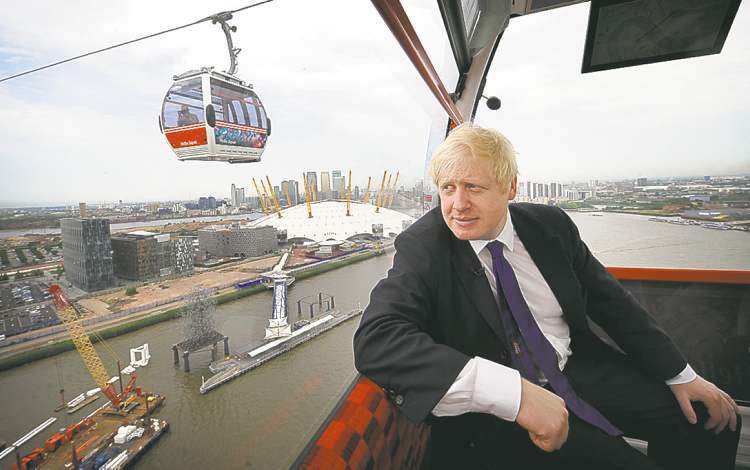
He then skips the centuries, picking famous figures, along with the occasional overlooked genius, to make his case that these are “the people who made the city that made the world.”
Among them are the usual suspects — Alfred the Great, William the Conqueror and William the Writer. But in each case, Johnson offers a charming and funny take on an old chestnut. Like the CBC’s George Stroumboulopoulis, he gives us a little bit of “something you didn’t know about” London.
In terms of the overlooked and forgotten, he draws attention to the 17th-century inventor Robert Hooke, the man of a million ideas. Or as Johnson describes him, “the greatest inventor you’ve never heard of.”
A clockwork gas-bag of a man, sexually peculiar, lice-covered and cheap as Scrooge, he threw off ideas like sparks from the fire in his favourite London coffee house. He was always surrounded by his circle of friends, which included diarist John Aubrey and architect Christopher Wren.
Some of Hooke’s ideas were whacky, such as “a bizarre bat suit for allowing a human being to fly,” but he’s also credited with the invention of the air pump and the sash window.
Indeed, after the Great Fire of 1666, Hooke designed or had a hand in rebuilding 51 churches in London.
To take a stab at gender equality, Johnson offers the story of Mary Seacole. He starts by stating he complained at his child’s school play he’d never heard of her. But he’s man enough to admit, after some research, that Seacole earns full marks for her nursing of British soldiers during the Crimean War and is as deserving as Florence Nightingale, who shares the same chapter.
Indeed, Seacole faced even more hurdles than the tough-minded Nightingale, as she was a black who’d come all the way from Jamaica. Facing a variety of prejudices, by the end of the war she was carried aloft (showing her petticoats, to the dismay of Florence) by the soldiers she had served and saved.
Lovers of British schoolboy humour will quickly recognize Johnson’s style and his disdain for dates as borrowing from the bestselling 1066 and All That. That book’s quick gloss managed to boil all dates down to one, thus making them so much easier to remember.
This being London’s Olympic year, Johnson claims bragging rights for the invention of, and codifying rules for, football (soccer), boxing (Marquess of Queensberry) and lawn tennis. “The first organized swimming competitions seem to have taken place on the Serpentine in 1857,” he writes and then finishes by claiming ping pong for London as well.
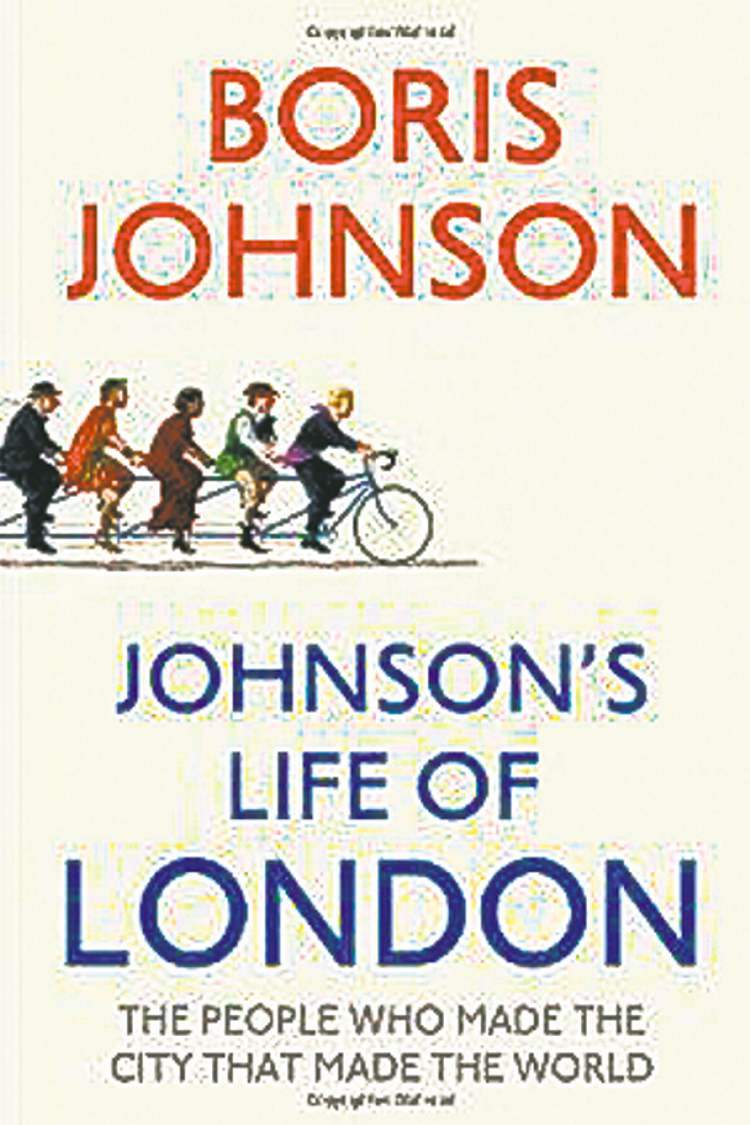
As for Johnson’s favourite hobby horse, the bicycle, he grudgingly admits it was not invented by an Englishman, but insists that the idea was quickly “filched and improved upon by a London inventor,” Denis Johnson.

Pictures of Boris, helmeted and cycling through London past the ranks of Barclays Cycle Hires (filched if not improved on from the Montreal experiment) are constantly in the British papers.
He also beats the drum for the new redesigned Routemaster bus, which he championed and, more controversially, for a new airport to be built on the Thames estuary.
Johnson’s Life of London is a clever campaign platform, posing as a book, by a man who could be the next leader of the Conservative party in England.
Winnipeg broadcaster Ron Robinson wants to have his ashes sprinkled from the back platform of an original Routemaster.