

Carbon tax could tame severe weather
Advertisement
Read this article for free:
or
Already have an account? Log in here »
To continue reading, please subscribe:

Digital Subscription
One year of digital access for only $205*
- Enjoy unlimited reading on winnipegfreepress.com
- Read the E-Edition, our digital replica newspaper
- Access News Break, our award-winning app
- Play interactive puzzles
*First annual payment billed as $205.00 + GST for one year. This annual subscription will automatically renew at $233.00 + GST every 52 weeks (10% off the regular annual price of $259.35). Offer available to new and qualified returning subscribers only. Cancel any time.
To continue reading, please subscribe:
Add Free Press access to your Brandon Sun subscription for only an additional
$1 for the first 4 weeks*
- Enjoy unlimited reading on winnipegfreepress.com
- Read the E-Edition, our digital replica newspaper
- Access News Break, our award-winning app
- Play interactive puzzles
*Your next Brandon Sun subscription payment will increase by $1.00 and you will be charged $17.95 plus GST for four weeks. After four weeks, your payment will increase to $24.95 plus GST every four weeks.
Read unlimited articles for free today:
or
Already have an account? Log in here »
Hey there, time traveller!
This article was published 08/02/2013 (4974 days ago), so information in it may no longer be current.
Not long after U.S. President Barack Obama promised to fight climate change in his inaugural address, temperatures soared to 70 in Baltimore — in late January. Our weather continues to be unrecognizable.
Last summer was the hottest ever recorded at Baltimore/Washington International Airport. And across the 48 contiguous states, 2012 was the warmest on record by a huge margin. Globally, the heating trend — fueled mostly by the combustion of fossil fuels — proceeds apace. The years 2000-2009 were the warmest decade in 120,000 years.
With these data in hand, I would like to offer a few not-so-bold predictions for 2013.
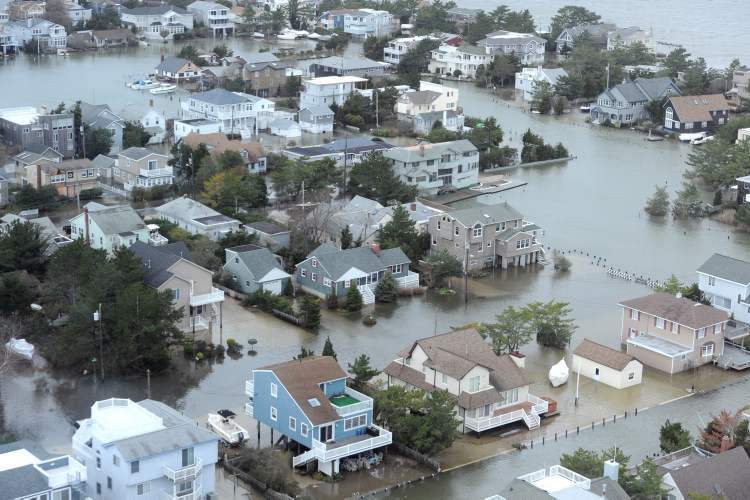
First, Hurricane Sandy will return this year with equal vengeance under a new name. Second, ferocious land-based storms like last year’s derecho will kill a troubling number of citizens while knocking out power to tens of millions (again). Third, we can expect much more drought in 2013, triggering historic closures of parts of the Mississippi River. Fourth, wildfires will continue to devastate our Western forests with record consequences.
How are such predictions possible? The answer is simple — and it lies in part in Hurricane Sandy itself. After the storm, everyone asked: Did global warming cause this monster? The answer is: yes, yes, and again yes. As the famous linguist George Lakoff said after Sandy, it was “systemic causation” that triggered the full power of the storm.
We have, beyond dispute, altered many of our planet’s most powerful physical systems in recent decades. There is 40 per cent less ice in the Arctic Ocean today than in the 1970s. Satellite photos prove it. We’ve transformed the basic ecological systems that govern the great polar North.
That’s just one example. We’ve simultaneously altered, thanks to global warming, the great systems that give rise to huge hurricanes. Ocean surface temperatures are way up. Moisture levels in the atmosphere are climbing. And we’ve caused the oceans themselves to rise.
Hard-core skeptics can (wrongly) question human involvement in the warming, but they cannot deny these systems are changing. Higher temperatures, increasing moisture, rising waters: These are measurable, observable facts. And they are also the primary drivers of highly destructive hurricanes. (Mid-Atlantic waters, for instance, were a full five degrees above normal when Sandy slammed into New Jersey and New York.)
This is systemic causation. And unless these systems reverse course soon, there will be more causation.
Which is why it takes little predictive skill to say chances are very good that another huge hurricane will come to us in 2013 — as well as more destructive droughts, wildfires and massive thunderstorms, all linked by scientists to planetary warming.
So what’s the solution? How do we hit the brakes on planetary changes this big, and do it fast? Well, by definition, the solution must match the dynamics of the problem. It must be a systemic answer. We must systematically phase out the use of oil, coal and natural gas in this country. And the only way to do that is to put a “price on carbon.”
With a carbon tax or fee attached to fossil fuels, we make these fuels steadily more expensive. This would do two things in the marketplace: reflect the harm these fuels do to our planet and, simultaneously, usher carbon-free fuels like wind and solar power into our economy with the speed and breadth of a hurricane surge tide.
Yes, states like California and others should continue to push for state-based policies that incentivize things like residential solar power and offshore wind farms. But the real change will come at the national level, with a federal carbon tax or the “cap and dividend” system championed by Rep. Chris Van Hollen. The Maryland Democrat’s approach would charge oil, gas and coal companies an ever-rising fee for dumping their carbon pollution into our atmosphere. The proceeds, or “dividends,” would then be returned in equal share to all Americans.
Almost weekly, here and worldwide, we see changes to our climate that are shockingly powerful. And we have only one reliable tool strong enough to fight back: the power of markets. A price on carbon, like the global rise in temperature, would affect every corner of our country, moving quickly and relentlessly, transforming our nation toward clean energy. As gas-fired electricity costs rise, utilities will switch to wind. As oil gets pricier, electric car sales will explode.
This is the inevitable, systemic solution to the climate crisis now before us. President Barack Obama and Congress should give it the same attention as the ongoing budget crisis — perhaps even using some of the carbon revenue to solve that systemic problem, too.

Meanwhile, stay tuned for more reasons to act. 2013 could be a record-book year for extraordinary weather.
Mike Tidwell is director of the Chesapeake Climate Action Network.
—The Baltimore Sun