

Why Mali is not another Afghanistan
Advertisement
Read this article for free:
or
Already have an account? Log in here »
To continue reading, please subscribe:
Monthly Digital Subscription
$0 for the first 4 weeks*
- Enjoy unlimited reading on winnipegfreepress.com
- Read the E-Edition, our digital replica newspaper
- Access News Break, our award-winning app
- Play interactive puzzles
*No charge for 4 weeks then price increases to the regular rate of $19.00 plus GST every four weeks. Offer available to new and qualified returning subscribers only. Cancel any time.
Monthly Digital Subscription
$4.75/week*
- Enjoy unlimited reading on winnipegfreepress.com
- Read the E-Edition, our digital replica newspaper
- Access News Break, our award-winning app
- Play interactive puzzles
*Billed as $19 plus GST every four weeks. Cancel any time.
To continue reading, please subscribe:
Add Free Press access to your Brandon Sun subscription for only an additional
$1 for the first 4 weeks*
*Your next subscription payment will increase by $1.00 and you will be charged $16.99 plus GST for four weeks. After four weeks, your payment will increase to $23.99 plus GST every four weeks.
Read unlimited articles for free today:
or
Already have an account? Log in here »
Hey there, time traveller!
This article was published 19/02/2013 (4694 days ago), so information in it may no longer be current.
EDMONTON — When speaking to a parliamentary committee on Feb. 12, Canadian Foreign Affairs Minister John Baird announced that Canada was unlikely to commit further resources to the French-led intervention in Mali in fears of the deployment becoming similar to the decade-long mission in Afghanistan.
“I am very cautious about sending in potentially thousands of Canadian troops to Malian soil… to what is already is amounting to a counterinsurgency,” Baird told the committee. “We’re not at the drop of a hat going to get into another Afghanistan.”
There is little doubt that the Harper government would be wise to avoid any further involved in Mali, but the comparison of Mali to Afghanistan is not the justification for avoiding such a move.
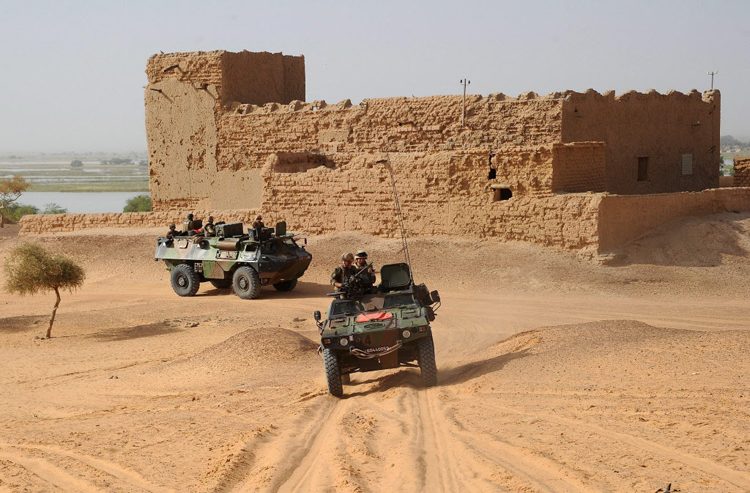
In fact, the French mission in Mali is absolutely nothing like what has taken place in Afghanistan since 2001, other than the broad similarity that they are both counterinsurgency missions. There are a few key components to the mission in Mali that demonstrate beyond any doubt why the two intervention experiences are distinctly different:
The first deals with why an intervention took place at all. In the Malian context, the government requested assistance from the French and was open to intervention in an effort to combat the advancing Islamist forces in the country’s north. The French have been fighting alongside Malian government forces advancing on Islamist forces, and upon completion of the mission, the French have made it clear they will not stay in the country.
Recall the circumstances in 2001 that led to the International Security Assistance Force mission in Afghanistan. By no means were external forces invited or welcomed, and the legal justification for the mission fell under collective defence and security provisions in response to the 9/11 attacks on the United States.
The mission in Afghanistan evolved into a counterinsurgency mission, but the initial stages were focused on overthrowing the Taliban government and establishing a new set of government institutions due to the knowledge that Taliban government officials were harbouring and sponsoring al-Qaida militants. Being invited and fighting on behalf of a government versus invading and toppling one is a very important distinction.
The second difference is the type of deployment underway in Mali. Building on the previous point, the invitation of the Malian government and their intimate knowledge of military strategic elements in the country make the French mission substantially well informed. Further, by working with Malian forces, the French are able to stage military forces and support in government-held strongholds rather than having to rely on neighbouring countries for bases and support.
The initial stages of the mission in Afghanistan were quite different, and the type of intervention launched in 2001 required large-scale military deployment and resource-commitment from ISAF member states. In essence, it was known that the Afghan mission was the rebuilding of a country while the mission in Mali is not at all comparable.
Lastly, a major difference is the power of insurgent forces in Mali when compared to those in Afghanistan. Al-Qaida and Taliban insurgents in Afghanistan were well-funded, well-trained, well-equipped and had outstanding knowledge of terrain and geographical strategic considerations.
For instance, the mountainous areas of western Afghanistan posed, and continue to pose, particular difficulty for the International Security Assistance Force in combating insurgent forces.
In Mali, the insurgents have demonstrated they are better trained and equipped than initially thought; however, there is a division between those insurgents fighting for a secular independent states in Northern Mali, known as the National Movement for the Liberation of Azawad, and Islamist forces assumed to have ties to al-Qaida. This division has prevented those insurgent forces from fighting capably against Malian and French forces.
Ultimately, Baird and the Harper government are wise not to commit to further deployment in Mali, but the justification that somehow Mali could turn into another Afghanistan is a gross exaggeration at this point in time. The French and Malian forces have consistently advanced northward and have captured key strategic targets, and there is no sign the mission will turn into a long-term peace-building mission.
Canada’s avoidance of Mali is far better explained by the fact that Mali poses no benefit to Canada’s national interests, nor are the Canadian Forces in any position for another peace-building mission. Unless the situation in Mali changes dramatically in the coming weeks and months, Mali will not resemble Afghanistan in virtually any way.

Robert Murray adjunct professor of political science, University of Alberta.
—Troy Media