

Cat owners might get nipped
Proposed bylaw would levy licence fees, fines for felines
Advertisement
Read this article for free:
or
Already have an account? Log in here »
To continue reading, please subscribe:
Digital Subscription
One year of digital access for only $1.44 a week*
- Enjoy unlimited reading on winnipegfreepress.com
- Read the E-Edition, our digital replica newspaper
- Access News Break, our award-winning app
- Play interactive puzzles
*Billed as $5.77 plus GST every four weeks. After 52 weeks, price increases to the regular rate of $19.95 plus GST every four weeks. Offer available to new and qualified returning subscribers only. Cancel any time.
To continue reading, please subscribe:
Add Free Press access to your Brandon Sun subscription for only an additional
$1 for the first 4 weeks*
- Enjoy unlimited reading on winnipegfreepress.com
- Read the E-Edition, our digital replica newspaper
- Access News Break, our award-winning app
- Play interactive puzzles
*Your next Brandon Sun subscription payment will increase by $1.00 and you will be charged $17.95 plus GST for four weeks. After four weeks, your payment will increase to $24.95 plus GST every four weeks.
Read unlimited articles for free today:
or
Already have an account? Log in here »
Hey there, time traveller!
This article was published 11/01/2013 (4917 days ago), so information in it may no longer be current.
The proverbial fur may fly at city hall over a new plan to make pet owners pay an annual fee to license their cat.
A city report, released Thursday, recommends Winnipeg enact a new bylaw that will require cat owners to purchase an annual licence for their furry friend at a cost of $15 if the animal is spayed or neutered or $50 if it is not. The net profit from the fees — an estimated $21,000 if 5,000 cats are licensed in 2014 — will go to either the Winnipeg Humane Society or partner organizations to help expand their spay-and-neuter programs.
Winnipeggers who do not license their cat would be fined $250 when the proposed regulations would take effect next January.
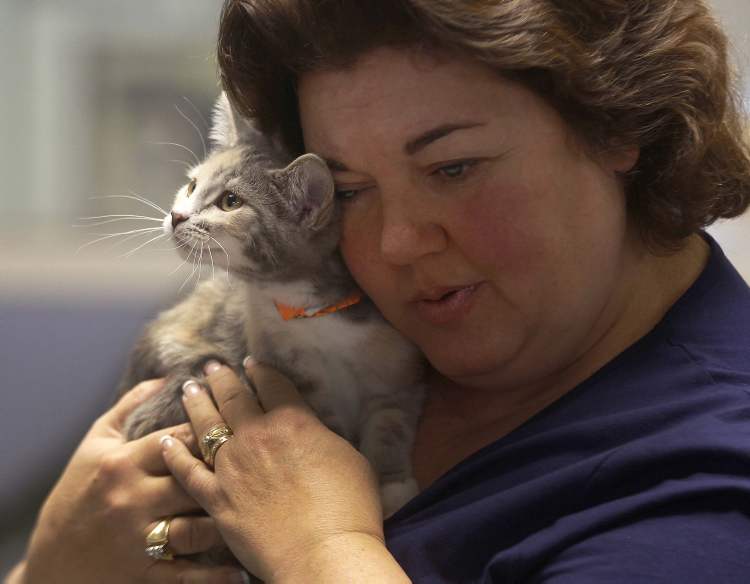
The move is part of a massive overhaul of Winnipeg’s pet bylaws that includes a proposed ban on the sale of cats and dogs in pet stores and requires anyone who sells puppies or kittens to register for a $300 annual licence. The city started to review the bylaws in 2011 following growing concern Winnipeg’s stray-pet population had literally run wild and animal shelters could barely keep up with demand.
Though there are no estimates on how many stray or feral cats live in the city, the Winnipeg Humane Society takes in about 6,000 lost, stray or unwanted cats a year, 2,500 of which are euthanized.
Winnipeg animal services chief operating officer Leland Gordon said the regulations will make Winnipeg’s pet bylaws among the most progressive in the country. He said the hope is the proposed cat-licensing program will increase the number of lost cats reunited with their owners.
Gordon said only nine per cent of all cats taken in by the humane society are returned to their owners, compared with other cities such as Calgary, which returns 52 per cent of lost felines to their owners with the help of a licensing program.
Although there may be those who refuse to license their cat, Gordon said he expects most Winnipeggers will do so for the added protection.
There are an estimated 200,000 owned cats in the city.
“It’s a very sad circumstance,” Gordon said of the number of euthanized cats. “That’s not happening in Calgary, where they have cat licensing.”
Winnipeg Pet Rescue executive director Carla Martinelli-Irvine called the proposed licensing a “cash grab” and said the fee will target responsible pet owners, not people who dump unwanted cats in the street or at shelters.
Martinelli-Irvine said the majority of cats that end up in shelters are unwanted, not lost, and animals that have been spayed and neutered typically have microchips or tattoos to help reunite them with their owners if they wander from home.
She also raised concerns the pet-vendor licence will not monitor backyard breeders and may lead city residents to perceive some breeders as more legitimate than they really are.
“Cats that are roaming the streets do not belong to responsible pet owners, and those are not the people who are going to be paying for a licence,” she said, adding she wants to see a more detailed plan on how the revenue from the licensing fees will be spent.
Winnipeg Humane Society executive director Bill McDonald said shelter groups need to work together to solve the pet-overpopulation problem.

McDonald said part of the problem persuading people it’s necessary to license their cat is due to the fact animal services has historically focused on dogs. Loose dogs can pose a danger to people that cats do not, McDonald said, noting neighbourhood cats are also less visible than dogs, as many of them are housebound.
Last year, the organization took in 486 more cats than in 2011.
“I think if cat owners knew the money that they’re paying for that $15 licence is going to lower the cat population overall (they’d say), ‘Why not?’ ” he said. “That’s three coffees at Starbucks.”
Council’s protection and community services committee will review the recommendations at a meeting Monday.
jen.skerritt@freepress.mb.ca
History
Updated on Friday, January 11, 2013 9:04 AM CST: replaces photo
Updated on Friday, January 11, 2013 9:23 AM CST: adds fact box