

Backers for cage-free eggs get cracking
Advertisement
Read this article for free:
or
Already have an account? Log in here »
To continue reading, please subscribe:

Digital Subscription
One year of digital access for only $205*
- Enjoy unlimited reading on winnipegfreepress.com
- Read the E-Edition, our digital replica newspaper
- Access News Break, our award-winning app
- Play interactive puzzles
*First annual payment billed as $205.00 + GST for one year. This annual subscription will automatically renew at $233.00 + GST every 52 weeks (10% off the regular annual price of $259.35). Offer available to new and qualified returning subscribers only. Cancel any time.
To continue reading, please subscribe:
Add Free Press access to your Brandon Sun subscription for only an additional
$1 for the first 4 weeks*
- Enjoy unlimited reading on winnipegfreepress.com
- Read the E-Edition, our digital replica newspaper
- Access News Break, our award-winning app
- Play interactive puzzles
*Your next Brandon Sun subscription payment will increase by $1.00 and you will be charged $17.95 plus GST for four weeks. After four weeks, your payment will increase to $24.95 plus GST every four weeks.
Read unlimited articles for free today:
or
Already have an account? Log in here »
Hey there, time traveller!
This article was published 30/07/2016 (3633 days ago), so information in it may no longer be current.
Dozens of American restaurant chains, supermarket chains and dining-service companies have committed in the last two years to ending their use or sales of eggs laid by caged hens. On Monday, one of the world’s largest food-service suppliers, Paris-based Sodexo, upped the ante, saying it would switch to cage-free eggs in all its global operations by 2025.
The announcement by a major international company is a sign that the rapid shift in the United States to cage-free eggs is going more global. It came after talks with animal-rights groups, as well as an international animal-rights coalition recently formed by the Humane League, a small American organization arguing for the rights of farm animals that has driven several U.S. companies’ pledges to swear off eggs from caged hens.
Sodexo had already pledged last year to use only cage-free eggs and egg products in its U.S. operations by 2020. The new decision will affect both liquid eggs and the 250 million shell eggs the company purchases annually for use at 32,000 schools, hospitals, corporations and other sites it services in 80 countries.
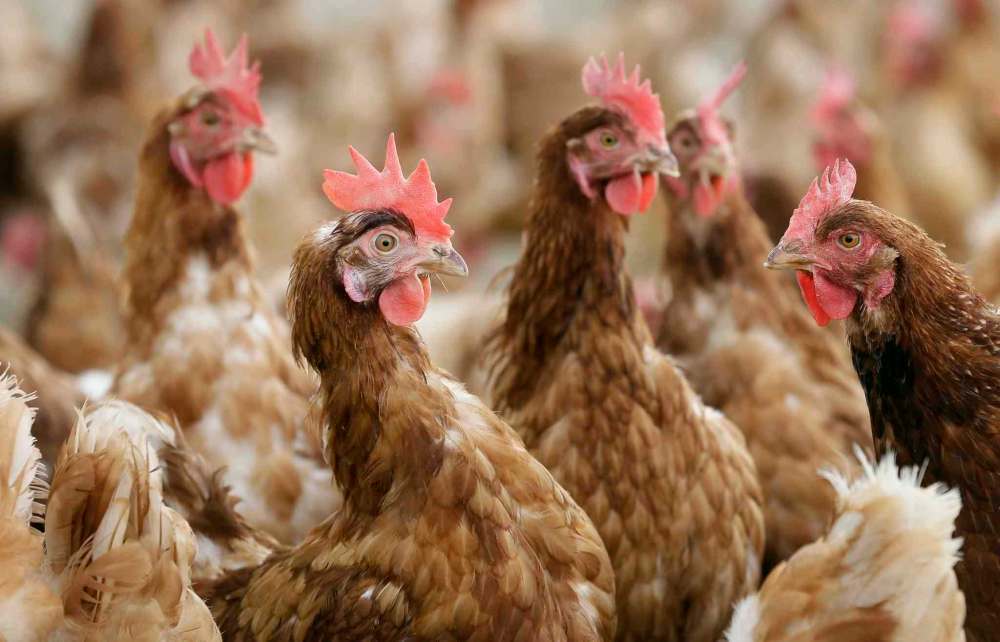
Battery cages — small wire enclosures whose floors are smaller than a piece of letter-sized paper — are already banned in the European Union, and Sodexo said in a statement that it already uses only cage-free eggs in Austria, Switzerland, Germany and Belgium. But about half of egg-laying hens in the EU are housed in larger “enriched cages,” and David Coman-Hidy, the Humane League’s executive director, said Sodexo had agreed to stop purchasing eggs from farms using those systems.
In a statement, Sodexo’s senior vice-president of supply management, Michel Franceschi, said the company plans to “support and contribute to the progressive transformation of the whole industry.” He said it would would “take advice” from the Humane Society, Compassion in World Farming and the Humane League “to accompany the conversion and the evolution of the local industry so that by 2025, we will be able to source cage-free eggs from local producers in each country where we operate.”
In the United States, increasing consumer concern about how animals are raised for food has driven demand for meat and poultry that is free-range, antibiotics-free, grass-fed and otherwise perceived as healthier or more humane. Last month, Perdue, the third-largest chicken producer in the U.S., announced it would change the way it raises and slaughters chickens, including by giving them more exposure to natural light, in response to customers’ concerns.
Whether the issue of hen housing conditions will have the same traction at a global level remains to be seen. Coman-Hidy, whose group also negotiated a commitment from Grupo Bimbo in Mexico, said he thinks “the issue of caging animals in cages that are just are barely larger than their bodies is universally reviled by people.”
Cage-free eggs, however, do not come from hens pecking and clucking in verdant pastures. They are able to roam freely in large, crowded barns, stretch their wings and do things like dustbathe. But their beaks are often still partially cut off to prevent them from pecking one another, and they do not go outside.
And as the corporate timelines suggest, the switch won’t affect hens for many generations to come. Egg producers say the process of converting caged systems is logistically mammoth and unlikely to happen by 2025, corporate commitments notwithstanding. Currently, less than 10 per cent of eggs sold in the United States are laid by cage-free or free-range hens.
“There should be no illusion that these animals live great lives. They’re still on factory farms,” Coman-Hidy said. “But this is such a meaningful improvement that we feel strongly it’s worth fighting for.”
— The Washington Post