

Russia to drop paratroopers at North Pole
Mission a provocation, says prof
Advertisement
Read this article for free:
or
Already have an account? Log in here »
To continue reading, please subscribe:
Digital Subscription
One year of digital access for only $1.44 a week*
- Enjoy unlimited reading on winnipegfreepress.com
- Read the E-Edition, our digital replica newspaper
- Access News Break, our award-winning app
- Play interactive puzzles
*Billed as $5.77 plus GST every four weeks. After 52 weeks, price increases to the regular rate of $19.95 plus GST every four weeks. Offer available to new and qualified returning subscribers only. Cancel any time.
To continue reading, please subscribe:
Add Free Press access to your Brandon Sun subscription for only an additional
$1 for the first 4 weeks*
- Enjoy unlimited reading on winnipegfreepress.com
- Read the E-Edition, our digital replica newspaper
- Access News Break, our award-winning app
- Play interactive puzzles
*Your next Brandon Sun subscription payment will increase by $1.00 and you will be charged $17.95 plus GST for four weeks. After four weeks, your payment will increase to $24.95 plus GST every four weeks.
Read unlimited articles for free today:
or
Already have an account? Log in here »
Hey there, time traveller!
This article was published 30/07/2009 (6155 days ago), so information in it may no longer be current.
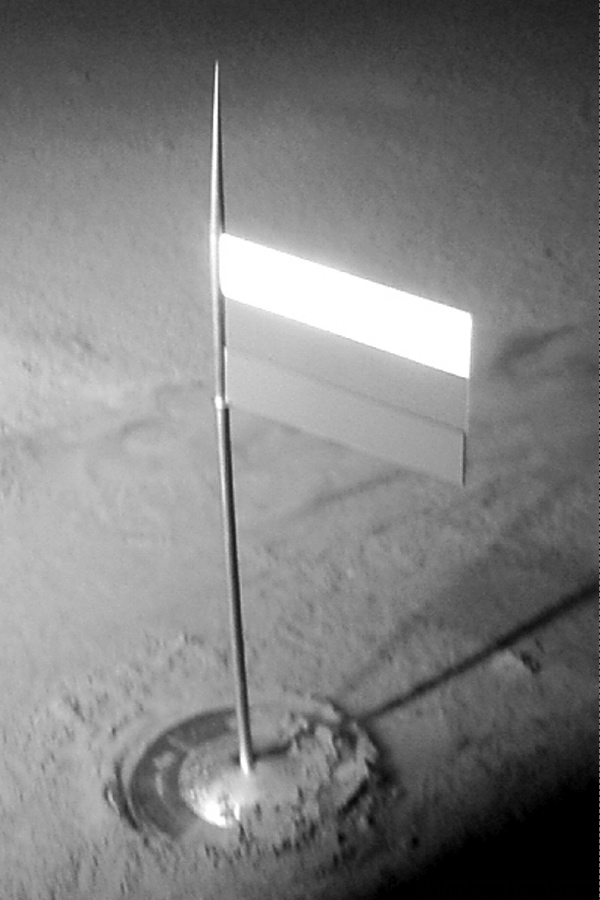
In a planned mission that echoes Russia’s controversial 2007 flag-planting on the seabed at the North Pole, a team of Russian paratroopers is reportedly preparing for a symbolic landing there next spring to mark the 60th anniversary of a Cold War achievement by two Soviet scientists.
The proposed parachute drop, reported Wednesday by the Norway-based Barents Observer and Russian media, is described by a top Russian general as a "peaceful" mission — but one that also symbolizes the "protection of national interest in the northern direction."
Insisting that the operation will not stoke military tensions in the Arctic, Gen. Vladimir Shamanov is quoted as saying: "We do not intend to engage in (sabre-) rattling, we only intend to make a peaceful visit to the North Pole."
But a leading Canadian expert on polar geopolitics expressed astonishment at the brashness of the idea at a time when Canada, Russia and Denmark are gathering geological data to determine ownership of the seabed around the North Pole under a UN treaty.
"The political sensitivity of sending a paratrooper drop at the North Pole?" said University of Calgary political scientist Rob Huebert. "(Consider) the political symbolism and the military capability that that shows — it’s clear the Russians are very much increasing their assertiveness, and I’d say starting to border on aggressiveness, in terms of their intent to show their ability to have control of the Arctic region."
Huebert said the reported involvement in the paratrooper mission of Artur Chilingarov — the Russian politician and Arctic scientist who led the 2007 flag-planting expedition, and has emerged as Moscow’s pointman on all polar issues — only adds to its strategic significance.
"How long is it going to take people to clue in that they mean what they say?" said Huebert, who believes Canada needs to significantly bolster its military capability in the Arctic as a counterweight to the Russian military’s long-standing and extensive presence in the region.
But the planned parachute mission was downplayed by University of British Columbia professor Michael Byers, an expert in international law and author of the forthcoming book Who Owns the Arctic?
"Under international law, the Russians have every right to do this," Byers told Canwest News Service. "The North Pole is part of the high seas, and militaries conduct operations on the high seas all the time."
He added that "this could create an opportunity for international co-operation" if, for example, Canada offered to send a team of paratroopers to join the Russians in a "celebratory" exercise that would "defuse" possible tensions surrounding the event.
Two Russian scientists, Vitaly Volovich and Andrei Medvedev, became the first people to parachute to the frozen surface of the North Pole in May 1949. Next spring’s jump by Russian paratroopers would be a belated 60th anniversary tribute to the Cold War feat, according to news reports.
"I think it’s perfectly appropriate to celebrate technology and celebrate the Arctic, and this would be an opportunity for the Canadian government to reach out and say, ‘This is a great idea, we’d like to come along,’ " said Byers.
Huebert sees more menace in such Russian actions in the Arctic, describing the country’s two-track messaging on polar politics — typically striking a conciliatory tone internationally, but a jingoistic one domestically — as an "iron fist in a velvet glove."
Byers acknowledged that "there is a tendency on the part of some Russian government departments and politicians to push the sovereignty button — just like Canadian and Danish politicians do.
"These actions are usually directed as much toward Russian domestic public opinion as they are to the international domain," he added. But he argues that "one always has to be cautious and careful to seize upon opportunities to defuse the situation, and to turn what could be a provocation into an exercise in diplomacy and co-operation."
— Canwest News Service