

Shoot first, aid later
Police forces under fire for delays in rendering medical assistance after bullets fly
Advertisement
Read this article for free:
or
Already have an account? Log in here »
To continue reading, please subscribe:
Monthly Digital Subscription
$1 per week for 24 weeks*
- Enjoy unlimited reading on winnipegfreepress.com
- Read the E-Edition, our digital replica newspaper
- Access News Break, our award-winning app
- Play interactive puzzles
*Billed as $4.00 plus GST every four weeks. After 24 weeks, price increases to the regular rate of $19.95 plus GST every four weeks. Offer available to new and qualified returning subscribers only. Cancel any time.
Monthly Digital Subscription
$4.99/week*
- Enjoy unlimited reading on winnipegfreepress.com
- Read the E-Edition, our digital replica newspaper
- Access News Break, our award-winning app
- Play interactive puzzles
*Billed as $19.95 plus GST every four weeks. Cancel any time.
To continue reading, please subscribe:
Add Free Press access to your Brandon Sun subscription for only an additional
$1 for the first 4 weeks*
*Your next subscription payment will increase by $1.00 and you will be charged $16.99 plus GST for four weeks. After four weeks, your payment will increase to $23.99 plus GST every four weeks.
Read unlimited articles for free today:
or
Already have an account? Log in here »
Hey there, time traveller!
This article was published 24/09/2016 (3476 days ago), so information in it may no longer be current.
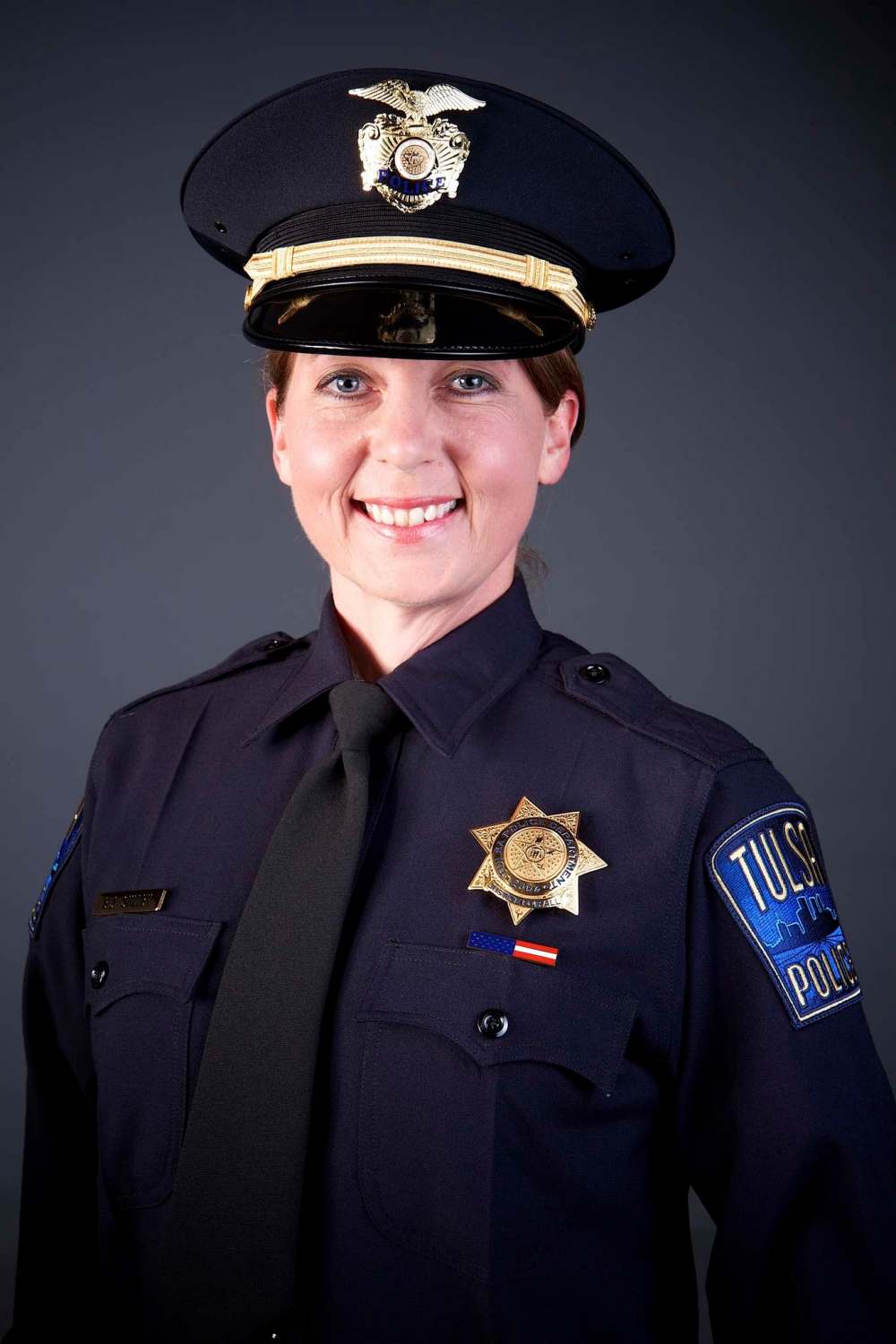
The frantic voice of Tulsa police officer Betty Shelby can be heard bursting into the video as she declares “shots fired.”
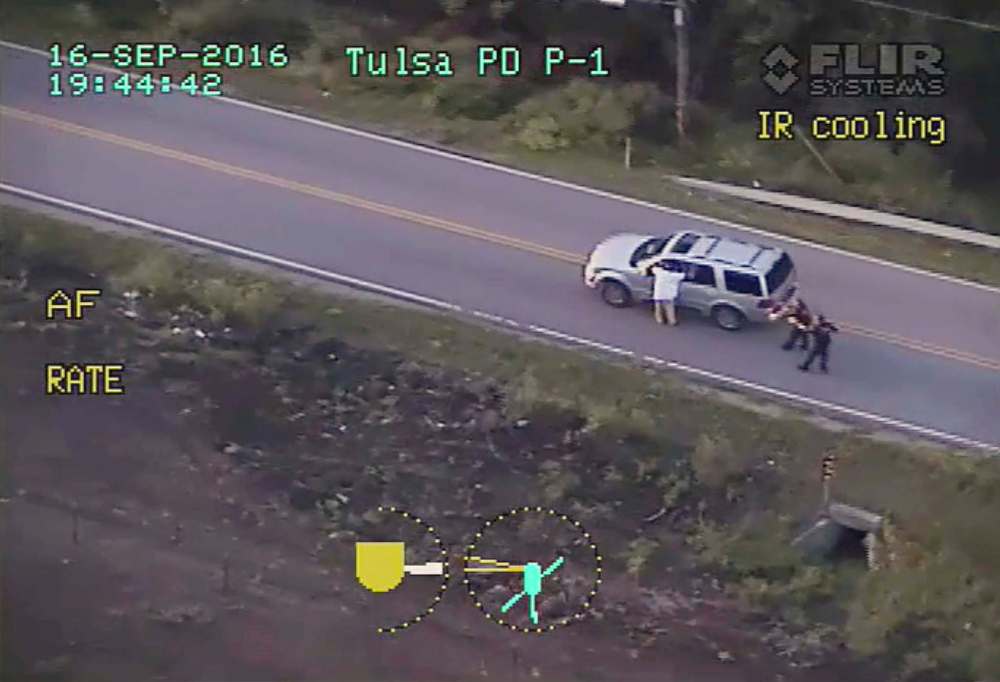
Just a moment earlier, Terence Crutcher, 40 had been hit in the chest with a bullet from Shelby’s service weapon. Now, he lay on the asphalt next to his vehicle as a circle of dark crimson expands across his chest.
Videos released this week of the shooting, which occurred last Friday, next show Shelby being led away from Crutcher’s body by two of her fellow officers. Two other officers can be seen appearing to check his vehicle for any other people or weapons.
About two minutes later, an officer appears to handcuff and search Crutcher. Another thirty seconds later, that officer appears to begin rendering medical aid. Later that night, Crutcher was pronounced dead at a nearby hospital.
In video of the encounter, the length of time between Crutcher’s body hitting the ground and the first officers attempting to provide him aid has enraged many as the video spread throughout the United States, raising again a question posed following a number of high-profile police shootings: why didn’t the officers render medical attention more quickly?
An attorney for Crutcher’s family decried he had been “left in the street to die,” and Ryan Kiesel, the executive director of ACLU of Oklahoma, declared by “shirking their legal and moral obligation to render aid as he lay dying in the street,” it was clear the officers involved “could not care less about whether the black citizens they are sworn to protect live or die.”
“If you see someone as human, as someone who is susceptible to pain, if you view their humanity the same as yours, you’re going to try to find a way to help,” said Rashad Robinson, the executive director of the civil rights group Color of Change. “You’re going to try to get them medical attention.”
Delays or failure to provide medical care for those who have been shot by the police have been a mainstay among the grievances levelled at police by advocates and activists during protests that have followed police shootings during the last two years. Policing experts note, while best practices dictate aid should be provided as soon as officers no longer feel they are facing a threat of violence, officers’ judgment of when that is the case — especially in the moments after a violent incident — are likely to differ from that of the public.
“People have a belief, and it’s a justifiable belief, that the officers should go from a tactical situation to a medical situation very quickly,” said Jim Bueermann, a retired police chief and president of the Police Foundation, a national police research organization.
In New York, officers listened to Eric Garner declare “I can’t breathe” 11 times before he died on a Staten Island sidewalk. In Cleveland, residents were outraged video showed more than four minutes elapsed before anyone attempted to aid 12-year-old Tamir Rice after he was shot by an officer. In Falcon Heights, Minn., earlier this year, Philando Castile could be seen in the live video broadcast by his girlfriend writhing in pain as he bled out after being shot by an officer. The video shows Officer Jeronimo Yanez, seemingly in shock after having just shot Castile, providing no medical response.
Bueermann said in the moments after a shooting, officers need to quickly cycle through several priorities — they must make sure the threat has ceased, secure any weapons or vehicles at the scene, check on the condition of fellow officers and search the person who has been shot — before providing medical aid.
Still, he said in most cases those priorities can be safely exhausted in a matter of seconds.
“I’m not sure that this is completely anchored in the culture of policing yet, but once a shooting occurs and the officers are safe they should be administering emergency first aid as fast as they can,” Bueermann said.
“When they don’t do this, or when officers leave a wounded or dead person uncovered on the ground, as they did in Ferguson, it inflames people,” he said. “People go: this shooting may have been justified, but that person is no longer a threat so they should be helping him.”
Expectations of how much medical care will be provided by officers after a shooting vary from department to department, and often fall short of what some in the public might expect. For example, after the video of the police shooting of Laquan McDonald was released last year, officials with the Chicago Police Department and the officers’ union said if an officer had radioed for a medical transport or called 911 after a shooting, he or she had fulfilled their duty.
“Our officers are trained to dial or to call paramedics,” police union president Dean Angelo told Fox32 in Chicago. “They’re not trained in first aid, they’re not there to supply CPR or to stop the flow of blood.”
Department officials said this week they have a voluntary program that provides officers with first aid training, but officers have to purchase first aid gear themselves.
“We are currently working with the Chicago Police Foundation to raise private funds so that we can equip every police officer in the city,” said Anthony Guglielmi, a spokesman for the Chicago Police Department, who added the Chicago Fire Department is dispatched along with police officers to calls that include injuries in order to provide on-the-scene aid.
Following Tamir Rice’s shooting, officials in Cleveland provided additional first aid training to 1,400 of the department’s officers and implemented a policy effective September 2015 that requires officers to immediately call for emergency medical services and, depending on the specifics of the situation, provide trauma care to a wounded person themselves. The department also spent US$100,000 to outfit its cruisers with trauma kits, according to a release issued last year.
“Our officers are certified in first aid in an effort to enhance our response to critical incidents,” Sgt. Jennifer Ciaccia, a spokeswoman for the Cleveland Division of Police, said in an email.
In New York, police officials began training all of their officers in advanced first aid earlier this year — prompted, at least in part, by the testimony of former NYPD officer Peter Liang, who told a jury he did not provide medical aid to Akai Gurley, an unarmed black man he accidentally shot, because he did not know CPR, a claim department leaders have disputed.
“To not have your officers fully trained in first aid would be criminal, metaphorically speaking. And the same goes for not having taught them that they need to render aid” said David Klinger, a former police officer and professor at the University of Missouri-St. Louis. “It’s literally part of the police mandate — to protect life, even if it’s the life of someone who you might have shot.”
Policing experts believe most, if not all officers, are trained in emergency first aid, however how much medical training a police officer receives varies from state to state.
In Oklahoma, officers are required to undergo 583 hours of training before they can become certified by the state, said Chuck Gerhart, assistant director of the state’s Council on Law Enforcement Education and Training. That training is carried out either at CLEET’s training facility, or at one of six certified academies run by various departments — including Tulsa PD. Of those training hours, eight of them are for first aid and CPR. Policies dictating how quickly an officer should provide medical aid after a shooting, however, vary by department and are not dictated by state officials.
Officers in Oklahoma City, for example, are subject to a written policy that states officers are responsible for rendering aid and/or summonsing medical attention in addition to securing the scene and identifying witnesses and evidence.
“Our officers receive training as first responders because that’s what we are and that’s what we do,” said Lt. Juan Balderrama of the Oklahoma City Police Department. “Absolutely our officers are trained to render aid to people who have been wounded.”
Meanwhile, in Tulsa, where Crutcher was killed, the department has no official policy regarding officers’ responsibility to provide medical aid to people who have been shot or otherwise wounded by officers, however officers do undergo about 16 hours of medical training.
“Our standard procedure is to request medical assistance as soon as possible,” said Jeanne MacKenzie, a spokeswoman for the Tulsa Police Department, who said the department has no formal policy that covers officers rendering aid after an on-duty shooting. “Currently officers are being trained to render aid, but not every officer has medical equipment in their patrol vehicles.”
Officers in Tulsa attend eight hours of CPR and first-aid training in the academy, and then an additional eight hours of tactical medical training, MacKenzie said, which focuses on stopping arterial bleeds, clearing blocked airways, and treating penetrating chest injuries,” she said.
Even when officers are trained in trauma care, medical experts caution that short of quickly getting the wounded person to a trauma centre, in many cases there is limited medical help a police officer can provide to someone who has been shot by an officer or by another civilian.
“The closer you get to a wound that is centre-mass, it eventually becomes essentially impossible for a police officer or a paramedic to effectively treat that wound,” said Alex Eastman, deputy medical director of the Dallas Police Department, who said officers in his department are trained to render medical aid. “At some point there is nothing to do but get the person the fastest transportation to a trauma centre that you can find.”
Eastman said while it can look bad when the video of an officer-involved shooting doesn’t immediately rush to someone who has been shot to render aid, in many cases the priority should making sure transportation to a medical centre is on its way.
“There is no question that the shorter the interval from the time of the wound to the entrance of the operating room, the better the patient is going to do, so we should be focusing our efforts on shortening that interval,” Eastman said.
— The Washington Post