

Stranded at the station
As Europe closes its doors to migrants, hundreds huddle behind depot in Serbia
Advertisement
Read this article for free:
or
Already have an account? Log in here »
To continue reading, please subscribe:

Digital Subscription
One year of digital access for only $205*
- Enjoy unlimited reading on winnipegfreepress.com
- Read the E-Edition, our digital replica newspaper
- Access News Break, our award-winning app
- Play interactive puzzles
*First annual payment billed as $205.00 + GST for one year. This annual subscription will automatically renew at $233.00 + GST every 52 weeks (10% off the regular annual price of $259.35). Offer available to new and qualified returning subscribers only. Cancel any time.
To continue reading, please subscribe:
Add Free Press access to your Brandon Sun subscription for only an additional
$1 for the first 4 weeks*
- Enjoy unlimited reading on winnipegfreepress.com
- Read the E-Edition, our digital replica newspaper
- Access News Break, our award-winning app
- Play interactive puzzles
*Your next Brandon Sun subscription payment will increase by $1.00 and you will be charged $17.95 plus GST for four weeks. After four weeks, your payment will increase to $24.95 plus GST every four weeks.
Read unlimited articles for free today:
or
Already have an account? Log in here »
Hey there, time traveller!
This article was published 12/03/2017 (3462 days ago), so information in it may no longer be current.
BELGRADE, Serbia — He was, by his account, the go-to shopkeeper for U.S. troops at a small outpost in northern Afghanistan, stocking appliances, construction materials, the latest headphones and an endless supply of Monster energy drinks.
Then the base closed, the Americans departed, and Taliban threats against his life began.
Now Tariq Stanikzay sleeps alongside six other Afghan men in a freezing metal shed behind the main train station in Belgrade, the Serbian capital, with blankets and strips of cardboard pressed against the walls for insulation.
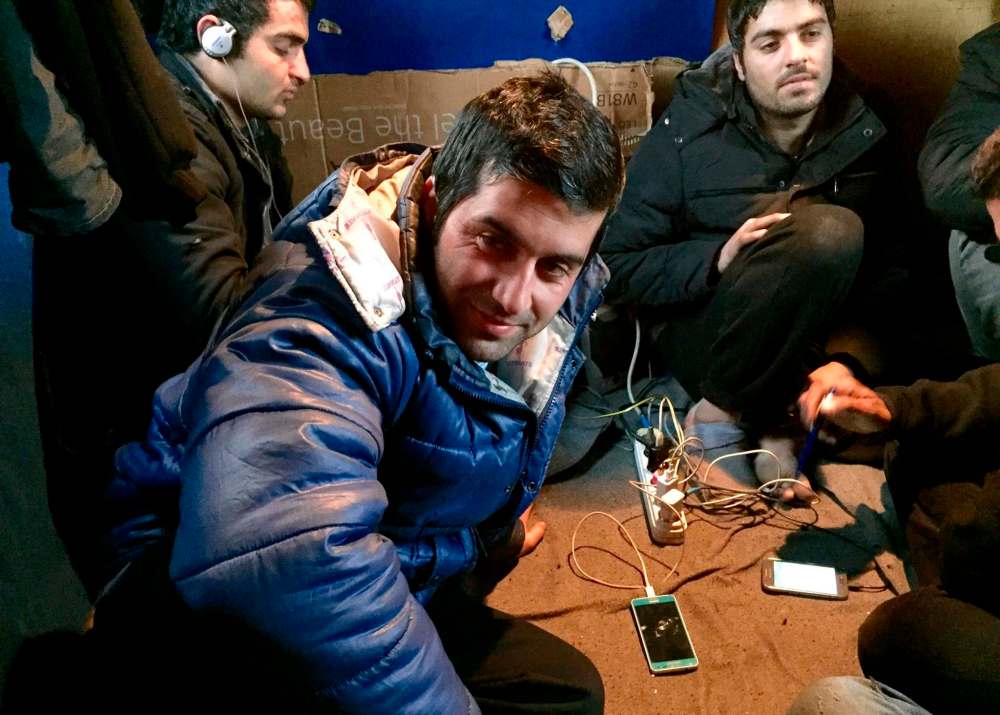
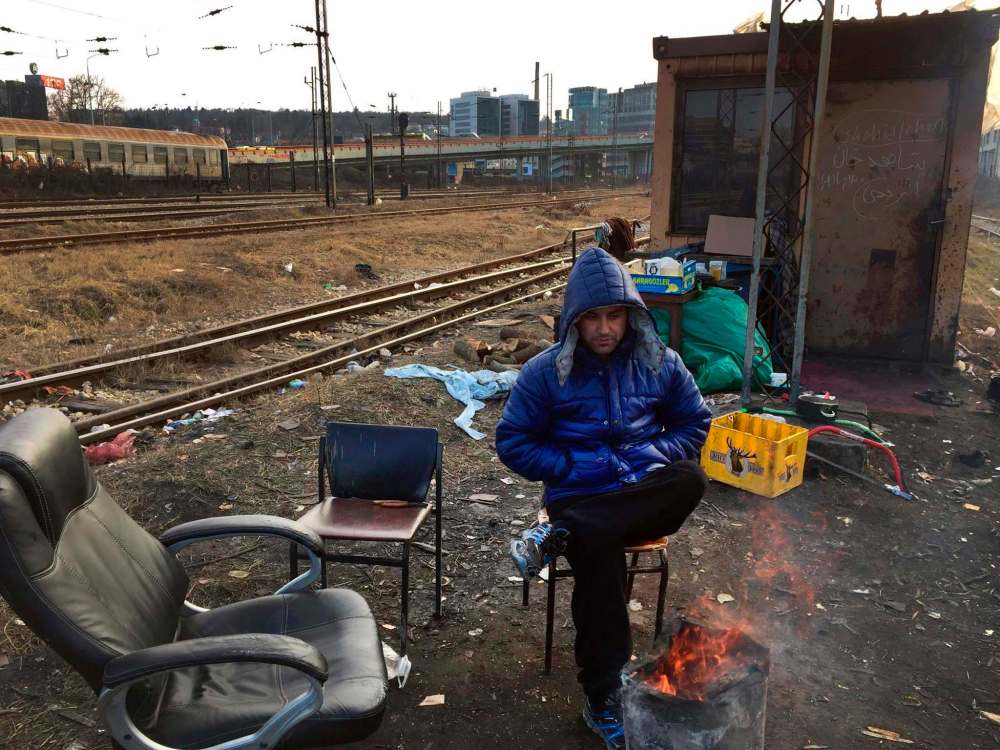
Hundreds of Afghans, Pakistanis, Syrians and others huddle here in abandoned warehouses and sheds that run along the tracks of the 19th century depot, burning donated firewood, old boxes and strips of tires during a winter when nighttime temperatures have touched -17 C.
This is where their flight from poverty and violence has ended, at least for now: at the doorstep to a Europe that is trying to shut the door on migrants.
Dark smoke from the fires stings their eyes and throats, then puffs through cracked windowpanes into the grey sky. Men step across rivers of trash and wash themselves from public taps, yelping as the cold water hits their shivering skin.
At night, they boil pots of tea and huddle around the flames, young faces creased with the worry their dreams of a life in Europe have grown more elusive than ever.
“I feel that I’m very unlucky,” said the 25-year-old Stanikzay, who left Afghanistan last fall after the U.S. rejected his asylum application, emails he provided to the Los Angeles Times state.
“Before, the way to Europe was easier. I have so many friends who made it to Britain and Germany. But as soon as I started on this journey, everything closed.”
The Balkan nation of Serbia was once a brief stop along the overland route to western Europe. In 2015, approximately 800,000 refugees and migrants passed through the country, according to government figures. Those numbers have plunged since last March as Europe tried to close the so-called Balkan route and Serbia’s European Union neighbours erected razor-wire fences and employed harsh police tactics along their borders.
Smugglers continue to use the route, bringing 100,000 migrants through Serbia over the past 12 months, the government estimates. Here they are often stranded for months, making multiple attempts to continue into the next country.
Stanikzay has tried six times to sneak over the border into the EU countries of Hungary, Croatia or Romania, continuing a journey he hopes will end with asylum in Britain. Each time, he has been stopped by baton-wielding security forces and guard dogs and sent back, returning to this squalid migrant camp in the shadow of the train station.
Doctors Without Borders has set up medical tents, and local charities distribute basics such as bread and toilet paper. The grim conditions have drawn comparisons to “the Jungle,” the sprawling migrant camp in Calais French authorities cleared last fall.
“I’d like someone to explain to me how people can be living in these circumstances on the world’s richest continent,” said Lydia Gall, eastern Europe researcher for Human Rights Watch.
Stanikzay initially slept on the cold concrete inside the warehouses but left after a lice outbreak and because the smoke from burning tires gave him a bad cough. His shed lies between the train tracks and a rock-strewn construction site where a US$3.7 billion, Emirati-financed complex of hotels and luxury apartments is rising at the confluence of the Danube and Sava rivers.
The youngest of seven brothers, Stanikzay ran a shop for several years for U.S. troops at Combat Outpost Xio Haq, in Laghman province east of Kabul. On Christmas Day in 2011, he and his brother Zahid, a military interpreter, submitted applications for special immigrant visas, designed to allow Afghans who worked for U.S. forces to resettle in America.
After the U.S. closed the base in 2013, Taliban militants posted two letters on the walls of the mosque in their village, threatening the brothers by name for working with the Americans. Stanikzay tore up the first in anger, but his brother kept the second, hoping it would bolster their chances for asylum, ex-soldiers familiar with their case said.
‘I’d like someone to explain to me how people can be living in these circumstances on the world’s richest continent’ — Lydia Gall of Human Rights Watch
Zahid’s application was eventually approved, allowing him and his wife to move to Denver. But in 2015, U.S. officials rejected Stanikzay on the grounds he had not formally been a military employee, he said.
Stanikzay feared militants would not see the distinction. In 2016, residents in their village began hearing fighters loyal to the Islamic State group had settled in the province. Rumours circulated that the militants had biometric scanning machines that would identify anyone who had worked with foreign troops.
“I panicked,” Stanikzay said over the din of a passing train.
He set off six months ago, crossing into Iran, Turkey and then the EU nation of Bulgaria, the start of the Balkan route. At the border, he was beaten by Bulgarian police and detained for several weeks in a walled-off migrant camp. Other refugees say they have been forcibly pushed back across the border by security forces — and, in some cases, local vigilantes — in what human rights groups describe as violations of international laws protecting asylum seekers.
Those who make it to Serbia, which lies outside the EU, complain of similar treatment at its northern borders — particularly from police in Hungary, whose hard-line prime minister has called immigration “poison.”
Faisan Hazarmir, a 16-year-old Afghan, trudged into the warehouse one recent evening, his feet stuffed into a ratty pair of shoes two sizes too small.
The lanky teenager had just been sent back from the border — it was his eighth or ninth attempt at what smugglers call “the game” — by Hungarian police who assaulted him with sticks, broke his phone, rubbed snow in his hair and confiscated his shoes, he said. He rode a bus back to Belgrade wearing a pair of boots he found abandoned by another migrant.
Like most, Hazarmir has no interest in seeking asylum in Serbia. “But the police here treat us 1,000 times better than in Hungary,” he said.
Having taken in nearly one million refugees during the Balkan wars of the 1990s, Serbian officials say they are committed to respecting the rights of the current wave of asylum seekers, even as they warn they cannot take in many more. The country hosts more than 6,600 migrants in 17 government-run centres with hot meals and heating. At the same time last year, there were just 2,000.
“We are only a transit country, so we can only be a good host on their perilous journey,” said Ivan Miskovic, spokesman for the Serbian government commission on refugees.
“What’s very frustrating for the migrants is that they reach right to the gates of Europe, but they can’t continue.”
Humanitarian officials wonder whether Serbia — which is seeking EU membership — will eventually adopt the tougher border policies of its neighbours.
“We’ll see more pressure from upstream countries on Serbia to close the border,” said Mirjana Milenkovski, spokeswoman for the United Nations refugee agency in Belgrade.
“You’ll see Serbia try to act as a good soldier, but under pressure to adopt these unlawful tactics.”
During one of the coldest winters in years, with frostbite racing through the migrant camp, the Serbian government last month opened a new shelter at an old military barracks half an hour south of Belgrade. It is now home to roughly 700 men and boys who sleep in bunk beds and take meals in a canteen — but harbour hopes of continuing to Europe once the weather improves.
Ismail Omar, a 52-year-old painter from Homs, Syria, reached Serbia with his son three months ago. On their last attempt to cross into Hungary, muzzled police dogs clawed at his foot, leaving him with a limp.
“I came here to rest, eat and relax, and then we will try again,” said Omar, who said he had paid smugglers US$8,000 to get him this far.
“We will try again and again until we die.”
Stanikzay and others remain near the train station where they have easier access to smugglers, or because of false rumours Serbian authorities will deport them from the shelters. Thanks to cheap mobile Internet — and a Good Samaritan who connected their shed to a power line a few weeks ago — Stanikzay spends most of his days on Facebook or texting smugglers about the next “game.”
As the borders grow tighter, migrants are adopting riskier tactics. Last month, about 20 Afghans led by Pakistani smugglers tried to cross into Hungary over the frozen Tisza River. The ice cracked under their feet, and one man drowned.
Stanikzay remained hopeful. Just days before, he said, nine Afghan friends reached Hungary by hiding in the back of a cargo truck.
“I have to keep trying. I’ll never go back to Afghanistan,” Stanikzay said.
He stepped outside and pulled the hood of his jacket tightly over his head.
“Sometime in the future, when I sit in a warm place, I’ll think back on this and remember everything.”
— Los Angeles Times