Blinded by grief, now she can see
Advertisement
Read this article for free:
or
Already have an account? Log in here »
To continue reading, please subscribe:

Digital Subscription
One year of digital access for only $205*
- Enjoy unlimited reading on winnipegfreepress.com
- Read the E-Edition, our digital replica newspaper
- Access News Break, our award-winning app
- Play interactive puzzles
*First annual payment billed as $205.00 + GST for one year. This annual subscription will automatically renew at $233.00 + GST every 52 weeks (10% off the regular annual price of $259.35). Offer available to new and qualified returning subscribers only. Cancel any time.
To continue reading, please subscribe:
Add Free Press access to your Brandon Sun subscription for only an additional
$1 for the first 4 weeks*
- Enjoy unlimited reading on winnipegfreepress.com
- Read the E-Edition, our digital replica newspaper
- Access News Break, our award-winning app
- Play interactive puzzles
*Your next Brandon Sun subscription payment will increase by $1.00 and you will be charged $17.95 plus GST for four weeks. After four weeks, your payment will increase to $24.95 plus GST every four weeks.
Read unlimited articles for free today:
or
Already have an account? Log in here »
Hey there, time traveller!
This article was published 09/10/2010 (5794 days ago), so information in it may no longer be current.
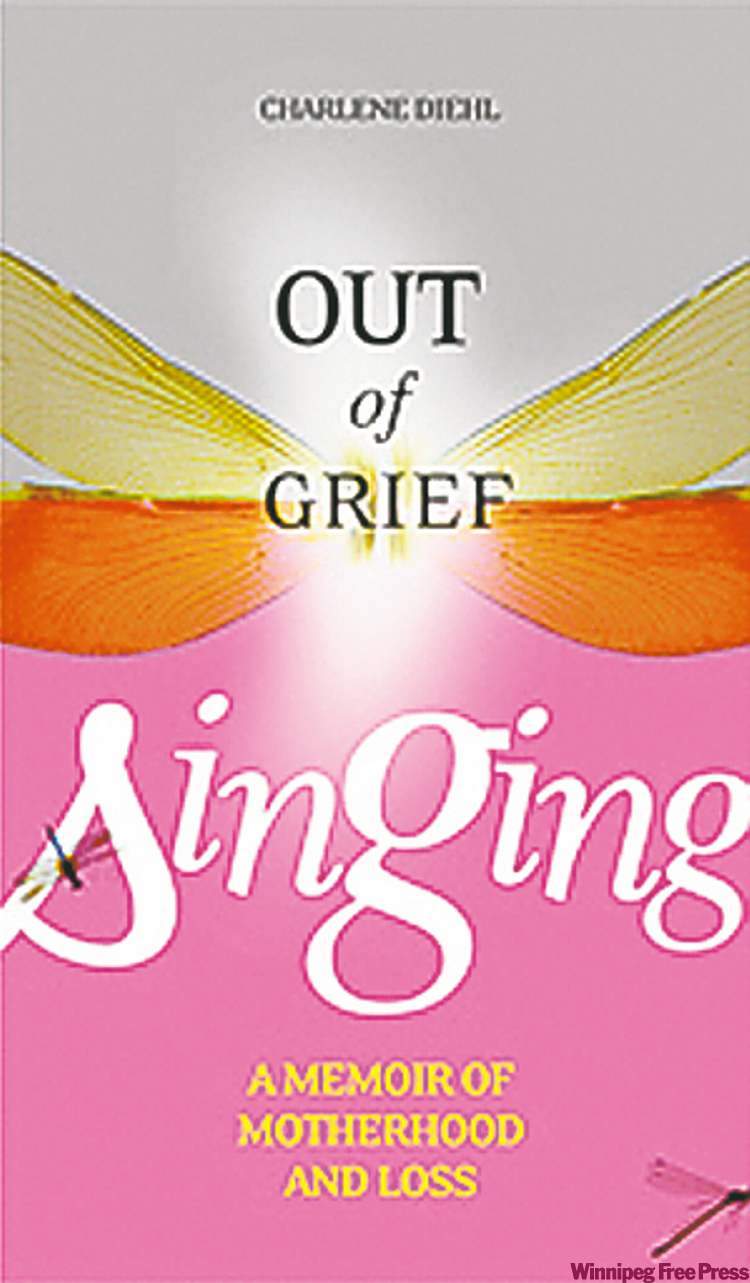
Out of Grief, Singing
A Memoir of Motherhood and Loss
By Charlene Diehl
Signature Editions, 155 pages, $19
American novelist Jodi Picoult is acclaimed for her gut-wrenching women’s stories, like the story of the euthanasia pact between two siblings in My Sister’s Keeper.
This memoir of losing an infant, by the director of the annual Winnipeg literary festival Thin Air, digs one level deeper and rises a literary plane higher than Picoult ever could.
Charlene Diehl’s account of a life-altering time 15 years ago, when she was in her early 30s, is presented in diary form. She lays bare the utter despair of her situation, even after it has been replaced by a good life marching on.
Diehl tells the story of birthing and then losing her first child, a daughter, Chloe, six days later. The baby’s unexpected extraction from Diehl’s womb is worsened by the fact that Diehl herself experiences medical catastrophe. “I have crossed a threshold I couldn’t see,” she writes. “I have become an emergency.”
Diehl finds herself collapsing before she reaches Chloe in the hospital’s neo-natal unit.
“No matter what the angle, nothing is good about our situation,” she writes.
“[My] baby is facing inhuman demands just to stay alive, all of us are desperate with worry, and today’s excursion confirms beyond doubt that I am too ill to visit her.”
During her multiple dark moments, Diehl introduces the members of her family who are helping to carry her through. However, Diehl does not overly develop her characters, like husband Bill, from whom she later separates, or her mother, who stays with her daughter on the front lines of her trauma.
Diehl leaves the impression that the granular detail of her experience, and her experience alone, is what she needs to birth in order to bring death to that time in her life.
After Chloe dies, the painfulness of the memoir spikes. It is almost impossible to read Diehl’s account of her working on Chloe’s simultaneous birth and death announcement. She records Chloe’s name, birth date and weight next to the ink prints of her tiny feet, impressed after her death.
Two years later, Diehl is heavily pregnant again. She finds herself anticipating a new life but still struggling with how to continue to honour her lost daughter.
During a visit to her obstetrician, she discovers that Chloe’s birth announcement, despite its sorrowful brevity, is included in the proud showcase of babies whom the doctor has brought into the world.

For Diehl, the moment is a breakthrough to joy. She realizes that “whoever assembles this ever-growing pile of photos came upon Chloe’s and chose to include my baby among the other babies. A gratitude bigger than language sweeps up through me.”
This moment also makes her realize that her mourning has cauterized her ability to write. “Language,” she writes, “has had little traction in my grief world.”
To overcome being “a writer without words,” Diehl decides to exorcise her memories by giving them away. At the threshold of bringing a healthy, thriving son into the world, Diehl turns inward and finds reconciliation by “looking at my own effort to tell my way back into wholeness.”
Although some may find her telling overly indulgent, anyone who needs to navigate through deep sorrow will identify with Diehl’s in-depth account.
Joanne Thibault works in the public sector in Winnipeg.