

Modernist buildings have a story to tell
Preserve balance between past and present

Advertisement
Read this article for free:
or
Already have an account? Log in here »
To continue reading, please subscribe:

Digital Subscription
One year of digital access for only $205*
- Enjoy unlimited reading on winnipegfreepress.com
- Read the E-Edition, our digital replica newspaper
- Access News Break, our award-winning app
- Play interactive puzzles
*First annual payment billed as $205.00 + GST for one year. This annual subscription will automatically renew at $233.00 + GST every 52 weeks (10% off the regular annual price of $259.35). Offer available to new and qualified returning subscribers only. Cancel any time.
To continue reading, please subscribe:
Add Free Press access to your Brandon Sun subscription for only an additional
$1 for the first 4 weeks*
- Enjoy unlimited reading on winnipegfreepress.com
- Read the E-Edition, our digital replica newspaper
- Access News Break, our award-winning app
- Play interactive puzzles
*Your next Brandon Sun subscription payment will increase by $1.00 and you will be charged $17.95 plus GST for four weeks. After four weeks, your payment will increase to $24.95 plus GST every four weeks.
Read unlimited articles for free today:
or
Already have an account? Log in here »
Hey there, time traveller!
This article was published 08/11/2010 (5767 days ago), so information in it may no longer be current.
In 2007, the American Institute of Architects launched a public survey to identify “America’s Favourite Architecture.” With the Empire State Building, the White House and the Washington National Cathedral finishing in the Top 3, the list exposed a strong public connection with heritage buildings. Of the Top 50 favourite structures in the United States, only five were built after the Second World War.
These results raise the question: Do people prefer historic buildings for their character and style or, like a favourite pair of faded blue jeans, is time and familiarity an important factor in the public perception of architecture? Will the steel and glass modernist buildings that replaced these styles be just as well-loved when they are old enough to be considered historic? If so, should we work to protect them in the same way we do the brick buildings of the Exchange District?
The answers to these questions are of particular importance for Winnipeg, a city celebrated for its historic buildings, but less well known as home to one of the finest surviving collections of modernist architecture in Canada.
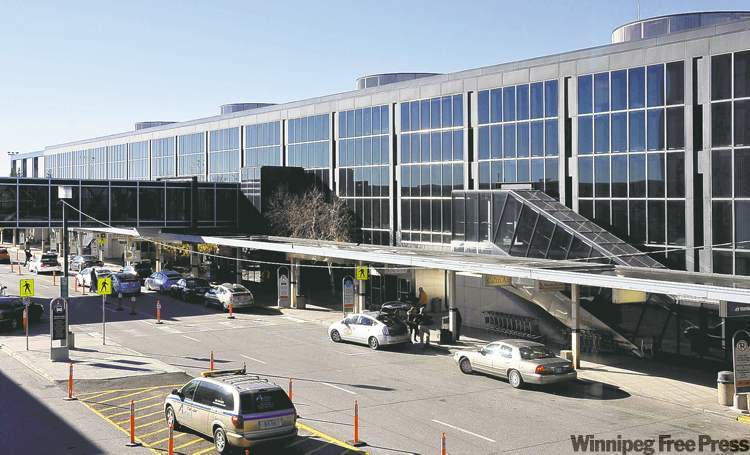
Emerging in the 1950s, modernism was an architectural movement that rejected the ornamentation of the past and celebrated the technological advancements of the 20th century. Heavy walls of stone were replaced with large curtains of glass flooding light into open interior spaces. The decorative motifs of the past gave way to a machine-inspired look of exposed structure and clean, austere lines.
Examples of this style, both large and small, can still be found in every Winnipeg neighbourhood. The Centennial Concert Hall and MTC Theatre, the Great West Life and Workers Compensation buildings, Shaarey Zedek Synagogue, Kildonan Park Pavilion and even the Bridge Drive-in (BDI) on Jubilee are all remnants of the modernist era.
The soon-to-be-replaced terminal building at the Richardson International Airport is one of Winnipeg’s most significant representatives of this movement. Designed by GBR Architects in 1964, it stands as the only remaining example of a federal initiative to modernize Canada’s national image by constructing a series of new airports across the country. Much like the railway did decades earlier, these new jet-age terminals were an effort to unify and inspire the country.
At its opening, the Winnipeg airport was considered to be one of the finest examples of modernist architecture in Canada. With the nation’s largest public art installation and its vast mezzanine floating in a light-filled open volume, it exemplified the romantic notion of air travel at the time.
Serving for decades as our city’s front door and welcome mat, the impending demolition of a building that has contributed more to Winnipeg’s historic narrative than almost any other, is causing some to evaluate the importance of placing modernist buildings under the protective wing of the heritage preservation movement.
Modernist buildings like the airport are a physical record of a period in our history, representing a moment in time no less significant than that of the brick warehouses downtown. Modernism was an expression of enthusiasm and optimism in a country trying to remove itself from two world wars and the Great Depression. During this time, cars became fanciful pieces of sculpture, Bing Crosby and Glenn Miller were replaced by Little Richard and Elvis Presley. Modernism was the architectural manifestation of that same cultural shift. Its clean lines were seen at the time as the rock ‘n’ roll of architecture.

While it is often difficult to see these buildings less as a part of our current era and more a part of a greater historic timeline, the old airport terminal is forcing us to give consideration to the collective importance of these structures and what they represent. We have gone to great lengths to preserve our two historic train stations. What public efforts should be made to preserve their equally significant modern cousin?
A wonderful example of the reward that modernist preservation efforts might yield can be found at the new Manitoba Blue Cross offices near Polo Park. Originally designed by LM Architectural Group in 1959, the long vacant building was saved from demolition, restored and enhanced by Stantec Architecture and is now a beautiful part of the Winnipeg cityscape. The key lesson in this example is that we not rush to judgment with these buildings. As the list of America’s favourite architecture indicates, time affords perspective and a maturation of public opinion.
It is important not to stand in the way of progress or pretend that time is frozen, but establishing a balance between the past and present by protecting important buildings from the various chapters of our history will enhance the texture of our city’s fabric and preserve the stories that it is able to tell in the future.
Brent Bellamy is senior design architect for Number Ten Architectural Group. Email him at Bbellamy@numberten.com.
Brent Bellamy is creative director for Number Ten Architectural Group.
Our newsroom depends on a growing audience of readers to power our journalism. If you are not a paid reader, please consider becoming a subscriber.
Our newsroom depends on its audience of readers to power our journalism. Thank you for your support.
Brent Bellamy is creative director for Number Ten Architectural Group.
Our newsroom depends on a growing audience of readers to power our journalism. If you are not a paid reader, please consider becoming a subscriber.
Our newsroom depends on its audience of readers to power our journalism. Thank you for your support.
Advertisement Advertise With Us
Advertisement Advertise With Us