

Harper takes aim at vote subsidies
Promise to kill funding unites opposition
Advertisement
Read this article for free:
or
Already have an account? Log in here »
To continue reading, please subscribe:
Monthly Digital Subscription
$1 per week for 24 weeks*
- Enjoy unlimited reading on winnipegfreepress.com
- Read the E-Edition, our digital replica newspaper
- Access News Break, our award-winning app
- Play interactive puzzles
*Billed as $4.00 plus GST every four weeks. After 24 weeks, price increases to the regular rate of $19.95 plus GST every four weeks. Offer available to new and qualified returning subscribers only. Cancel any time.
Monthly Digital Subscription
$4.99/week*
- Enjoy unlimited reading on winnipegfreepress.com
- Read the E-Edition, our digital replica newspaper
- Access News Break, our award-winning app
- Play interactive puzzles
*Billed as $19.95 plus GST every four weeks. Cancel any time.
To continue reading, please subscribe:
Add Free Press access to your Brandon Sun subscription for only an additional
$1 for the first 4 weeks*
*Your next subscription payment will increase by $1.00 and you will be charged $16.99 plus GST for four weeks. After four weeks, your payment will increase to $23.99 plus GST every four weeks.
Read unlimited articles for free today:
or
Already have an account? Log in here »
Hey there, time traveller!
This article was published 02/04/2011 (5490 days ago), so information in it may no longer be current.
OTTAWA — Stephen Harper has reprised his famous role as a coalition-busting slayer of vote subsidies in the hope of casting himself as the star of a new Conservative majority government.
The prime minister turned his long-stated desire to scrap the $2-a-vote subsidy for political parties — which nearly cost him power in 2008 — into a formal campaign pledge Friday, with two caveats:
First, Harper said he needs a majority to do it. He also promised to introduce the measure slowly, over a three-year period, so that opposing parties would not see themselves financially strangled.
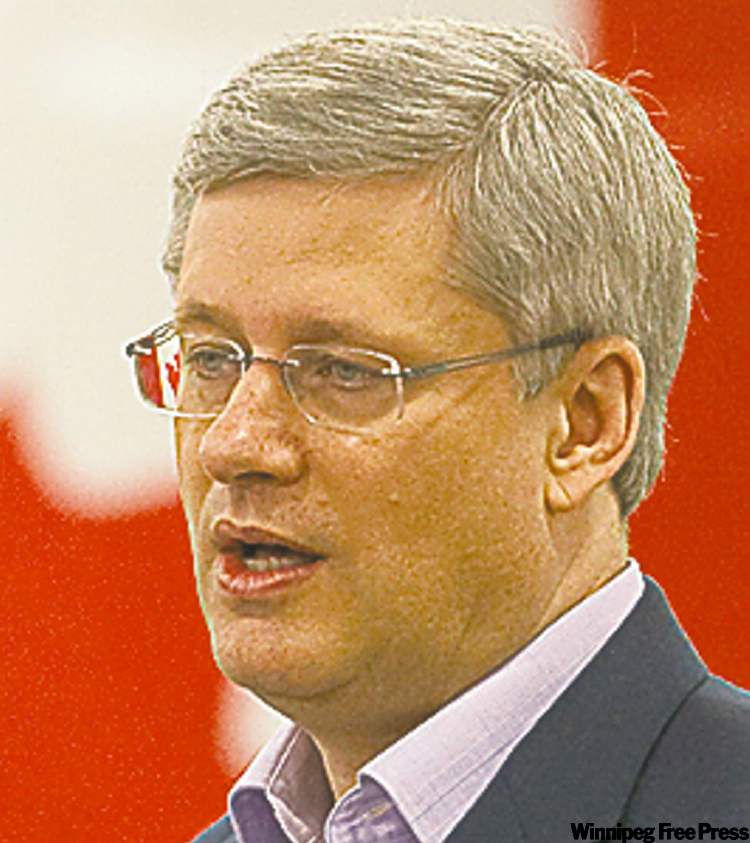
His opponents weren’t swayed. The Conservatives dwarf their rivals in fundraising and they believe this change would give Harper’s troops a near-insurmountable financial edge.
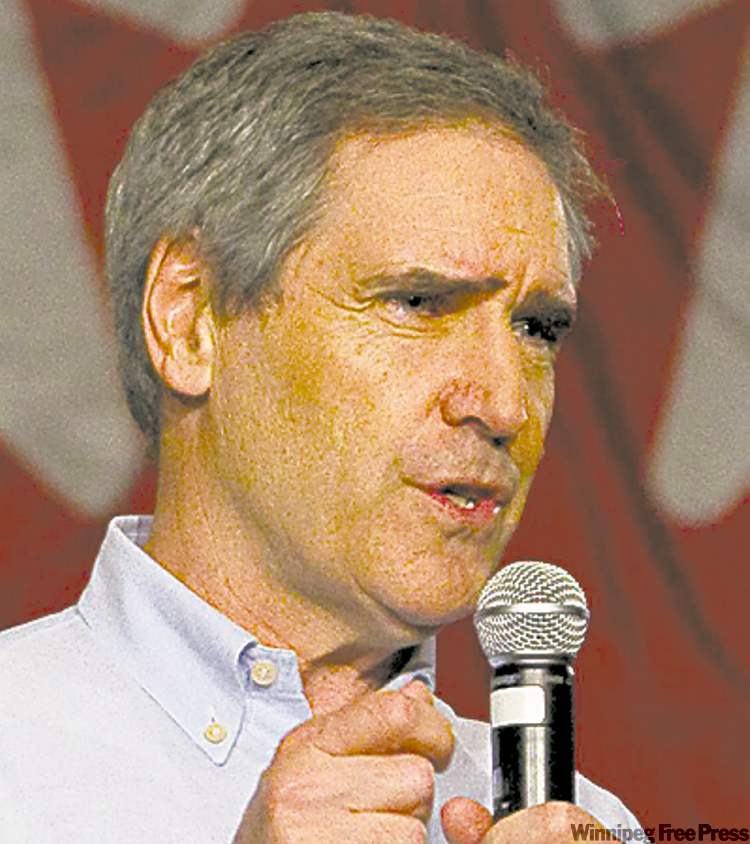
The opposition parties castigated the idea Friday as forcefully as they did 27 months ago, when a showdown over public subsidies poisoned the atmosphere in Parliament and nearly toppled the Tories. Liberal Leader Michael Ignatieff said the idea would lead to “American-style attack politics” in Canada. The Bloc Québécois and NDP warned it could mean a return to the bad old days when cash ruled politics.
That pile-on by the opposition may have been the exact response Harper was looking for.
The prime minister enjoyed the best poll numbers of his political life just over two years ago, when he squared off against his Liberal-NDP-Bloc foes in the showdown over subsidies and coalitions.
Now he’s betting it could happen again.
Harper began the campaign with fire-and-brimstone warnings about a coalition and, to keep those embers crackling, he ended Week 1 by resurrecting his promise on vote subsidies.
His message was designed to channel public anger on two fronts: tax rage and voter fatigue. Harper argued public subsidies are at the root of frequent elections since 2004.
“Taxpayers shouldn’t have to support political parties that they don’t support. I think that’s people’s choice,” Harper said in Dieppe, N.B.
“This enormous cheque that keeps piling into parties every month whether they raise any money or not means we’re constantly having campaigns, the war chests are always full for another campaign.”
Harper said even his party would have to adapt to a new reality. Last year, the Tories received $10.4 million, versus $7.3 million for the Liberals, $5 million for the NDP and $2.7 million for the Bloc Québécois.
But the elimination of the subsidy would give the Conservatives a commanding advantage over their rivals based on money raised in recent years. The Tories raked in $17.8 million in 2009 — almost double the $9 million for the Liberals.
It should be noted that during his two-year crusade against public subsidies, the prime minister has never hinted at cutting the tax refund for individual contributions, where his Tories hold a huge advantage.
The opposition parties warned Harper’s gambit could have negative long-term consequences on Canadian democracy.
“Mr. Harper wants to bring American-style attack politics into Canada,” the Liberal leader replied. “He’s been doing it for 2.5 years. This is Canada. We have a Canadian electoral system that limits the influence of big money in politics.”

The NDP’s Jack Layton said Canada has built a fair system that shouldn’t be tampered with.
“Do we want to go back to the days where money and those who could finance campaigns determine the nature of our democracy? I don’t want to go there,” Layton said.
“I think a mixed approach that has people making contributions, mixed with some public support, gives us a vibrant democracy where big money doesn’t have the same play.”
— The Canadian Press
Related Articles
Liberals win 4th mandate as NDP vote collapses and Singh announces he will resign





Advertisement Advertise With Us
Advertisement Advertise With Us