Series finale lets down readers
Advertisement
Read this article for free:
or
Already have an account? Log in here »
To continue reading, please subscribe:

Digital Subscription
One year of digital access for only $205*
- Enjoy unlimited reading on winnipegfreepress.com
- Read the E-Edition, our digital replica newspaper
- Access News Break, our award-winning app
- Play interactive puzzles
*First annual payment billed as $205.00 + GST for one year. This annual subscription will automatically renew at $233.00 + GST every 52 weeks (10% off the regular annual price of $259.35). Offer available to new and qualified returning subscribers only. Cancel any time.
To continue reading, please subscribe:
Add Free Press access to your Brandon Sun subscription for only an additional
$1 for the first 4 weeks*
- Enjoy unlimited reading on winnipegfreepress.com
- Read the E-Edition, our digital replica newspaper
- Access News Break, our award-winning app
- Play interactive puzzles
*Your next Brandon Sun subscription payment will increase by $1.00 and you will be charged $17.95 plus GST for four weeks. After four weeks, your payment will increase to $24.95 plus GST every four weeks.
Read unlimited articles for free today:
or
Already have an account? Log in here »
Hey there, time traveller!
This article was published 14/05/2011 (5590 days ago), so information in it may no longer be current.
The Land of Painted Caves
By Jean M. Auel
Crown, 768 pages, $35
Many people, young and old, are familiar with the Earth’s Children series.
Indeed, three generations are avid readers of Jean M. Auel’s novels and were excited to hear that the 75-year old American author had released her sixth and final novel about the prehistoric adventures of the Cro-Magnon woman Ayla and her Neanderthal squeeze, Jondalar.
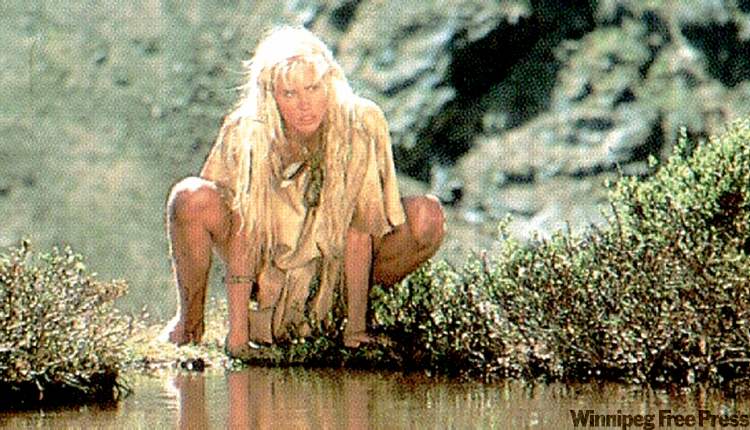
The first in the series, The Clan of the Cave Bear, came out in 1980 (and was adapted into the 1986 Daryl Hannah movie). It has been almost 10 years since the last book, The Shelters of Stone.
Auel’s fans have been waiting eagerly to delve into the pages of yet another meticulously researched, fascinating and original epic and to finally complete the story of what may be one of the most loved literary characters of the 20th century.
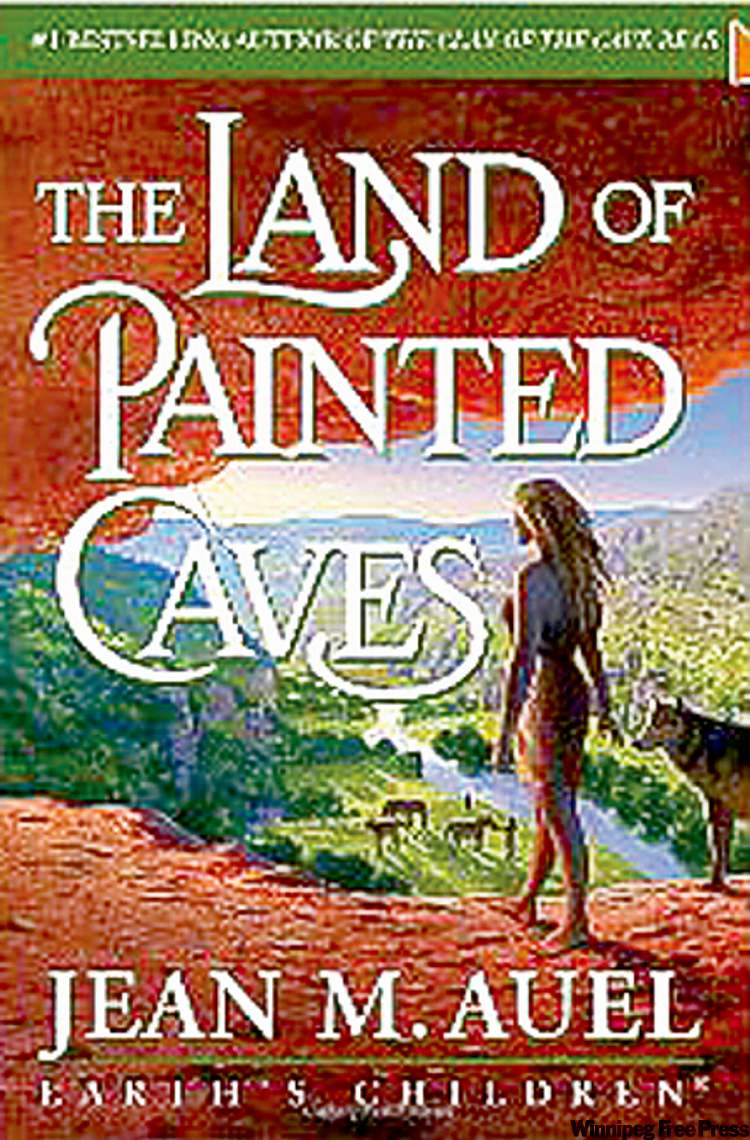
The final book, The Land of Painted Caves, picks up with Ayla in her 20s as she treks across the glaciers of Europe, trying to raise a family among Jondular’s people.
Unfortunately, this grand finale is a bit of a letdown. Not a lot happens. The writing feels forced and at times is almost tedious to read. Often it feels similar to visiting an art museum blindfolded and having a librarian describe what you should be seeing.
Much of the novel seems to have no real purpose until almost halfway through the story. It’s as if Auel meanders through a plot hoping to find an ending and then finding none.
Instead she essentially recycles the ending she already used in her third book, The Mammoth Hunters.
Auel does, however, make it very easy for anyone to come to the book not having read her previous ones or not having read them in many years. She constantly refers to past events and characters in the series.
However, what are supposed to be subtle reminders will be annoyingly repetitive to anyone who remembers anything of Auel’s previous novels.
The Land of Painted Caves could never be helped from being compared to its predecessors, though Auel puts up a valiant fight. The storytelling, organization and rhythm are new and distinct from books past, and long gone are the numerous pages describing a herd moving over a plain or a rock formation.

Instead, the focus of the book is more on the relationships of the characters, which is fascinating in its own way. However, some aspects should have been more consistent with the series.
What were once integral parts of the Ayla’s sense of self are almost completely forgotten. For example, an amulet Ayla wears her entire life is casually mentioned to be left at home.
However, Auel has written that Ayla believed that she would die if she were to lose the amulet and thus had almost never removed it from her neck.
Various details like this serve to distance Ayla’s character from the so clearly defined person of the previous books. Also, the featured animals, which are normally characters in themselves, are downgraded to mere vehicles of the plot.
Winnipeg chemist Jenwa Beaupré is travelling through Europe this summer, hoping to encounter archeological evidence of Ayla and her kin.
Related Articles
Literary western's elements blended by 'mad scientist'
Advertisement Advertise With Us
Advertisement Advertise With Us