Literary western’s elements blended by ‘mad scientist’
Advertisement
Read this article for free:
or
Already have an account? Log in here »
To continue reading, please subscribe:

Digital Subscription
One year of digital access for only $205*
- Enjoy unlimited reading on winnipegfreepress.com
- Read the E-Edition, our digital replica newspaper
- Access News Break, our award-winning app
- Play interactive puzzles
*First annual payment billed as $205.00 + GST for one year. This annual subscription will automatically renew at $233.00 + GST every 52 weeks (10% off the regular annual price of $259.35). Offer available to new and qualified returning subscribers only. Cancel any time.
To continue reading, please subscribe:
Add Free Press access to your Brandon Sun subscription for only an additional
$1 for the first 4 weeks*
- Enjoy unlimited reading on winnipegfreepress.com
- Read the E-Edition, our digital replica newspaper
- Access News Break, our award-winning app
- Play interactive puzzles
*Your next Brandon Sun subscription payment will increase by $1.00 and you will be charged $17.95 plus GST for four weeks. After four weeks, your payment will increase to $24.95 plus GST every four weeks.
Read unlimited articles for free today:
or
Already have an account? Log in here »
Hey there, time traveller!
This article was published 14/05/2011 (5590 days ago), so information in it may no longer be current.
The Sisters Brothers
By Patrick deWitt
Anansi, 336 pages, $30
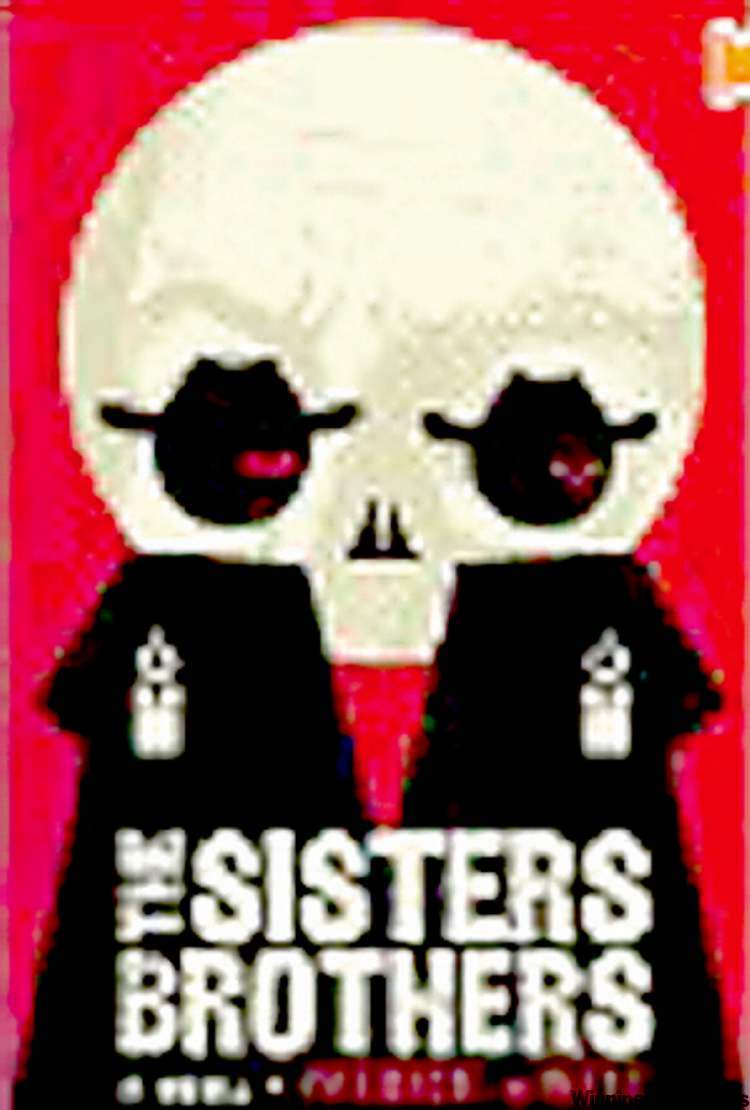
CANADIAN expatriate Patrick deWitt blends elements in his literary western like a mad scientist.
He combines the formal, slightly archaic diction of Charles Portis’s True Grit with the talkative hit men of Quentin Tarantino’s Pulp Fiction to create a bizarrely comic piece of magic realism.
The Sisters Brothers is a bloody, nightmarish frontier road trip that seems at times like something out of Cormac McCarthy, yet somehow merges laughter and hope with suffering, death and betrayal.
The Oregon-based deWitt debuted in 2009 with Ablutions: Notes for a Novel, a comic novel about a Hollywood bartender who sets off for the Arizona desert. Like his debut, The Sisters Brothers is a picaresque populated by oddballs, outcasts and boozers.
Charlie and Eli Sisters are notorious killers working for the Commodore, a powerful crime lord based in Oregon City (near present-day Portland), at the time of the California gold rush of the 1850s.
The brothers are on a mission to find — and kill — a prospector named Warm. But their journey turns out to be more than just another job. Rather, it’s a search for meaning in a world of random violence, in which Warm (a German-American chemist whose name is almost German for “why”) becomes their guide.
Chubby younger brother Eli, the novel’s narrator, has a soft spot for women and children and hopes to get out of the killing business. Charlie, on the other hand, is quick on the draw and hopes to rise in the criminal world.
The long journey from Oregon to San Francisco, where Warm is under surveillance by one of the Commodore’s men, gives the brothers a chance to discuss their future. Along the way, they encounter a rude waiter, a morose dentist, a starving boy, a crying prospector and a witch, among the many characters who help or hinder their mission.
They grumble about horses, drinking, money and delays and discover the benefits of dental hygiene. And before the novel ends, their mission becomes one of redemption.
From the very first page, when Eli complains about his new horse Tub, it’s clear that this western is anything but a typical equine opera.
“Our unnamed previous horses had been immolated,” he notes, revealing something about his world both through the matter-of-fact reference to an unexplained violent incident and the odd, detached tone of his language.
The language remains strangely formal and at times hilarious, as when Charlie comments about a group of threatening, fur-clad trappers: “Doubtless they are infamous among the muskrat community hereabouts, but these are not killers of men.”
The comedy is frequently dark and bloody. Here’s the chemist Warm discussing his father’s odd way of departing the world: “If there was ever anyone who could find a way to kill himself with an ax, it was Father.”

The journey becomes increasingly philosophical when Eli and Charlie find Warm, who has invented a chemical process that almost magically reveals the presence of gold.
Warm’s discovery sounds more like alchemy than chemistry. It’s worth recalling that the alchemists of history weren’t just crackpot proto-scientists, but rather devotees of spiritual purification and transformation.
The son of an evil watchmaker (an allusion perhaps to the watchmaker in the common proof of the existence of God), Warm spent his early years in drunken degradation, acquiring the delusion that he was a creature made of living excrement. But healed by his chemical search for gold, he has become a shining example of compassion and trust in a nasty, brutish world.
Like an alchemist, deWitt has refined and purified the base metals of black comedy and the western to produce literary gold.
Winnipeg playwright Bob Armstrong’s first novel, Dadolescence, will be published next fall by Turnstone Press.
Related Articles
Series finale lets down readers
Advertisement Advertise With Us
Advertisement Advertise With Us