Internationally renowned cellist had North End Winnipeg roots
Advertisement
Read this article for free:
or
Already have an account? Log in here »
To continue reading, please subscribe:

Digital Subscription
One year of digital access for only $205*
- Enjoy unlimited reading on winnipegfreepress.com
- Read the E-Edition, our digital replica newspaper
- Access News Break, our award-winning app
- Play interactive puzzles
*First annual payment billed as $205.00 + GST for one year. This annual subscription will automatically renew at $233.00 + GST every 52 weeks (10% off the regular annual price of $259.35). Offer available to new and qualified returning subscribers only. Cancel any time.
To continue reading, please subscribe:
Add Free Press access to your Brandon Sun subscription for only an additional
$1 for the first 4 weeks*
- Enjoy unlimited reading on winnipegfreepress.com
- Read the E-Edition, our digital replica newspaper
- Access News Break, our award-winning app
- Play interactive puzzles
*Your next Brandon Sun subscription payment will increase by $1.00 and you will be charged $17.95 plus GST for four weeks. After four weeks, your payment will increase to $24.95 plus GST every four weeks.
Read unlimited articles for free today:
or
Already have an account? Log in here »
Hey there, time traveller!
This article was published 18/06/2011 (5550 days ago), so information in it may no longer be current.
In the spring of 1928, a sweet-looking 10-year-old from the North End sat down to play the cello in Winnipeg’s music festival.
The adjudicator was so stunned by Sarah Nelson’s prodigious talent that he awarded her 99 marks out of 100, raving about her interpretation of the test piece, “This little artist sang her way through it.”
Sarah, who went to Machray School, was the youngest of three daughters of a Russian-immigrant Jewish flutist. He insisted that the girls practise music religiously in their small house at 425 Redwood Ave.
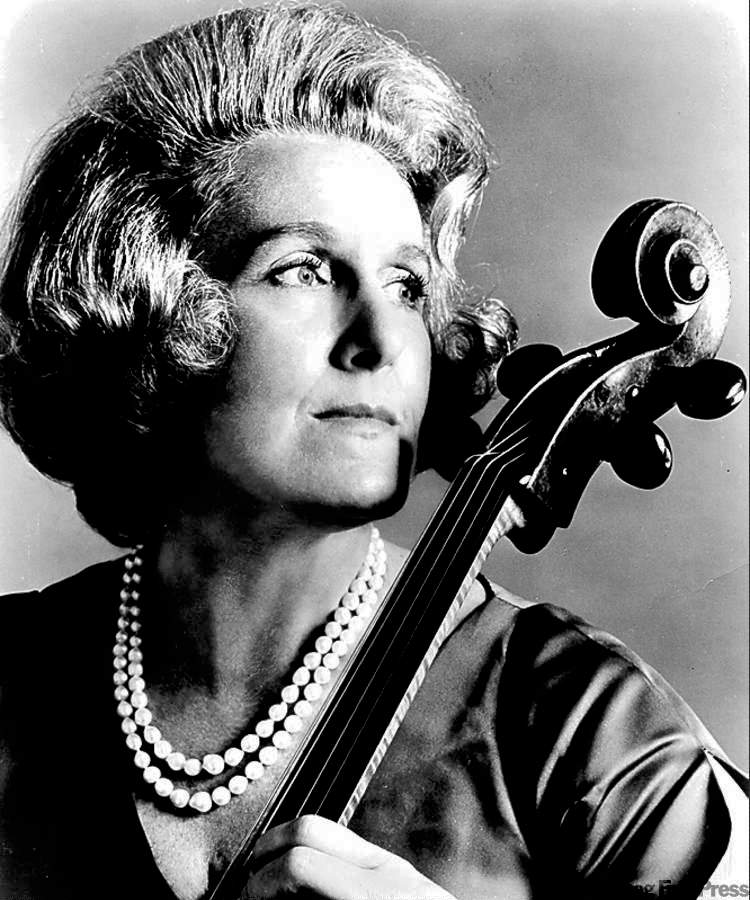
The gifted sisters were causing a local stir as a trio, with Anna on piano and Ida on violin.
Their father had started Sarah when she was so tiny, she initially played a converted viola as a cello. She told the story years later of being so upset about missing out on skating with her friends, she jabbed holes all over one piece of music with a safety pin.
While her sisters would ultimately fall by the wayside, Sarah would grow up to be the regal Zara Nelsova, a virtuoso of international renown who changed her name to sound more Russian, though her father had anglicized it.
Nelsova studied with cello giants Pablo Casals, Emanuel Feuermann and Gregor Piatigorsky, appeared with more than 30 major orchestras, formed close relationships with legendary composers, was the first North American cellist to tour the Soviet Union, and left critics awestruck over a career that lasted nearly 70 years.
In the 1950s, she was a trailblazer in giving recitals for unaccompanied cello, almost unheard-of at the time.
The grand dame who died in 2002 at the age of 83 was, without question, one of the highest artistic achievers ever born in Winnipeg. Virtuoso Mstislav Rostropovich called her the greatest of all female cellists, although she said in 1978, “I hate to be called a woman cellist. A performer is a performer.”
James Manishen, artistic operations associate with the Winnipeg Symphony Orchestra, says Nelsova ranks as one of the 10 or 12 most outstanding cellists of the 20th century.
Sunday at 6:45 p.m. at the Centennial Concert Hall, Manishen will give a talk about Nelsova before the gala finale concert of the five-day International Cello Festival of Canada.
Also Sunday, at 10:30 a.m. at the University of Winnipeg’s Eckhardt-Gramatté Hall, the winner of the festival’s inaugural Zara Nelsova Award for an emerging Canadian cellist will perform.
At 1 p.m. at the same venue, the festival will screen part of a CBC concert film that captures Nelsova performing with American pianist Grant Johannesen, her second husband. (Black-and-white footage of Nelsova’s extraordinary artistry can also be viewed on YouTube.)
Back in 1928, Winnipeggers believed it was essential to go overseas for professional music training. The Free Press reported that both “public and private subscription” funded the family to move to England for proper tutelage. Winnipeggers donated nearly $3,000 to the cause.
Sarah made her solo debut with the London Symphony Orchestra at age 12. The sisters toured internationally as The Canadian Trio for about a decade.
The outbreak of the Second World War brought Nelsova back to Canada. She was desperately poor and took up residence at the Toronto YWCA, where she practised in the basement boiler room. One day, she had the window open and turned to see five people gaping through it in amazement. They were musicians who had been rehearsing at the church next door.
Through them, she quickly gained attention. She spent three years as principal cellist of the Toronto Symphony Orchestra before high-profile U.S. engagements swept her off on a global concert and recording career. Her best-known studio achievement, Manishen says, is her definitive recording of Ernest Bloch’s Hebraic rhapsody Schelomo.
Had she been a man, Nelsova would have been more famous and recorded more, Manishen says. She had to fight the novelty label of “lady cellist” and the presumption that women lacked the physical power to play the instrument.
The string diva became an American citizen in 1955 and lived in New York, where she was a longtime teacher at the Juilliard School. Until the end of her life, she continued to make trips to her home city to perform, teach or visit her “darling” relatives, such as the Neaman family on Ash Street. She always called herself a child of Winnipeg.
“My roots are here,” she said, “and roots run deep.”
alison.mayes@freepress.mb.ca