

Premier, mayor voice support for decision to end police officers’ OT retail-security shifts

Advertisement
Read this article for free:
or
Already have an account? Log in here »
To continue reading, please subscribe:

Digital Subscription
One year of digital access for only $205*
- Enjoy unlimited reading on winnipegfreepress.com
- Read the E-Edition, our digital replica newspaper
- Access News Break, our award-winning app
- Play interactive puzzles
*First annual payment billed as $205.00 + GST for one year. This annual subscription will automatically renew at $233.00 + GST every 52 weeks (10% off the regular annual price of $259.35). Offer available to new and qualified returning subscribers only. Cancel any time.
To continue reading, please subscribe:
Add Free Press access to your Brandon Sun subscription for only an additional
$1 for the first 4 weeks*
- Enjoy unlimited reading on winnipegfreepress.com
- Read the E-Edition, our digital replica newspaper
- Access News Break, our award-winning app
- Play interactive puzzles
*Your next Brandon Sun subscription payment will increase by $1.00 and you will be charged $17.95 plus GST for four weeks. After four weeks, your payment will increase to $24.95 plus GST every four weeks.
Read unlimited articles for free today:
or
Already have an account? Log in here »
Premier Wab Kinew and Mayor Scott Gillingham are backing the police chief’s decision to end the option for officers to work overtime shifts providing security at retail stores.
Chief Gene Bowers informed officers about the change Monday in a memo that cited the recent inability to fill key vacancies and the need to “protect the service’s ability to staff critical positions.”
“The operational decisions, it’s up to Chief Bowers and the other folks that are part of the force, but we’re happy to support their efforts,” Kinew told reporters Thursday.
“The operational decisions, it’s up to Chief Bowers and the other folks that are part of the force, but we’re happy to support their efforts,” Premier Wab Kinew told reporters Thursday.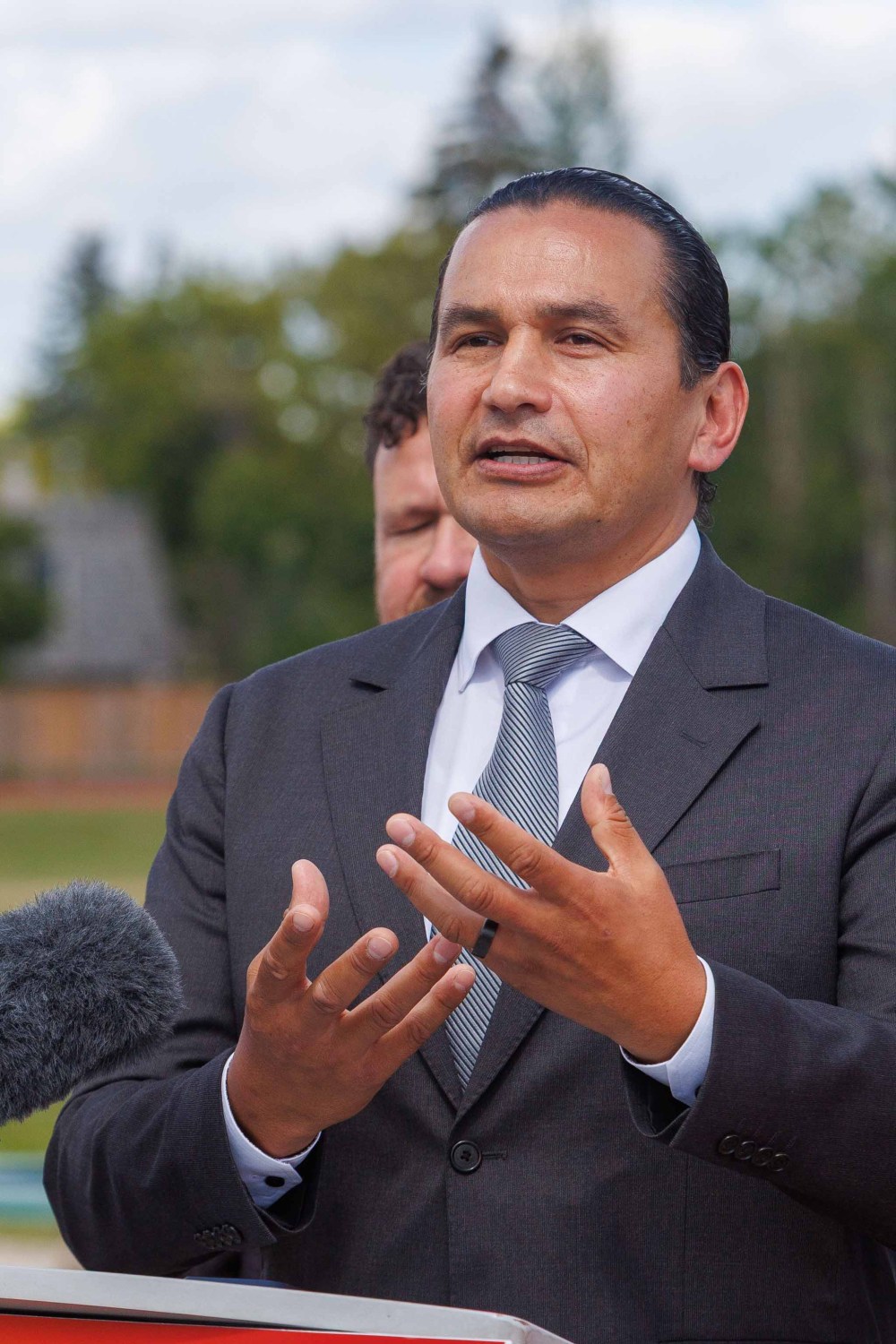
“We know there’s a lot of need out there in the community. Manitobans want to have police officers in so many different places for that reassurance, for the community impact and also in case something bad happens.
“I think this is part of the chief’s area of interest, his decision-making jurisdiction and, for us, we support them.”
Gillingham said front-line policing must be prioritized to ensure officers are available where they are needed most.
“The people of Winnipeg deserve nothing less,” he said in a statement. “If special duty work in retail stores is creating challenges in maintaining full staffing for front-line police service, then changes need to be made.”
The Winnipeg Police Service has allowed special duty work for years in retail stores, at sporting and special events, and in other venues or situations at the expense of the business or entity that hires the officers.
National chains, including Real Canadian Superstore and Walmart, are typically the retailers that hire police to provide security due to the cost involved.
The service’s hourly fees start at $141.75 (GST included). The shifts count as pensionable hours.
MIKAELA MACKENZIE / FREE PRESS FILES Winnipeg police Chief Gene Bowers said very few municipal police services in Canada provide special duty officers to retailers.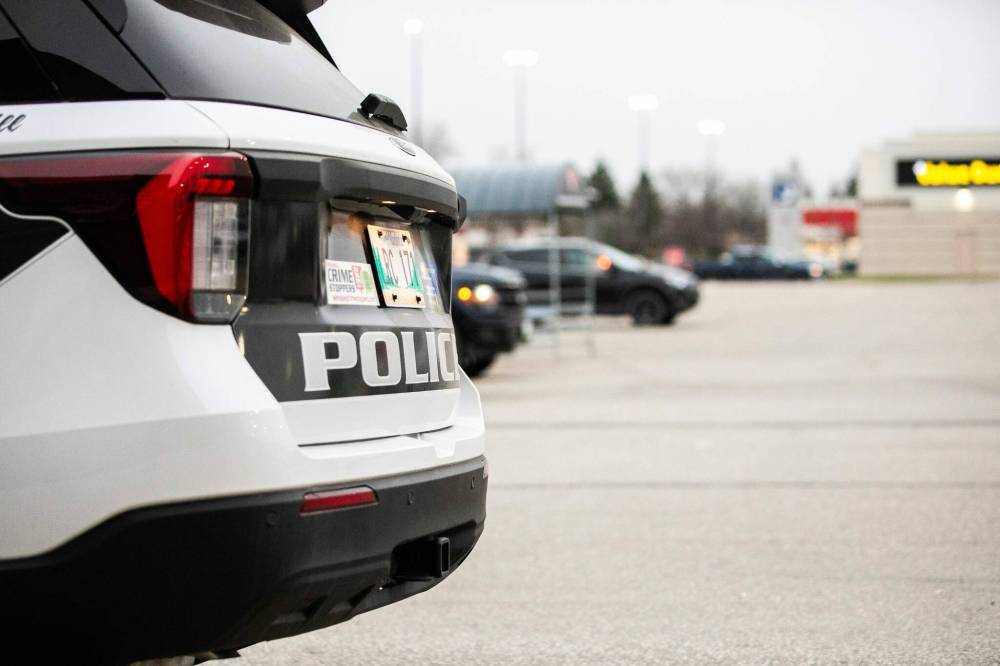
Retail special duty work will be scaled back starting Jan. 1 before a “full exit” May 1 to give retailers and officers time to prepare, Bowers’ memo said. The decision does not apply to non-retail special duty work, including sporting and special events.
“How this would affect the service is if we have shortages on our front lines, we often (ask) people to work overtime shifts, and often we’ve been recently unable to fill some of those required shifts to make sure we’re meeting our minimum strength on the street,” Bowers told the Free Press Wednesday.
“We feel the amount of retail special duty has had a significant impact on our ability to fill those days where we need those members to fill those cruiser cars.”
He said very few municipal police services in Canada provide special duty officers to retailers.
Cory Wiles, president of Winnipeg Police Association, which represents front-line officers, said the union has no control over the “unilateral operational decision” by WPS leadership that isn’t captured under the current collective agreement.
“The WPA has consistently advocated for a stronger police presence across Winnipeg because the evidence supports it.”
“The WPA has consistently advocated for a stronger police presence across Winnipeg because the evidence supports it,” Wiles said in a statement.
“Last year’s shoplifting initiative demonstrated what most people already understand: When officers are visible in the community, it makes a difference.
“That principle is the same reason we continue to lobby for greater resources on our streets. Our position has not changed, and our focus remains where is always has been.”
He said the union will ensure that, however the transition unfolds next year, “our collective agreement is honoured, assignments are managed without discrimination and the general patrol minimums our members negotiated are maintained.”
Winnipeg Police Board chair Colleen Mayer and councillors Janice Lukes and Evan Duncan also backed the change.
“From our standpoint, front-line visible policing is a core priority.”
Mayer said the board will monitor for any potential effect on front-line policing.
“From our standpoint, front-line visible policing is a core priority,” she said.
Mayer said retailers and employees are going to have some questions.
“Not everyone might like this, but first and foremost it’s safety first,” she said.
Not all retailers can afford to hire special duty police, Mayer pointed out.
Duncan (Charleswood-Tuxedo-Westwood) said the No. 1 priority has to be general patrol availability in communities.
“If there is any risk whatsoever for not being able to fulfil the general patrol complement of officers on the street, then unfortunately we need to prioritize having cops on the street over retail locations and these large corporations,” said Duncan, a police board member who stressed he was sharing his opinion as a councillor and not in his role as a board member.
RUTH BONNEVILLE / FREE PRESS FILES Coun. Evan Duncan, also a police board member, stressed he was sharing his opinion as a councillor.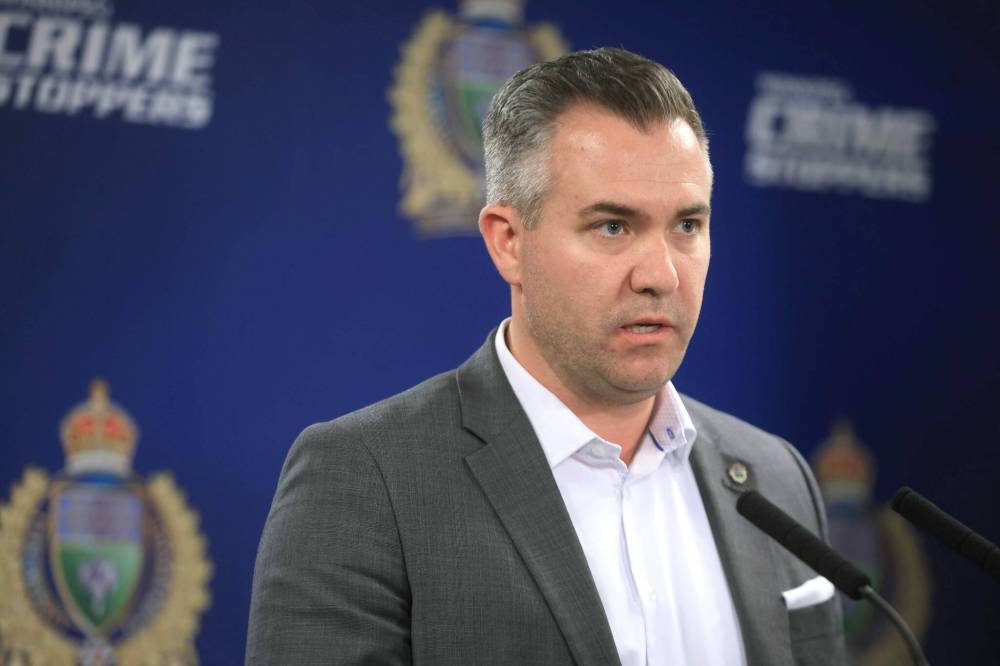
Lukes (Waverley West) said the change is long overdue.
“Police officers are trained in things that you probably don’t need in a grocery store,” she said. “Maybe you do, but not to the degree we need them on the streets.”
Officers worked more than 50,000 special duty hours between May 2023 and June 2024, with retailers accounting for 68 per cent of the hours, a previous Free Press analysis found.
More than 20,000 of those hours were spent at Loblaw-owned Superstore locations, followed by Walmart (about 5,700 hours).
“We are aware of the Winnipeg Police Service’s decision to end its special duty program and are saddened to see it come to an end,” a Loblaw spokesperson said.
“With the program continuing until April 2027, we are working through plans for what comes next and will continue to take steps to ensure our stores remain safe and welcoming places to work and shop.”

The Manitoba government is in the process of modernizing the security guard training manual for the first time in 20 years.
The Retail Council of Canada is advocating for another level of security personnel who would have enhanced training and more authority to assist police and fill some gaps for retailers to help combat theft.
Duncan said the province “can step up on this” and allow security personnel to have additional powers.
Kinew said the NDP government has funded dozens of additional WPS officers and will “continue to invest in keeping communities safe.”
fpcity@freepress.mb.ca
Chris Kitching is a general assignment reporter at the Free Press. He began his newspaper career in 2001, with stops in Winnipeg, Toronto and London, England, along the way. After returning to Winnipeg, he joined the Free Press in 2021, and now covers a little bit of everything for the newspaper. Read more about Chris.
Every piece of reporting Chris produces is reviewed by an editing team before it is posted online or published in print — part of the Free Press‘s tradition, since 1872, of producing reliable independent journalism. Read more about Free Press’s history and mandate, and learn how our newsroom operates.
Our newsroom depends on a growing audience of readers to power our journalism. If you are not a paid reader, please consider becoming a subscriber.
Our newsroom depends on its audience of readers to power our journalism. Thank you for your support.
Chris Kitching is a general assignment reporter at the Free Press. He began his newspaper career in 2001, with stops in Winnipeg, Toronto and London, England, along the way. After returning to Winnipeg, he joined the Free Press in 2021, and now covers a little bit of everything for the newspaper. Read more about Chris.
Every piece of reporting Chris produces is reviewed by an editing team before it is posted online or published in print — part of the Free Press‘s tradition, since 1872, of producing reliable independent journalism. Read more about Free Press’s history and mandate, and learn how our newsroom operates.
Our newsroom depends on a growing audience of readers to power our journalism. If you are not a paid reader, please consider becoming a subscriber.
Our newsroom depends on its audience of readers to power our journalism. Thank you for your support.
Related Articles
Police chief pulls plug on security shifts at supermarkets, stores


Advertisement Advertise With Us
Advertisement Advertise With Us
History
Updated on Thursday, August 27, 2026 4:44 PM CDT: Adds comments