

Terminal case of energy efficiency
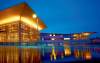
Building designed for LEED certification
Advertisement
Read this article for free:
or
Already have an account? Log in here »
To continue reading, please subscribe:

Digital Subscription
One year of digital access for only $205*
- Enjoy unlimited reading on winnipegfreepress.com
- Read the E-Edition, our digital replica newspaper
- Access News Break, our award-winning app
- Play interactive puzzles
*First annual payment billed as $205.00 + GST for one year. This annual subscription will automatically renew at $233.00 + GST every 52 weeks (10% off the regular annual price of $259.35). Offer available to new and qualified returning subscribers only. Cancel any time.
To continue reading, please subscribe:
Add Free Press access to your Brandon Sun subscription for only an additional
$1 for the first 4 weeks*
- Enjoy unlimited reading on winnipegfreepress.com
- Read the E-Edition, our digital replica newspaper
- Access News Break, our award-winning app
- Play interactive puzzles
*Your next Brandon Sun subscription payment will increase by $1.00 and you will be charged $17.95 plus GST for four weeks. After four weeks, your payment will increase to $24.95 plus GST every four weeks.
Read unlimited articles for free today:
or
Already have an account? Log in here »
Hey there, time traveller!
This article was published 29/10/2011 (5441 days ago), so information in it may no longer be current.
Winnipeg’s new airport terminal includes features and amenities that will vastly improve the airport experience for travellers, according to project officials, but much of that magic occurs behind the scenes, with innovations from local businesses and designers.
It may turn out to be the most energy-efficient building of its size in the world, according to the engineers on the project.
The building, opening Sunday, is designed to achieve Leadership in Energy and Environmental Design (LEED) certification.

It is an achievement for a building of its size, that’s all glass, facing due north and built in Winnipeg. It may be the largest LEED building in the world, once certified.
SMS Engineering Ltd. did much of the mechanical and electrical engineering design.
Russell Lavitt and Chris Hewitt, two partners of SMS, spent most of their waking hours (and some sleeping hours as well) on the project for the last seven years.
On a tour of the terminal Friday, Hewitt said it was an emotional experience to see the massive building on the verge of being commissioned.

“One thing people in the city should be proud of is that this is essentially a made-in-Manitoba building,” Hewitt said.
Lavitt said the building is going to surprise people.

“It will not be like anything they’ve ever seen before in the city,” he said.
Some of the reasons for that will actually remain unseen. The nuts and bolts of the mechanical and electrical systems for the building, stowed far from public access (and protected with state-of-art security measures requiring biometric security clearance for access), include several unique features. Among them:
- It may have more LED lights than any other building in the country — hundreds of metres of lights, inside and out. The original design did not include LED lighting, but because of the scale and length of time taken to complete the project, LED technology improved and became the most energy-efficient choice.
- When early drilling proved geothermal heating and cooling would not be an option, SMS persuaded the Winnipeg Airports Authority to use the Central Utilities Building, which had been slated for demolition. SMS redesigned the old boiler system, replaced some equipment and built a system to pump cooled and heated water one kilometre underground to the new terminal. The heating and cooling system has computer-controlled, variable-speed fans that will operate at more than 90 per cent efficiency (compared to about 70 per cent in the old terminal).
- SMS was also persuaded the Canada Green Building Council to rewrite regulations regarding the use of air filters. Instead of 30-centimetre-thick filters, which would have required massive fans and much more powerful motors (and much more energy consumption), SMS showed electrically charged filters about twice the thickness of a home-furnace filter would provide just as thorough air treatment with much less energy consumption.
- The building is designed to be lit almost entirely with natural light during daytime hours, including by scores of dramatic domed skylights in the baggage-claim hall.
- In-floor radiant heating and cooling mean people will be much more comfortable with much less energy expended than when air is blown from ceiling vents. The air temperature will be kept a little lower than normal because heat radiating up from the floor will make occupants feel warmer.
- Mechanical services are delivered throughout the departure lounge through a series of “totems” that will blow warm air to prevent condensation on the windows and cool air in the summer.
- The terminal has seamless backup power in the form of a pair of two-megawatt diesel generators sufficient to run the entire electrical requirements of the building. Just one will be sufficient to run all of the building’s safety systems.
- Every piece of baggage is x-rayed, some items twice, using a Singapore-designed system housed in the massive baggage-handling facility located below the arrivals area. It, too, is much more energy-efficient than the old system. The belts in the old terminal ran full-time, but computer controls in the new terminal ensure belts run only when necessary.
martin.cash@freepress.mb.ca
Related Articles
New airport terminal opened to flurry of early-morning travellers

Advertisement Advertise With Us
Advertisement Advertise With Us
History
Updated on Saturday, October 29, 2011 10:44 AM CDT: adds colour photos, link