

Jury weighs Shafia family’s fate
Deliberating alleged killings for honour
Advertisement
Read this article for free:
or
Already have an account? Log in here »
To continue reading, please subscribe:
Digital Subscription
One year of digital access for only $1.44 a week*
- Enjoy unlimited reading on winnipegfreepress.com
- Read the E-Edition, our digital replica newspaper
- Access News Break, our award-winning app
- Play interactive puzzles
*Billed as $5.77 plus GST every four weeks. After 52 weeks, price increases to the regular rate of $19.95 plus GST every four weeks. Offer available to new and qualified returning subscribers only. Cancel any time.
To continue reading, please subscribe:
Add Free Press access to your Brandon Sun subscription for only an additional
$1 for the first 4 weeks*
- Enjoy unlimited reading on winnipegfreepress.com
- Read the E-Edition, our digital replica newspaper
- Access News Break, our award-winning app
- Play interactive puzzles
*Your next Brandon Sun subscription payment will increase by $1.00 and you will be charged $17.95 plus GST for four weeks. After four weeks, your payment will increase to $24.95 plus GST every four weeks.
Read unlimited articles for free today:
or
Already have an account? Log in here »
Hey there, time traveller!
This article was published 28/01/2012 (5238 days ago), so information in it may no longer be current.
KINGSTON, Ont. — The fate of a family alleged to have disposed of three rebellious sisters and an unwanted wife by dumping their bodies in a canal in the name of honour is now in the hands of a jury.
The seven women and five men have heard from 58 witnesses and have seen 165 exhibits over about 10 weeks in the trial of three members of the Montreal-based Shafia family, originally from Afghanistan.
The jury must now decide if it believes the Shafias pushed a car containing their four family members into the water in the middle of the night, clumsily staging it as an accident, or if they think it’s possible the four unintentionally plunged to their deaths during a joyride.
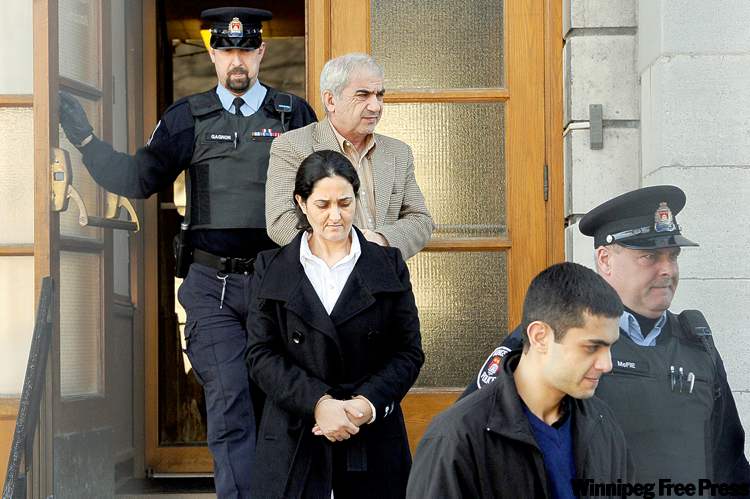
Jurors have a daunting task ahead, sifting through hours of statements containing differing versions of events and reams of cellphone and computer evidence, all complicated by a cultural cloud that hangs over this case prosecutors allege is a so-called honour killing.
The bodies of Shafia sisters Zainab, 19, Sahar, 17, and Geeti, 13, as well as their father’s first wife in a polygamous marriage, Rona Amir Mohammad, 52, were found June 30, 2009, eerily suspended inside a black Nissan submerged in the locks of a canal in Kingston, Ont.
Police began to suspect remaining members of the family almost from the outset and charged them with four counts each of first-degree murder on July 22, 2009. Mohammad Shafia, 58, his wife Tooba Yahya, 42, and their son Hamed, 21, pleaded not guilty at their trial.
Judge Robert Maranger told the jury Friday they can find the accused guilty of first-degree murder, guilty of second-degree murder or not guilty.
“This was either an accident or the intentional killing of four people made to look like an accident,” Maranger said. “If you find that this was not an accident but an intentional killing, then you should have no trouble finding that the accused…had the required state of mind for murder.”
But, he said, just because they are all charged with the same offences and are all being tried together, doesn’t mean the jury has to render the same verdict for all.
Any of the accused can be found guilty of either degree of murder whether the jury finds they were a principal offender or that they aided or abetted a principal offender, Maranger said.
The difference between first- and second-degree murder, Maranger explained, is first-degree murder is planned and deliberate.

Trouble in the wealthy Afghan-Canadian family had been brewing for some time, the Crown alleges.
The Crown painted a picture of a household controlled by a domineering Shafia, with Hamed keeping his sisters in line and doling out discipline when his father was away on frequent business trips to Dubai.
The family says Hamed had no such role and Shafia testified on his own behalf that he was a loving and lenient father, liberal in fact.
But when Zainab started dating a Pakistani boy, Shafia was allegedly furious. She ran away from home and came back after a promise she could marry her boyfriend — a marriage the family urged her to annul the day after it took place. But, it’s alleged, the damage was done. Zainab was sexually compromised and out of the family’s control, the Crown says.
Several Shafia siblings called police the day Zainab ran away, saying their lives were in danger because they feared how Shafia would react, court heard. That was a lie designed to hurt their father, who they blamed for Zainab leaving, testified a surviving brother who can’t be identified.
Two surviving siblings of the girls would report to their parents about their now-deceased sisters’ behaviour, court heard.
Relatives testified Shafia had talked to them about wanting to kill Zainab, but Shafia testified when he came home he forgave his daughter, kissed her on the head and gave her $100.
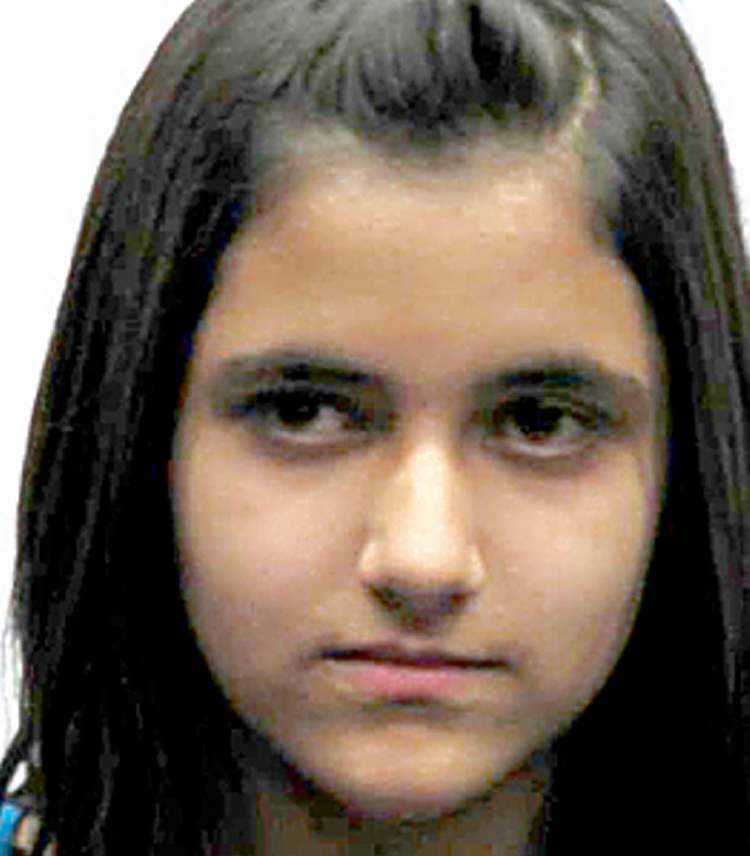
Sahar, too, was dating, though she tried to keep it secret from her parents, and wore what the family deemed inappropriate clothing — a picture of her in a short skirt hugging her boyfriend was a focal point of the trial. She was making plans to leave home and told her Christian boyfriend’s aunt two months before she died if her parents found out about her relationship, she was “a dead woman.”
The trial heard from a seemingly endless stream of teachers, vice-principals, police officers, social workers and youth protection workers who testified that Sahar and Geeti desperately wanted to leave home because they were afraid of their father.
Those were just stories made up to get attention at school, the family says.
Geeti was becoming almost impossible to control: skipping school, failing classes, being sent home for wearing revealing clothes, stealing and telling almost every authority figure she encountered she wanted to be sent to foster care, court heard.
Rona was Shafia’s first wife but, unable to conceive, her status in the Shafia household began eroding as soon as a young Tooba Yahya was brought in as a polygamous wife, court heard. When the family moved to Canada, they referred to Rona as Shafia’s cousin and suggested on a visa application she was domestic help, court heard.
Rona loved everyone in the household and was joyously happy, the family says. She and Yahya were like sisters, and she took long walks for exercise, court heard from various members of the family.
But translated excerpts from Rona’s diary tell a different story. She writes that she was not allowed to help run the household, so she spent her days wandering the streets, crying, sitting in her room or using payphones to call relatives.
Shafia beat her and “made life a torture,” Rona wrote. Yahya held onto Rona’s passport and would tell her, “Your life is in my hands,” Rona wrote. “You are not his wife, you are my servant,” Rona recalled Yahya telling her one time. Rona told a relative she was afraid for her life.
The family turmoil came to a head after Zainab’s brief mid-May 2009 marriage, and the plot to kill them began to solidify, the Crown says. Having decided to kill Zainab, the Crown suggests it wasn’t a stretch for the family to include Sahar, in whose room condoms were discovered. Yahya testified the condoms were found after their deaths.
The writing was on the wall for Geeti, the Crown says. If she was difficult to control at 13, she would become their worst nightmare as she grew up and further rebelled, they say. And she clearly couldn’t be counted on to keep family secrets, so she would have to go too, the Crown has put to the jury.
Why Rona? For one, she would not have kept quiet if her beloved girls were killed, especially Sahar, whom she raised as her own daughter. But the Crown also says, to the Shafias, Rona was “utterly disposable.”
The defence says there simply is no evidence of a motive to kill any of the sisters or Rona. Most of the complaints they made about their family life to authorities, relatives or friends were exaggerations or outright lies, they suggest, typical teenage behaviour, pushing boundaries to gain more freedom.
But the Crown says evidence of a murderous plot taking shape is seen in Hamed’s trip to Dubai, where his father was on business. When he went from June 1 to 13 he brought with him pictures of the four soon-to-be deceased, including photos that had been discovered of Sahar with her boyfriend, it’s alleged.
Those pictures, the Crown alleges, incited Shafia’s rage, but the family maintains the pictures were not found until after the deaths, and that is why Shafia spews venomous tirades about his dead daughters as treacherous whores on wiretaps secretly recorded by police in the days leading to the July 22 arrests.
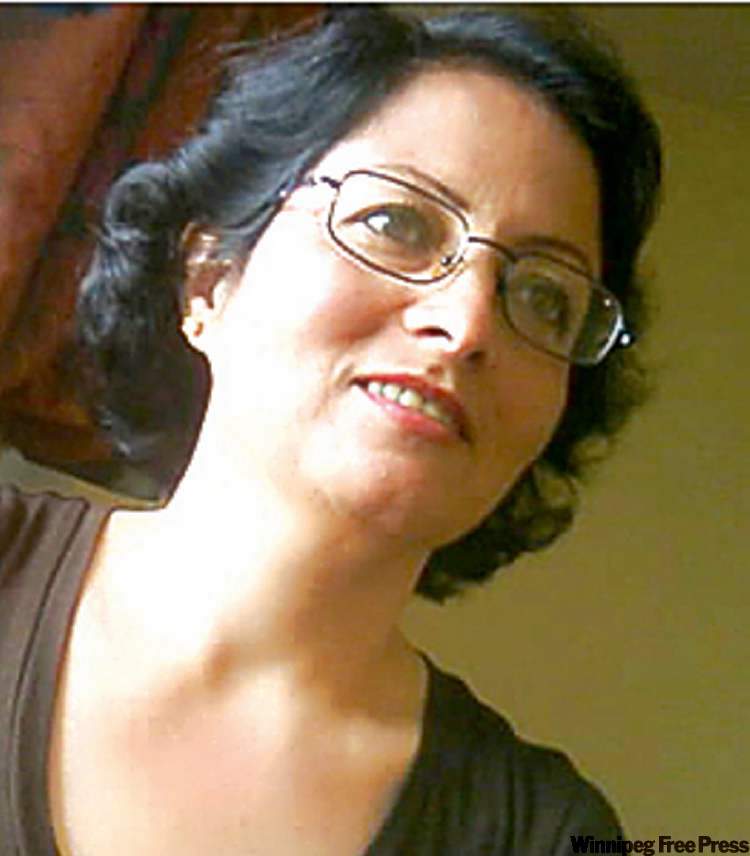
“Whenever I see those pictures, I am consoled,” Shafia was recorded as saying. “I say to myself, ‘Would they come back to life a hundred times, for you to do the same again?’ That is how hurt I am. Tooba, they betrayed us immensely. They violated us immensely. There can be no betrayal, no treachery, no violation more than this.
“Even if they hoist me up onto the gallows … nothing is more dear to me than my honour,” Shafia says on the secret recording.
Shafia testified that when he talks about doing “the same again,” he meant giving his daughters good advice and prohibiting them from dating until they completed their education.
What Hamed also brought with him to Dubai, court heard, is the family laptop. Someone conducted Google searches on it, routed through the United Arab Emirates on June 3, inquiring if a prisoner can have control over his real estate.
Starting June 6, there were numerous searches for bodies of water, pictures of such areas and maps. On June 15, one map that was viewed was centred over Kingston Mills locks, where the four family members would be found dead two weeks later.
Beginning June 19, many of the computer searches included the Grand-Remous area of Quebec. The Shafia family vacation to Niagara Falls, Ont., that ended in the deaths began with a jaunt to Grand-Remous, on the Gatineau River and some 450 kilometres out of the way. But the original plan, the family says, was to drive to Vancouver, which would have taken them through that area.
Hamed, or at least his cellphone, also went to Grand-Remous on June 20, records show. About an hour after he allegedly returned home, someone conducted an Internet search for “where to commit a murder.”

A surviving Shafia sibling said it might have been him doing the search, wanting to kill himself but not knowing the word for suicide. However, he admitted under cross-examination he had heard the word suicide before and used proper terminology in a call he made to Hamed just before the arrests asking if he should kill himself.
The Crown has presented piles of evidence it says is damning, but the Shafias have countered nearly every point prosecutors presented, saying there is either an innocuous explanation or that the evidence is simply wrong. The jury will have to consider it all.
— The Canadian Press