Setting helps tell dark story

Advertisement

Advertise with us

RAPE, miscarriage, shame, disease, death against a backdrop of political violence and corruption.

Read this article for free:


or

Already have an account? Log in here »

To continue reading, please subscribe:

Subscribe and receive a limited-edition Free Press branded hat or tote.

Digital Subscription

One year of digital access for only $205*

  • Enjoy unlimited reading on winnipegfreepress.com
  • Read the E-Edition, our digital replica newspaper
  • Access News Break, our award-winning app
  • Play interactive puzzles

*First annual payment billed as $205.00 + GST for one year. This annual subscription will automatically renew at $233.00 + GST every 52 weeks (10% off the regular annual price of $259.35). Offer available to new and qualified returning subscribers only. Cancel any time.

To continue reading, please subscribe:

Add Free Press access to your Brandon Sun subscription for only an additional

$1 for the first 4 weeks*

  • Enjoy unlimited reading on winnipegfreepress.com
  • Read the E-Edition, our digital replica newspaper
  • Access News Break, our award-winning app
  • Play interactive puzzles
Start now

*Your next Brandon Sun subscription payment will increase by $1.00 and you will be charged $17.95 plus GST for four weeks. After four weeks, your payment will increase to $24.95 plus GST every four weeks.

Opinion

Hey there, time traveller!
This article was published 28/04/2012 (5226 days ago), so information in it may no longer be current.

RAPE, miscarriage, shame, disease, death against a backdrop of political violence and corruption.

Ontario-based Yejide Kilanko tackles some tough subjects in her debut novel. Daughters Who Walk This Path has its weaknesses, but it presents its difficult aspects with an impressive lack of sensationalism.

Kilanko gives us the world through the eyes of her protagonist, Morayo. The story starts when she is five. Morayo grows up in modern-day Nigeria, with loving but strict traditional parents, a sister who worships her and aunts who provide a strong sense of female community.
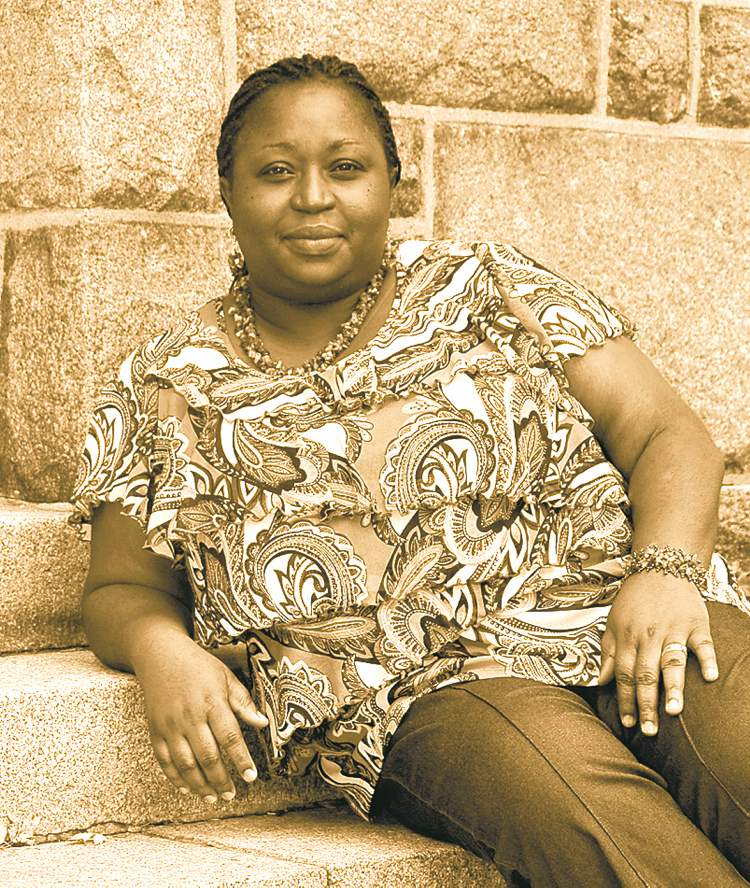
CORINA FLIKWEERT
Yejide Kilanko tackles tough subjects such as, rape miscarriage, shame, disease and political corruption.
CORINA FLIKWEERT Yejide Kilanko tackles tough subjects such as, rape miscarriage, shame, disease and political corruption.

But when her cousin Bros-T moves in, that community is shattered. Bros-T repeatedly rapes his younger cousin over the course of a year and when Morayo finally speaks out the family is torn.

Morayo’s story, very simply told, reads like a memoir. It can feel a bit plodding: this happens, then this happens, then this happens — much like a child telling a winding story before getting to the point.

Kilanko’s writing lacks the insight of American Alice Sebold’s memoir of the aftermath of her rape, Lucky. Kilanko attempts to explore themes similar to those in African-American Alice Walker’s acclaimed novel The Color Purple, especially the idea of a woman developing her identity in a world that enforces her sense of shame and self-loathing. But she never really manages to transcend the very heavy material.

But what does work, on several levels, is the setting, Kilanko’s hometown in Nigeria. Morayo’s story is universal and women around the world will relate. But the choice to set it in Nigeria adds a strong metaphorical level to this story.

Nigerian proverbs set the tone for each chapter: “If one has been told that a bird can eat one’s eyes, when one sees the tiniest bird, one take’s to one’s heels” or “It is the same moon that wanes today that will be full tomorrow.”

The country Kilanko showcases is speeding down the modern highway, but is also very much tied to traditional roots. Much like Morayo’s family, those roots are both comforting and constricting.

Morayo’s story is set against a backdrop of family gatherings, with all the food, dancing and laughter that connect families and communities. Kilanko captures the way Nigeria is embracing the old and the new in passages such as this one describing a joyous bride:

“Adanna was stunning in her gold-laced puffed blouse and navy-blue George wrappers. The blue and gold damask head tie fanned out from the top of her head like a satellite dish.”

But there is the darker side to Nigeria. Bombed-out cars sit on the side of the road. Soldiers kidnap women from markets at gunpoint.

And Kilanko offers a truly mind-boggling depiction of political corruption, which she uses to cleverly make a point about the dangers of staying silent and the power of standing up for yourself.


Joanne Kelly teaches journalism at Red River College. Follow her on Twitter @joannemkelly.

Report Error Submit a Tip

More Stories

‘Useful starting point’: Manitoba teacher commissioner received 94 complaints in 15 months, report reveals

Maggie Macintosh 5 minute read Preview

‘Useful starting point’: Manitoba teacher commissioner received 94 complaints in 15 months, report reveals

Maggie Macintosh 5 minute read Updated: 4:28 PM CDT

Ninety-four complaints about teacher misconduct were flagged in the 15 months after Manitoba set up an independent office to regulate the profession.

Commissioner Noni Classen has released a summary of the allegations brought to her attention and findings of investigations undertaken between January 2025 and March 2026.

A new disciplinary system, as well as an online registry where members of the public can look up the education level and standing of teachers and school clinicians, came into effect Jan. 6, 2025.

“These processes can be difficult and deeply personal for everyone involved, including students, families, teachers and school administrators,” Classen wrote in a 24-page report published this week.

Read
Updated: 4:28 PM CDT

Manitoba’s liquor regulator has accused an Exchange District nightclub of exceeding its occupant capacity limit and hindering the work of inspectors.

Diablo, located at Main Street and Bannatyne Avenue, is scheduled to appeal two compliance orders, issued by the Liquor, Gaming and Cannabis Authority of Manitoba, at a Sept. 8 hearing.

An LGCA spokesperson said the compliance orders are part of an ongoing investigation.

The spokesperson said one of the orders was issued after the licensed club was over capacity April 26.

Letters, Aug. 19

6 minute read Preview

Letters, Aug. 19

6 minute read 2:00 AM CDT

Nellie McClung was a trailblazer as both a suffragette and an elected official. As an advocate of eugenics, she supported the forced sterilization of women.

Read
2:00 AM CDT

Pharmacist who failed to disclose addiction, couldn’t account for ‘staggering’ amount of drugs fined $100K by disciplinary panel

Scott Billeck 4 minute read Preview

Pharmacist who failed to disclose addiction, couldn’t account for ‘staggering’ amount of drugs fined $100K by disciplinary panel

Scott Billeck 4 minute read Yesterday at 12:50 PM CDT

A June 9 disciplinary decision found more than 39,000 doses went unaccounted for while Glen Pauch, who worked at a Portage la Prairie pharmacy, was consuming drugs and improperly dispensing controlled substances — including opioids oxycodone and hydromorphone, and Concerta, a stimulant prescribed for ADHD — to 11 patients.

Read
Yesterday at 12:50 PM CDT

The common abuse of ‘common sense’

Alex Passey 5 minute read 2:00 AM CDT

If you spend any amount of time having deep conversations on sensitive subject matters, you will undoubtedly encounter patterns of thought and speech peppered into the discourse as if certain people were helpless but to utter them.

Perhaps you are trying to get to the heart of a complicated matter and the disagreement with your conversational partner starts to get a little heated. Often somebody will dust off the old diplomatic gem of “let’s agree to disagree” to extinguish further argument.

Or perhaps you are trying to console a grief-stricken person who has gone through a traumatic event. People in such a state will often rail against the state of the universe with powerful philosophical sentiments, demanding to know how such injustice could be permitted. You would not be the first person to misguidedly try to soothe them with something like “everything happens for a reason.” Or, less secularly, “God works in mysterious ways.”

These are known as thought-terminating clichés. Pithy little sayings that sound like folksy wisdom but serve mostly to sever a train of thinking, often because it is either uncomfortable or more complicated than the person is willing to engage. Admittedly, they often come from a good-natured place of keeping the peace, though it could easily be argued that they mostly serve to preserve to comfort or indulge the intellectual laziness of those who speak them.

Brandon’s gas plant: a health decision

Riley De Blonde and Scott Blyth 5 minute read 2:00 AM CDT

Imagine a Manitoba in which our lives are powered by clean, affordable electricity that Manitobans own and which doesn’t pollute the air and water we depend on.

That future is within reach and, as doctors, we know it would protect people’s health now and for many generations.

Instead, Manitoba Hydro wants to spend $3 billion on three new gas-fired turbines in Brandon.The Public Utilities Board is now considering this proposal, before our provincial leaders make a final decision that could lock us into burning harmful fossil fuels for decades.

Every day doctors witness the toll of air pollution, hotter summers and smokier skies on our patients — the child struggling through an asthma attack in the emergency room, the senior dangerously overheating during a heat wave. These health crises are not inevitable. They are the consequence of decisions, by governments and corporations, to keep burning fossil fuels.