

Brandon’s gas plant: a health decision
Advertisement
Read this article for free:
or
Already have an account? Log in here »
To continue reading, please subscribe:

Digital Subscription
One year of digital access for only $205*
- Enjoy unlimited reading on winnipegfreepress.com
- Read the E-Edition, our digital replica newspaper
- Access News Break, our award-winning app
- Play interactive puzzles
*First annual payment billed as $205.00 + GST for one year. This annual subscription will automatically renew at $233.00 + GST every 52 weeks (10% off the regular annual price of $259.35). Offer available to new and qualified returning subscribers only. Cancel any time.
To continue reading, please subscribe:
Add Free Press access to your Brandon Sun subscription for only an additional
$1 for the first 4 weeks*
- Enjoy unlimited reading on winnipegfreepress.com
- Read the E-Edition, our digital replica newspaper
- Access News Break, our award-winning app
- Play interactive puzzles
*Your next Brandon Sun subscription payment will increase by $1.00 and you will be charged $17.95 plus GST for four weeks. After four weeks, your payment will increase to $24.95 plus GST every four weeks.
Read unlimited articles for free today:
or
Already have an account? Log in here »
Imagine a Manitoba in which our lives are powered by clean, affordable electricity that Manitobans own and which doesn’t pollute the air and water we depend on.
That future is within reach and, as doctors, we know it would protect people’s health now and for many generations.
Instead, Manitoba Hydro wants to spend $3 billion on three new gas-fired turbines in Brandon.The Public Utilities Board is now considering this proposal, before our provincial leaders make a final decision that could lock us into burning harmful fossil fuels for decades.
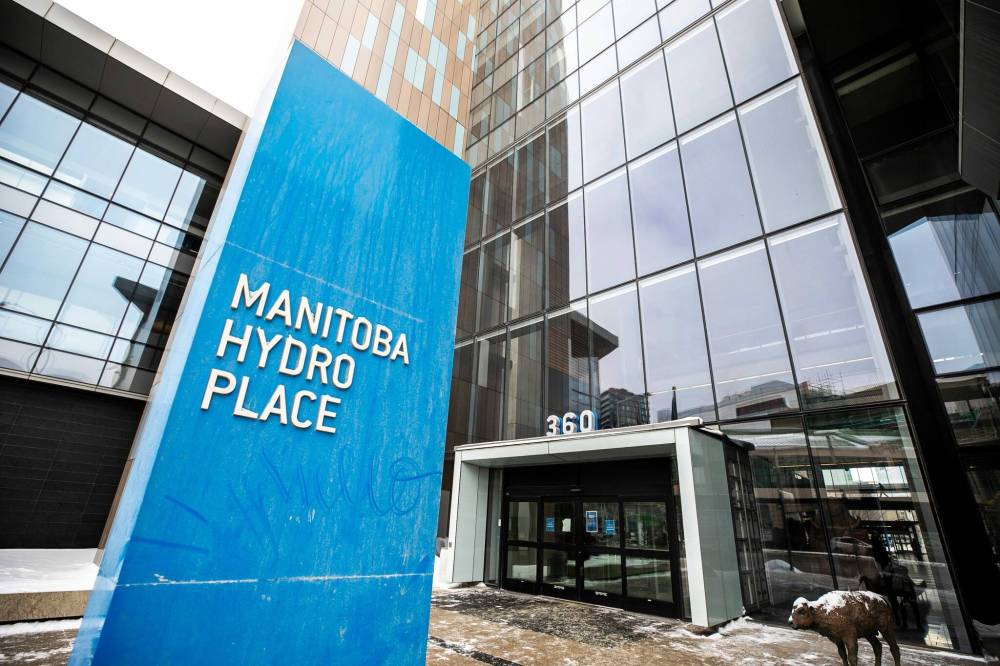
Every day doctors witness the toll of air pollution, hotter summers and smokier skies on our patients — the child struggling through an asthma attack in the emergency room, the senior dangerously overheating during a heat wave. These health crises are not inevitable. They are the consequence of decisions, by governments and corporations, to keep burning fossil fuels.
Burning gas for electricity releases carbon dioxide, the main driver of climate change, along with a hazardous cocktail of air pollutants, including nitrogen oxides, fine particulate matter and volatile organic compounds, such as benzene, formaldehyde and acetaldehyde.
The health effects of these pollutants are well documented. Exposure triggers severe asthma attacks, heart attacks and strokes; worsens chronic obstructive pulmonary disease (COPD); and is linked to dementia, pre-term births and premature death.
Would you want your family and neighbours to breathe these air pollutants? The proposed Brandon plant would sit less than two kilometres from a city with more than 50,000 people. Living close to a gas plant significantly raises the risk of asthma and respiratory illness and is linked to higher rates of hospitalization. The heaviest burden falls on children, older adults and households with the fewest resources to protect themselves from air pollution.
Would you want your family and neighbours to breathe these air pollutants?
In the long run, this gas plant will drive climate change through both carbon dioxide emissions and upstream leaks of methane. Methane is a super-pollutant that traps more than 80 times more heat (i.e., a greenhouse gas) than carbon dioxide over 20 years.
The World Health Organization and The Lancet have recognized climate change as the single greatest threat to human health in the 21st century.
We are already living through the consequences: a rise in vector-borne illnesses such as Lyme disease and wildfire seasons that make our air harmful to breathe and force community evacuations, most often in First Nations. Smoke-filled summers take an especially heavy toll on our children.
Manitoba Hydro is arguing that the plant would be used less than five per cent of the average year. But we can no longer count on “average” as our climate changes. These turbines would run hardest during extreme cold, during heat domes and drought, when hydroelectric output falls and electricity demand peaks. As climate change makes droughts more frequent, we can expect these turbines would run more often.
The good news is that we don’t have to accept this.
There are cleaner, more cost-effective alternatives that don’t make people sick and worsen the climate crisis. Other provinces are showing the way. Ontario is planning to use massive battery storage facilities to balance peak loads at the lowest cost in its history, avoiding new fossil gas. British Columbia and Quebec are aggressively scaling up wind and solar power.

Manitoba should redirect that $3 billion to wind, solar, geothermal and battery storage. Manitoba Hydro’s proposal before the utilities board already includes some battery storage and new Indigenous-led wind partnerships. We should be building more of that, faster.
Made-in-Manitoba clean energy should not pollute the air where our families and neighbours live and breathe.
Made-in-Manitoba clean energy should not pollute the air where our families and neighbours live and breathe. A future powered by renewables will prevent disease, lower health care costs, build resilient communities and create long-lasting jobs.
As doctors, we treat the symptoms, but we look to leaders to remove the causes of illness. Let’s protect the health of Manitobans, our children and future generations by leaving fossil gas in the past and embracing the healthier, clean energy future we urgently need.
Riley De Blonde is a family physician and environmental science graduate in Winnipeg. Scott Blyth is a retired family physician in Brandon. They are both representatives of the Canadian Association of Physicians for the Environment in Manitoba.