

Open-water swimmer unfazed by prospect of contending with ducks and reeds
Advertisement
Read this article for free:
or
Already have an account? Log in here »
To continue reading, please subscribe:

Digital Subscription
One year of digital access for only $205*
- Enjoy unlimited reading on winnipegfreepress.com
- Read the E-Edition, our digital replica newspaper
- Access News Break, our award-winning app
- Play interactive puzzles
*First annual payment billed as $205.00 + GST for one year. This annual subscription will automatically renew at $233.00 + GST every 52 weeks (10% off the regular annual price of $259.35). Offer available to new and qualified returning subscribers only. Cancel any time.
To continue reading, please subscribe:
Add Free Press access to your Brandon Sun subscription for only an additional
$1 for the first 4 weeks*
- Enjoy unlimited reading on winnipegfreepress.com
- Read the E-Edition, our digital replica newspaper
- Access News Break, our award-winning app
- Play interactive puzzles
*Your next Brandon Sun subscription payment will increase by $1.00 and you will be charged $17.95 plus GST for four weeks. After four weeks, your payment will increase to $24.95 plus GST every four weeks.
Read unlimited articles for free today:
or
Already have an account? Log in here »
Hey there, time traveller!
This article was published 25/07/2012 (5129 days ago), so information in it may no longer be current.
LONDON – Open-water swimmers may have to contend with ducks and reeds as they race the Olympic course in Hyde Park’s Serpentine lake. Those would be but minor inconveniences, though, compared with some of the wildlife elements that have featured in previous races.
Jellyfish the size of dinner plates in Australia, for example, or swimming outside the shark nets in Hong Kong.
Britain’s Kerri-Anne Payne was the first athlete to try out the Serpentine course Wednesday, and was full of enthusiasm.
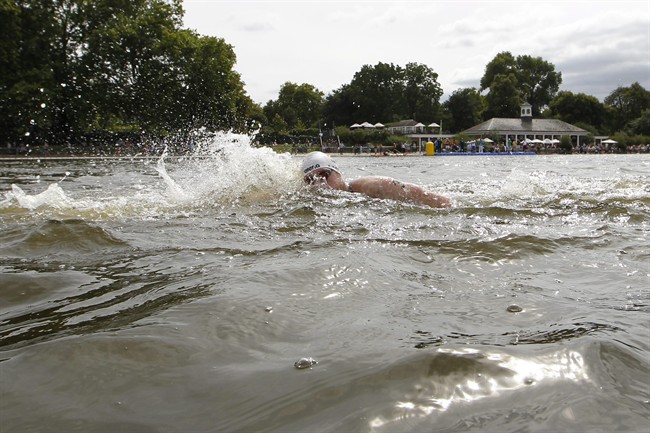
“It was really nice to get in there,” she said of her morning swim. “I had to fight with a couple of ducks though to get round the buoys. But other than that it was pretty good.” She also found swimming through the reeds rather interesting. “I kept getting a little tangled in them, but I’ve overcome that now.”
As an open-water swimmer racing in natural settings rather than the controlled environment of a pool, being prepared for the unexpected goes with the territory.
“I can assure you that as an open-water swimmer, I’ve swum through way worse things than reeds and a few ducks,” she said. “It just depends on the person and how strong-willed you are.”
Some of Payne’s more interesting swims have included the 2007 World Championships in Melbourne — her second ever open water swim, which she shared with “thousands and thousand of jellyfish in the water, all the size of dinner plates. It was very difficult, to be honest.”

Another memorable occasion came in Hong Kong, when she found out the big buoys the racers were swimming outside were in fact shark nets.
“I kind of made sure I stayed in the middle of the pack for that one,” Payne said.
Then there was the river in China.
“Everybody keeps mentioning the dead horse. There was no dead horse. Just a dead dog.”
So reeds and ducks? Really not a problem at all.
Related Articles
Ian Thorpe comes to grips with his qualification failure and pledges to continue swimming


.jpg?w=100)

Advertisement Advertise With Us
Advertisement Advertise With Us