

Pussy Riot puts Putin’s vulnerable spot on display
Advertisement
Read this article for free:
or
Already have an account? Log in here »
To continue reading, please subscribe:
Monthly Digital Subscription
$1 per week for 24 weeks*
- Enjoy unlimited reading on winnipegfreepress.com
- Read the E-Edition, our digital replica newspaper
- Access News Break, our award-winning app
- Play interactive puzzles
*Billed as $4.00 plus GST every four weeks. After 24 weeks, price increases to the regular rate of $19.95 plus GST every four weeks. Offer available to new and qualified returning subscribers only. Cancel any time.
Monthly Digital Subscription
$4.99/week*
- Enjoy unlimited reading on winnipegfreepress.com
- Read the E-Edition, our digital replica newspaper
- Access News Break, our award-winning app
- Play interactive puzzles
*Billed as $19.95 plus GST every four weeks. Cancel any time.
To continue reading, please subscribe:
Add Free Press access to your Brandon Sun subscription for only an additional
$1 for the first 4 weeks*
*Your next subscription payment will increase by $1.00 and you will be charged $16.99 plus GST for four weeks. After four weeks, your payment will increase to $23.99 plus GST every four weeks.
Read unlimited articles for free today:
or
Already have an account? Log in here »
Hey there, time traveller!
This article was published 21/08/2012 (4974 days ago), so information in it may no longer be current.
Other Opinion
Just months ago, few people in or outside Russia had heard of Pussy Riot, a marginal group of feminist performance artists.
The country’s opposition movement was a disorganized and apparently spent force. Foreign leaders and global pop stars such as Madonna and Paul McCartney had little to say on the independence of courts in Moscow.
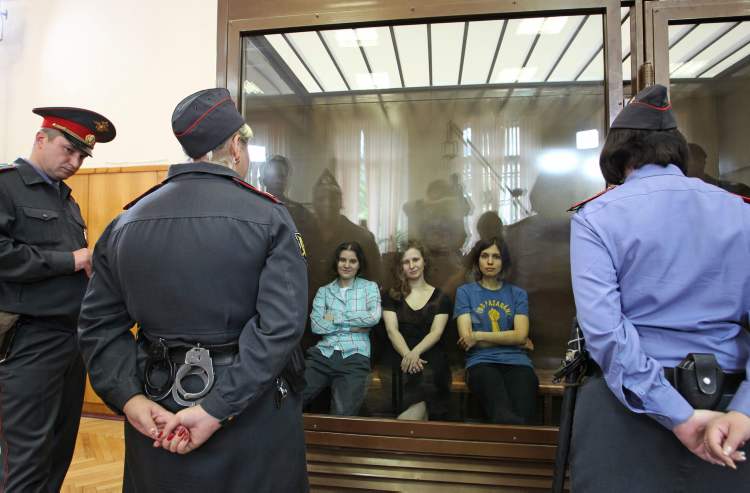
That all changed because of the trial that ended Friday with the conviction of three Pussy Riot members, on charges of hooliganism and inciting religious hatred. The court sentenced the three — who have already been in jail for five months — to two years in prison.
For President Vladimir Putin and the semi-autocratic political system he has crafted over the past 12 years, the attempt to punish the three women has been a self-inflicted defeat. It has broadcast the repressive goals of his regime, as well as the limits on his ability to crush dissent in a more worldly and middle-class Russia, using tools dusted off from the days of the USSR.
The authorities gave the trial a prominent stage in a Moscow court. The aim was seemingly to demonstrate the futility and dangers of too actively opposing the regime, while consolidating Putin’s core of support among religious conservatives. The three women — Nadezhda Tolokonnikova, Maria Alekhina and Yekaterina Samutsevich — were arrested in February, when they lip-synced and mimed a “punk prayer” for Putin’s removal, in Moscow’s Christ the Saviour Cathedral. They later put the images to music and posted the result online.

Show trials aim to inspire fear and flaunt the absolute power of the state. Stalin achieved that in the 1930s by having defendants tortured and their families threatened so they would read scripted confessions. It was theatre of the grotesque. Thankfully, today’s Russia is different. Pussy Riot were able to use the courtroom as a platform from which to promote their cause. The evident bias of the court, meanwhile, made the state look ridiculous. This was theatre of the absurd.
The three women pose no immediate threat to Putin or his regime, but he should take note. Putin chose the worst of three paths that were open to him after his controversial re-election as president in March. He could have reinvented himself as the deliverer of liberal reform, or he could have continued the pretense of reform (the formula used when his protege Dmitry Medvedev was president). Either of these paths might have kept Russia’s growing urban middle class quiet. Instead, he chose the third path, repression.
Putin will be tempted to continue that strategy. It’s politically difficult to turn back, and his opinion poll ratings, though down compared with his earlier years in power, remain above 60 per cent. On Friday, police arrested several people from a crowd of Pussy Riot supporters outside the courtroom, including former chess champion Garry Kasparov.
In the longer term, though, it’s hard to see a good outcome for Putin or Russia if he tries to maintain absolute power by squashing dissent. The Pussy Riot trial has helped to energize Russia’s divided opposition — who would have thought just months ago that the hodgepodge of groups could get it together to organize an online election for their own leadership? The trial has also deepened a fissure between Russia’s rising middle class and the religious conservative countryside.
So long as Putin relies on repression to rule, his support and authority will erode. Should events undermine the economic growth on which he has built his popularity, the only avenue for dissent will be outright revolt. A sustained decline in the oil price, for example, could cut government revenue and starve him of the money he needs to keep pensioners and the military happy. Given the economic clouds hanging over Europe, that’s not impossible.