

PQ wins power after nine years
Minority could make sovereignty elusive goal
Advertisement
Read this article for free:
or
Already have an account? Log in here »
To continue reading, please subscribe:
Digital Subscription
One year of digital access for only $1.44 a week*
- Enjoy unlimited reading on winnipegfreepress.com
- Read the E-Edition, our digital replica newspaper
- Access News Break, our award-winning app
- Play interactive puzzles
*Billed as $5.77 plus GST every four weeks. After 52 weeks, price increases to the regular rate of $19.95 plus GST every four weeks. Offer available to new and qualified returning subscribers only. Cancel any time.
To continue reading, please subscribe:
Add Free Press access to your Brandon Sun subscription for only an additional
$1 for the first 4 weeks*
- Enjoy unlimited reading on winnipegfreepress.com
- Read the E-Edition, our digital replica newspaper
- Access News Break, our award-winning app
- Play interactive puzzles
*Your next Brandon Sun subscription payment will increase by $1.00 and you will be charged $17.95 plus GST for four weeks. After four weeks, your payment will increase to $24.95 plus GST every four weeks.
Read unlimited articles for free today:
or
Already have an account? Log in here »
Hey there, time traveller!
This article was published 05/09/2012 (5021 days ago), so information in it may no longer be current.
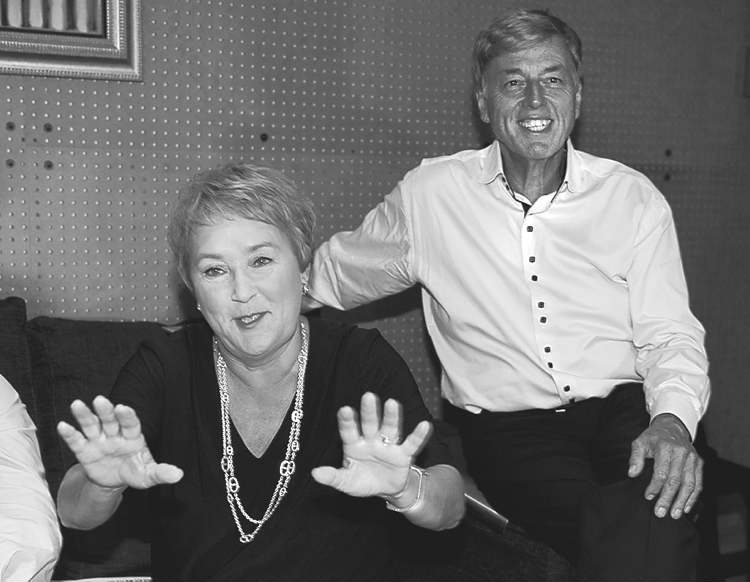
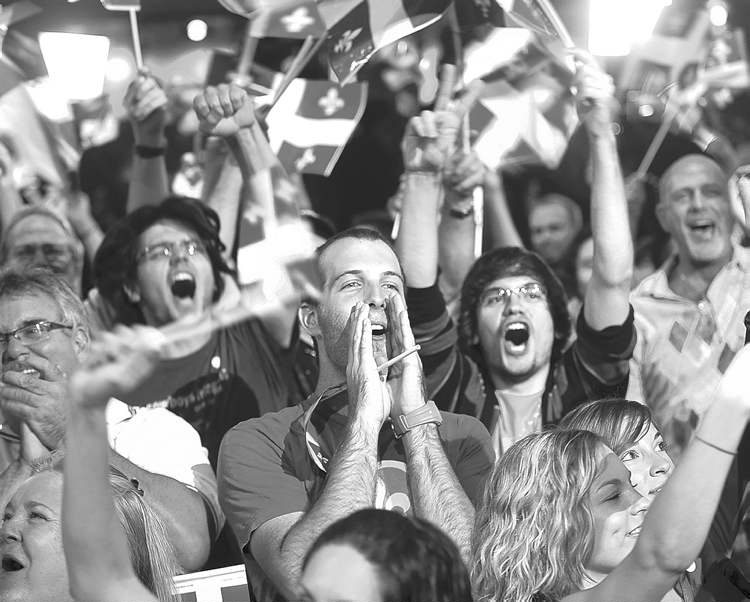
MONTREAL — The Parti Québécois is celebrating a return to power after nine years in opposition but its parade has been dampened by a weaker-than-desired result that could severely limit its ability to pursue its independence agenda.
The party has never governed with a minority in its history and, therefore, has never faced the challenge of tabling an inaugural speech — or any other confidence measures — with the support of other parties that oppose its agenda.
One factor could help resurrect the independence program: It was unclear whether the final seat numbers would ultimately leave another pro-independence party, the smaller and more left-wing Québéc solidaire, with the balance of power.
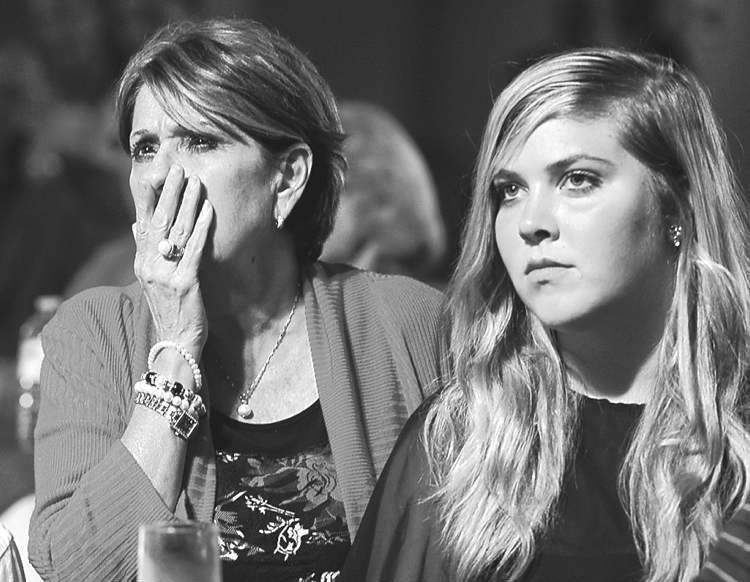
The PQ won or was leading in about 57 ridings in Tuesday’s election, shy of the 63 needed for a majority in the 125-seat legislature. Québéc solidaire won two seats.
Barring a late surprise the PQ could now face an awkward balancing act — pleasing its ardently pro-independence base while getting parliamentary backing from other parties.
The governing Liberals had a far better-than-expected result and were leading or elected in about 47 ridings, holding onto official Opposition status and staving off the electoral annihilation many had predicted. The newly formed Coalition party had a disappointing night, winning or leading in about 20 ridings.
Among party leaders, the leader of the PQ and likely premier Pauline Marois was easily elected in her riding; the Coalition’s Franßois Legault held a narrow lead; and Québéc solidaire’s two co-leaders, Amir Khadir and Franßoise David, were elected.
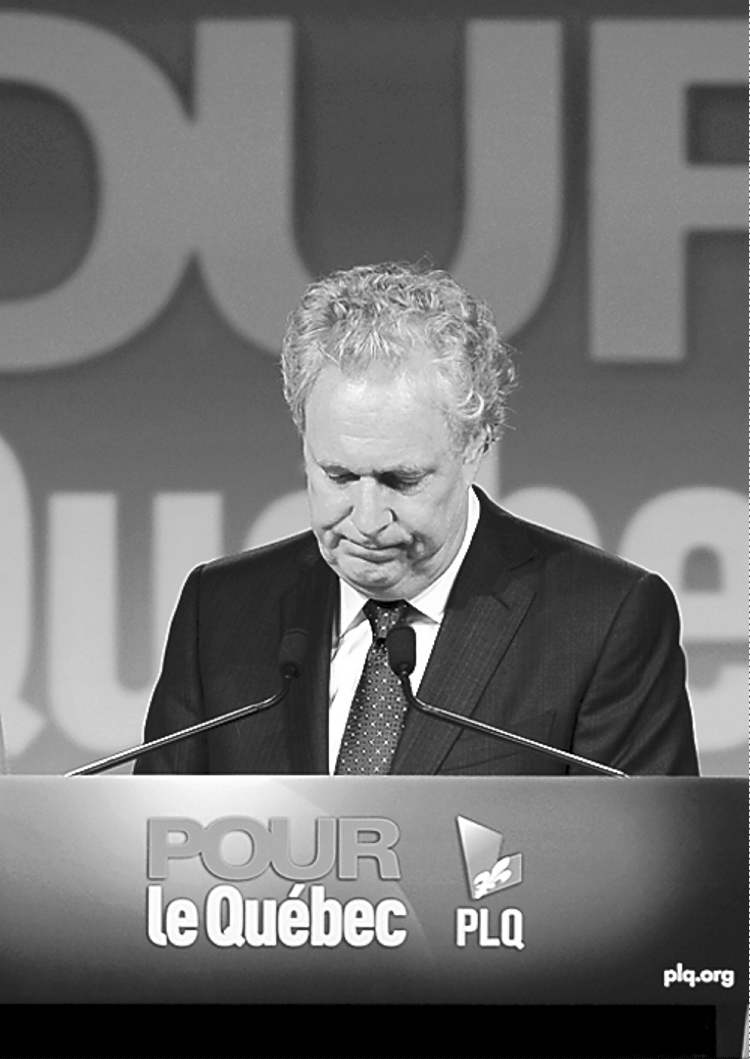
Liberal Premier Jean Charest lost his own riding of Sherbrooke to PQ candidate Serge Cardin.
There appeared to be a surge in voter turnout, with the number of ballots cast by 5:30 p.m. more than one-quarter higher than at the same hour in the previous election.
The sovereigntist PQ led in surveys throughout the campaign with its support pegged in the low 30s, leaving open the question of whether a majority government was within reach.
A PQ victory will terminate the reign of Charest, the resolutely pro-Canada premier who made the transition from national politics in 1998 when the federalist forces in the province were leaderless and fearful of another sovereignty referendum.
Charest’s Liberals had won the popular vote in every provincial campaign he led and, since 2003, had held power with three straight election victories.
The intervening years saw his government occasionally clash with Ottawa over policies related to criminal justice, the environment and health transfers, but those skirmishes were generally brief and sporadic.
The PQ would have no such qualms about schisms. The idea of confrontation with Ottawa is a central theme built into its platform.
The party plans to either demand or create new provincial powers, including a “Quebec citizenship.” To get that document, future immigrants would have to prove they speak French, and the document would be a requirement to run for public office.
The party would also demand a transfer of powers from Ottawa that touch on domestic and international affairs. Targets include employment insurance, copyright policy and foreign-assistance funding.
Should the Supreme Court get in the way of any new language laws, or should Ottawa say no to any request, the PQ has a backup plan: use each defeat as kindling to stoke the embers of the independence movement.
“There are a multitude of examples where we can make the demonstration that we would be best served if we decided for ourselves,” the PQ’s Marois said during the campaign.
“It’s obvious that (each federal rejection) will demonstrate the impossibility that we will ever be recognized as a distinct society.”
In the past, support for independence hasn’t reached its highest peaks because of actions by a PQ government — but because of outside events.
Two examples are the early 1990s, when an attempt to get Quebec constitutionally recognized as a “distinct society” failed, and in 2004 at the height of the sponsorship scandal.
The PQ has its work cut out for it, if it hopes to revive the flames of independence.
A recent survey pegged support for sovereignty at 28 per cent — or roughly half the historic levels recorded in the early ’90s.
Marois has sought to reassure moderate voters that there will be no automatic referendum under her watch.
“I am a responsible woman,” said Marois, an experienced politician who held no fewer than 15 cabinet portfolios under Réné Levesque, Jacques Parizeau, Lucien Bouchard and Bernard Landry.
“I have convictions and I am going to defend them. There will be a referendum when the Quebec population wants a referendum.”
Marois voted in her Quebec City-area riding on Tuesday and said it could be an historic day if she becomes Quebec’s first-ever female premier. She would become the fifth woman to lead a Canadian province or territory.
When reporters asked her Tuesday how she was preparing for the possibility of becoming premier, she replied: “I’ve been preparing for 30 years.”
Apart from the possibility that the polls are off, there are still several factors that could leave the election result up for grabs — a late shift in support, the strength of get-out-the-vote operations, or bizarre local splits in the three-way race.
There was one major wild card throughout the election: Legault’s new Coalition party.
With the polls relatively tight, it had never been clear whether this new party might ultimately play the role of contender, spoiler, kingmaker, or non-entity.
Its leader is a former PQ cabinet minister and, until recently, an ardent sovereigntist. But the party proposed pausing the independence debate for at least a decade.
— The Canadian Press
Related Articles
Charest loses rule, own riding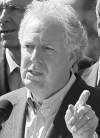
Advertisement Advertise With Us
Advertisement Advertise With Us