

Moon-landing astronaut says it’s time to go back
Sees lunar opportunities for commercial sector
Advertisement
Read this article for free:
or
Already have an account? Log in here »
To continue reading, please subscribe:
Digital Subscription
One year of digital access for only $75*
- Enjoy unlimited reading on winnipegfreepress.com
- Read the E-Edition, our digital replica newspaper
- Access News Break, our award-winning app
- Play interactive puzzles
*Billed as $5.77 plus GST every four weeks. After 52 weeks, price increases to the regular rate of $19.95 plus GST every four weeks. Offer available to new and qualified returning subscribers only. Cancel any time.
Monthly Digital Subscription
$4.99/week*
- Enjoy unlimited reading on winnipegfreepress.com
- Read the E-Edition, our digital replica newspaper
- Access News Break, our award-winning app
- Play interactive puzzles
*Billed as $19.95 plus GST every four weeks. Cancel any time.
To continue reading, please subscribe:
Add Free Press access to your Brandon Sun subscription for only an additional
$1 for the first 4 weeks*
- Enjoy unlimited reading on winnipegfreepress.com
- Read the E-Edition, our digital replica newspaper
- Access News Break, our award-winning app
- Play interactive puzzles
*Your next Brandon Sun subscription payment will increase by $1.00 and you will be charged $17.95 plus GST for four weeks. After four weeks, your payment will increase to $24.95 plus GST every four weeks.
Read unlimited articles for free today:
or
Already have an account? Log in here »
Hey there, time traveller!
This article was published 17/11/2012 (4933 days ago), so information in it may no longer be current.
LONDON, Ont. — You may have to excuse Harrison (Jack) Schmitt if the former American astronaut gets itchy feet for the moon these days.
It was 40 years ago next month, on Dec. 6, 1972, that he and fellow astronaut Eugene Cernan became the last humans to set foot on the lunar surface.
If the former Apollo 17 astronaut had his way, the United States would head back to the moon first, before travelling to planets like Mars.
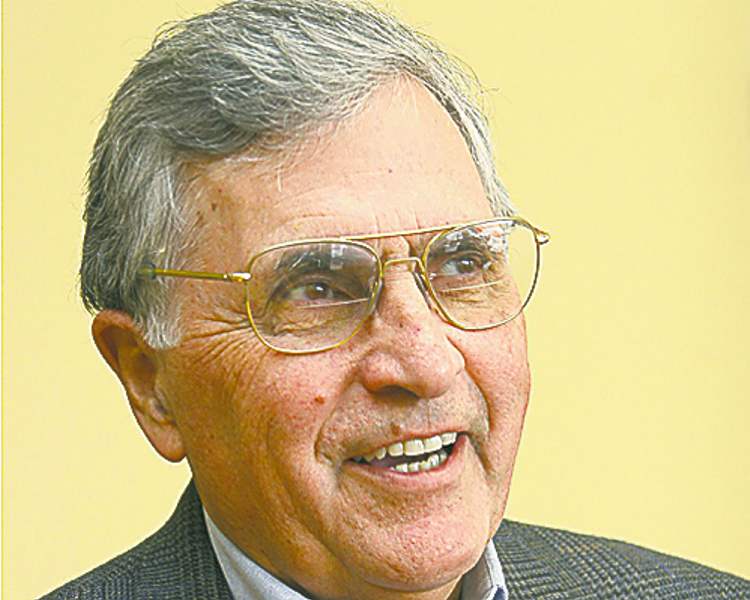
The 77-year-old geologist, who has his eye on lunar mining opportunities, says the commercial sector could be back on the moon within 15 to 20 years.
“I think it’s important to have the commercial sector of the Western world thinking about how do you not only get to the moon but what are the economic returns of doing so,” Schmitt said in an interview Friday.
He sees a role for Canada whose mining industry, he says, is very active and is an important player in the global economy. Schmitt also says humankind has the ability to put “permanent” settlements on the moon within 40 years.
Talking about his own experience, Schmitt recalled moon-walking or skiing on moon dust in December 1972.
“It was like being on a giant trampoline,” he told The Canadian Press.
“I used a cross-country skiing technique that many Canadians are familiar with and that I had learned in Norway as a student there.”
Schmitt, who was also a U.S. senator, was the last NASA astronaut to arrive on the moon. However, his colleague Cernan, who stepped off the module before him, was ultimately the last to leave the moon.
Now, 40 years later, Schmitt expressed disappointment that humans hadn’t returned to the moon: “I would have hoped we would have gotten back sooner.”
Schmitt answered in the affirmative when asked about potential life on other planets. He said “the chances are very, very good that there are carbon-based life forms” on Earth-like planets that are now being discovered — but, he added, don’t expect to see any little green men.
Schmitt made his comments at London’s Western University where he also attended a panel discussion on where humans should go next in space.
U.S. President Barack Obama has suggested the next step in human space flight should be a trip to an asteroid and eventually one to Mars in 2033.
But Schmitt got support for his call for a return to the moon from a number of space experts.
Western University’s Phil Stooke, a planetary cartographer, and Bjarni Tryggvason, a former Canadian astronaut, told students that the moon, which is just a few days away, is the logical place to go.
“It’s not too far away in time, it’s within our technological grasp, and we can go there for long periods of time and really see how to do things in space, long-term,” Tryggvason said.
“But Mars is way, way beyond current reach.” He even predicted that “not a single student” listening to Friday’s discussion would see a person walk on Mars.
NASA’s Peter Worden sounded a more ambitious note. The director of the Ames Research Center in California said that sometime this century, “in my opinion, sooner rather than later,” humans would leave the planet permanently and live on other worlds.
Schmitt agreed with Worden, saying that within the century, along with lunar settlements, “we at the very least will be moving towards such settlements on Mars and maybe even have them.”
— The Canadian Press