Twinkie, Twinkie dying star…
Iconic but much-maligned goo-filled sponge cake started life as real food before going over to the dark side
Advertisement
Read this article for free:
or
Already have an account? Log in here »
To continue reading, please subscribe:

Digital Subscription
One year of digital access for only $205*
- Enjoy unlimited reading on winnipegfreepress.com
- Read the E-Edition, our digital replica newspaper
- Access News Break, our award-winning app
- Play interactive puzzles
*First annual payment billed as $205.00 + GST for one year. This annual subscription will automatically renew at $233.00 + GST every 52 weeks (10% off the regular annual price of $259.35). Offer available to new and qualified returning subscribers only. Cancel any time.
To continue reading, please subscribe:
Add Free Press access to your Brandon Sun subscription for only an additional
$1 for the first 4 weeks*
- Enjoy unlimited reading on winnipegfreepress.com
- Read the E-Edition, our digital replica newspaper
- Access News Break, our award-winning app
- Play interactive puzzles
*Your next Brandon Sun subscription payment will increase by $1.00 and you will be charged $17.95 plus GST for four weeks. After four weeks, your payment will increase to $24.95 plus GST every four weeks.
Read unlimited articles for free today:
or
Already have an account? Log in here »
Hey there, time traveller!
This article was published 21/11/2012 (5015 days ago), so information in it may no longer be current.
Let’s not panic. We all know that Twinkies, Ding Dongs, Wonder bread and the rest of Hostess Brands’ oddly everlasting foods aren’t going away any time soon, even if the food culture that created them is gasping its last.
Hostess is on the brink of closing after years of losses and a strike by 5,000 of its 18,500 workers. A last-ditch mediation session between the company and the Bakery Workers union Tuesday afternoon may have been just a speed bump on the way to shutting down.
But before you rush out to stockpile a strategic Twinkie reserve, consider a few things. Namely, that Twinkies never die. You know full well that the snack cakes down at your corner 7-Eleven are going to outlive us all. Probably even after they’ve been consumed.

And then there’s the acquisition-happy nature of the business world, an environment that increasingly prizes intellectual property above all. It’s hard to imagine the fading away of brands as storied and valuable as Ho Hos, Ring Dings and Yodels. Within hours of announcing the closure last Friday, the company already had put out word that Zingers, Fruit Pies and all the other brands were up for grabs. (Saputo, a Montreal-based company, already owns the rights to Hostess brands in Canada.)
Even if production really did stop, how long do you think it would take for some enterprising investor intoxicated by a cocktail of nostalgia and irony for the treats mom used to pack in his G.I. Joe lunch box to find a way to roll out commemorative Twinkies? Special edition holiday Ho Hos? It’s just the nature of our product-centred world. Brands don’t die, even when perhaps they should.
But let’s pretend for a moment they did. What would we lose if Twinkies fell off the culinary cliff?
Certainly few obesity-minded nutritionists would bemoan the loss. With some 500 million Twinkies produced a year, each packing 150 calories… Well, let’s just leave it by saying that shaving 75 billion calories from the North American diet sure could add up to a whole lot of skinny jeans.
Except that Twinkies aren’t merely a snack cake, nor just junk food. They are iconic in ways that transcend how Americans typically fetishize food. But ultimately, they fell victim to the very fervour that created them.
Despite the many urban legends about the indestructability of Twinkies — Did you know they are made with the same chemical used in embalming? Or that they last five, no 15, no 50 years? — and the many sadly true stories about the atrocious ingredients used to create them today, these treats once upon a time were the real deal.
They started out back in 1930, an era when people actually paid attention to seasonality in foods. James A. Dewar, who worked at Hostess predecessor Continental Baking Company in Schiller, Ill., wanted to find a way to use the bakery’s shortbread pans year round. You see, the shortbread was filled with strawberries, but strawberries were available for only a few weeks a year.
So he used the oblong pans to bake spongecakes, which he then filled with banana cream. Bananas were a more regular crop.
Let’s pause so you can wrap your mind around that for a moment. Twinkies once contained real fruit. Twinkies were created because of seasonality.
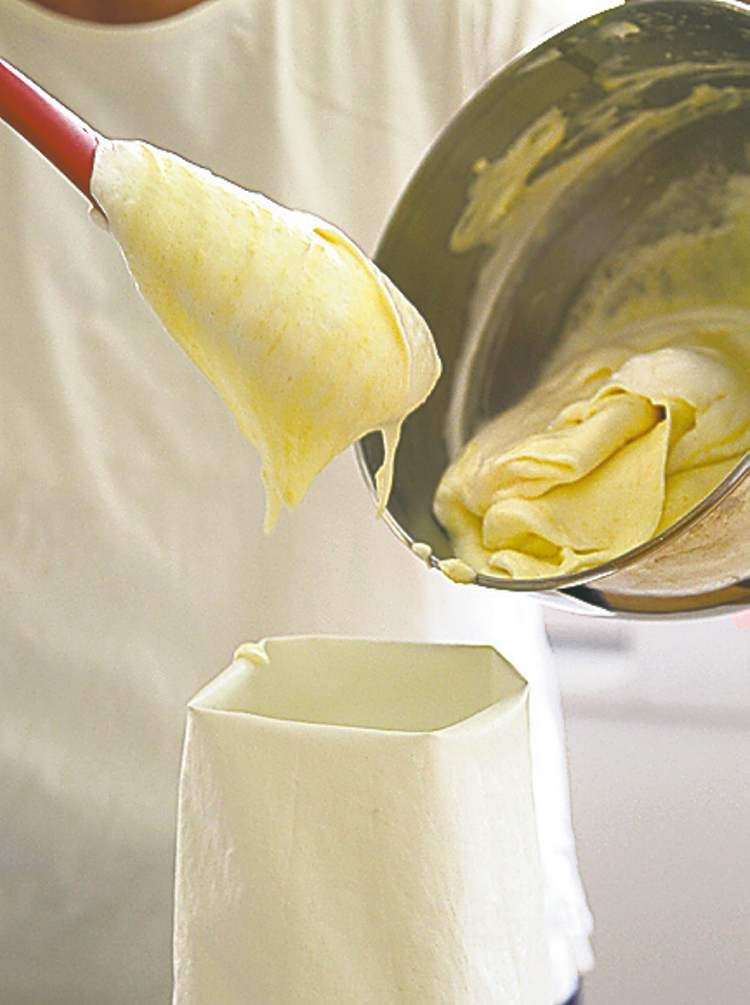
All went swimmingly until the Second World War hit and rationing meant — say it with me — Yes! We have no bananas. And so was born the vanilla cream Twinkie, which was vastly more popular anyway. Even then, there was a crafted element to these treats. The filling was added by hand using a foot pedal-powered pump. Pump too hard and the Twinkies exploded. These days you see that when teenagers post YouTube videos of themselves microwaving them.
It was around this time that American food culture did an about-face. It was an era when the industrialization and processing of cheap food wasn’t just desired, it was glorified. Cans and chemicals could set you free. And they certainly set Twinkies free of the nuisance of a short shelf life. It’s not formaldehyde that keeps these snack cakes feeling fresh, it’s the lack of any dairy products in the so-called “cream.”
“Something about it just absolutely grabbed the popular culture imagination,” says Marion Nestle, a New York University professor of nutrition and food studies — and no fan of junk food. “It’s the prototypical indestructible junk food. It was the sort of height to which American technological ingenuity could go to create a product that was almost entirely artificial, but gave the appearance of eclairs.”
When Twinkies signed on as a sponsor of the Howdy Doody show during the 1950s, their cultural legacy was sealed. Taglines such as “The snacks with a snack in the middle” began etching themselves into generations of young minds and it was considered perfectly fine that Twinkie the Kid would lasso and drag children before stuffing his sugar bombs in their faces.
It was the snack cake heyday. Twinkies were being deep-fried at state fairs, doing cameos in movies like Ghost Busters and Die Hard and being pushed by Spider-Man in comic books. A pre-vegan President Bill Clinton even signed off on including Twinkies in the nation’s millennium time capsule (the two-pack was later removed and consumed by his council overseeing such matters for fear mice would add themselves to the time capsule).
Sure, not all the attention was positive. Somewhere along the line, Twinkies became the butt of jokes, mostly about their perceived longevity (though Hostess staunchly maintains 25 days is the max). And not all associations were great. The so-called “Twinkie defence” came out of the 1979 murder trial of Dan White, whose lawyers included his junk food obsession among the evidence of his supposed altered state of mind.
Then something happened. Suddenly, Americans who for decades had been tone deaf to how food was produced suddenly started paying attention, seeking out organic goat cheeses made from the milk of an unoppressed herd raised on a fence-free collective within a 40-kilometre radius of home. Even Doritos went artisanal, and an awareness of seasons and availability crept back into the culinary consciousness.
Suddenly products that had so prospered by their artificiality lost their allure. Even Hostess has acknowledged that consumer concern about health and food quality changed the game. People just weren’t buying snack cakes like they used to.
So what will we lose if Twinkies really disappear? From a culinary standpoint and from a nutritional standpoint, it’s hard to love the Twinkie (or pretty much any Hostess product). It’s hard not to wonder how the North American diet, the North American palate, would be different if the parents of the ’50s hadn’t begun a cycle of turning to processed packages as the de facto snack of childhood.

And does nostalgia alone justify the continuation of something so patently bad for us?
Of course nostalgia, even irony, taste awfully good.
And I notice that a growing number of — dare I say it — artisanal bakeries are going retro, creating their own inspired takes on classic processed snack cake, but with real ingredients. So perhaps it isn’t time for Twinkies to go away. Or to stay the same. Maybe it’s time for them to go back to their roots. And then, we lose nothing.
— The Associated Press