

HAL you say?
Computers' threat to human existence would be focus of planned centre
Advertisement
Read this article for free:
or
Already have an account? Log in here »
To continue reading, please subscribe:

Digital Subscription
One year of digital access for only $205*
- Enjoy unlimited reading on winnipegfreepress.com
- Read the E-Edition, our digital replica newspaper
- Access News Break, our award-winning app
- Play interactive puzzles
*First annual payment billed as $205.00 + GST for one year. This annual subscription will automatically renew at $233.00 + GST every 52 weeks (10% off the regular annual price of $259.35). Offer available to new and qualified returning subscribers only. Cancel any time.
To continue reading, please subscribe:
Add Free Press access to your Brandon Sun subscription for only an additional
$1 for the first 4 weeks*
- Enjoy unlimited reading on winnipegfreepress.com
- Read the E-Edition, our digital replica newspaper
- Access News Break, our award-winning app
- Play interactive puzzles
*Your next Brandon Sun subscription payment will increase by $1.00 and you will be charged $17.95 plus GST for four weeks. After four weeks, your payment will increase to $24.95 plus GST every four weeks.
Read unlimited articles for free today:
or
Already have an account? Log in here »
Hey there, time traveller!
This article was published 26/11/2012 (4975 days ago), so information in it may no longer be current.
LONDON — Could computers become more clever than humans and take over the world? Or is that just the stuff of science fiction?
Philosophers and scientists at Britain’s Cambridge University think the question deserves serious study. A proposed Center for the Study of Existential Risk will bring together experts to consider the ways in which super-intelligent technology, including artificial intelligence, could “threaten our own existence,” the institution said Sunday.
“In the case of artificial intelligence, it seems a reasonable prediction that some time in this or the next century, intelligence will escape from the constraints of biology,” Cambridge philosophy professor Huw Price said. When that happens, “we’re no longer the smartest things around,” he said, and will risk being at the mercy of “machines that are not malicious, but machines whose interests don’t include us.”
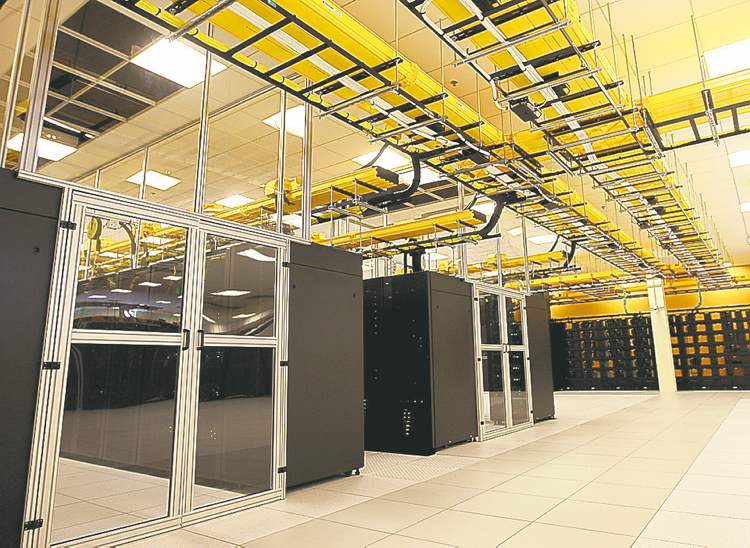
Fears machines could overtake humans have long been the subject of science fiction — the computer HAL in the movie 2001: A Space Odyssey, for example, is one of film’s best-known computer threats. Price acknowledged many people believe his concerns are far-fetched, but insisted the potential risks are too serious to brush away. “It tends to be regarded as a flaky concern, but given that we don’t know how serious the risks are, that we don’t know the time scale, dismissing the concerns is dangerous. What we’re trying to do is to push it forward in the respectable scientific community,” he said.
While Price said the exact nature of the risks is difficult to predict, advanced technology could be a threat when computers start to direct resources towards their own goals, at the expense of human concerns such as environmental sustainability.
He compared the risk to the way humans have threatened the survival of other animals by spreading across the planet and using up natural resources other animals depend upon.
— The Associated Press