

Court orders Toews to OK prison transfer
Judge says minister ignored evidence in decision
Advertisement
Read this article for free:
or
Already have an account? Log in here »
To continue reading, please subscribe:

Digital Subscription
One year of digital access for only $205*
- Enjoy unlimited reading on winnipegfreepress.com
- Read the E-Edition, our digital replica newspaper
- Access News Break, our award-winning app
- Play interactive puzzles
*First annual payment billed as $205.00 + GST for one year. This annual subscription will automatically renew at $233.00 + GST every 52 weeks (10% off the regular annual price of $259.35). Offer available to new and qualified returning subscribers only. Cancel any time.
To continue reading, please subscribe:
Add Free Press access to your Brandon Sun subscription for only an additional
$1 for the first 4 weeks*
- Enjoy unlimited reading on winnipegfreepress.com
- Read the E-Edition, our digital replica newspaper
- Access News Break, our award-winning app
- Play interactive puzzles
*Your next Brandon Sun subscription payment will increase by $1.00 and you will be charged $17.95 plus GST for four weeks. After four weeks, your payment will increase to $24.95 plus GST every four weeks.
Read unlimited articles for free today:
or
Already have an account? Log in here »
Hey there, time traveller!
This article was published 22/12/2012 (4957 days ago), so information in it may no longer be current.
OTTAWA — In a highly unusual move, a federal judge has ordered Public Safety Minister Vic Toews to accept the transfer to Canada of a prisoner serving his sentence in a U.S. jail, saying the minister only “paid lip service” to a previous ruling.
Federal Court Justice Luc Martineau has given Toews 45 days to approve the transfer request of Yves LeBon, a Quebec man currently in a Georgia prison for cocaine possession.
Martineau concluded Toews “wanted to punish” LeBon, who has a wife and son in Boisbriand, Que., because he was caught transporting a large quantity of drugs and did not provide the names of his accomplices.
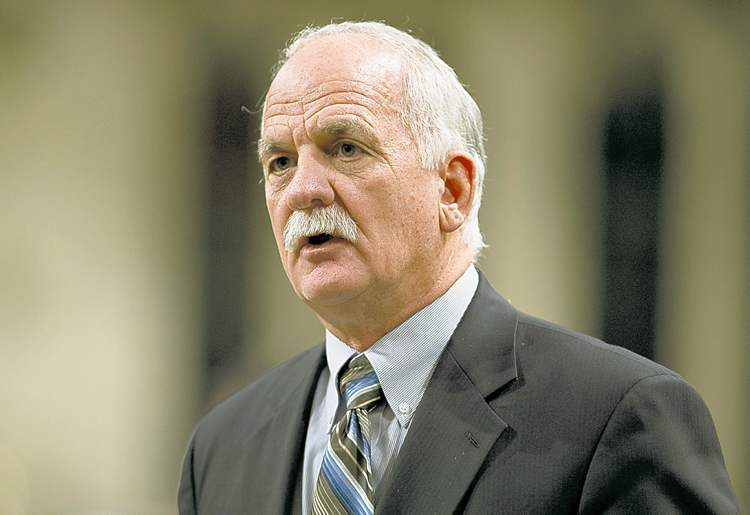
“The minister has shown a bias and has ignored the clear evidence on record supporting a transfer,” Martineau wrote in his judgment made public Friday. “The continued refusal of the applicant’s transfer request has had a serious impact on him, including alienation from his family and support network, frustration of his rehabilitation and deprivation of superior programming in a Canadian prison.”
Yavar Hameed, LeBon’s lawyer, said Friday that Toews’ attitude flies in the face of the desire of lawmakers to see offenders rehabilitated and eased back into society.
“I think it’s indicative of the moralistic resistance that the minister has to abiding by the clear intent of Parliament,” Hameed said.
The Conservatives have taken a much tougher stand on transfer approvals than previous governments, prompting numerous court cases.
LeBon entered New York state by car in August 2007 and was stopped in Illinois a few days later by a state trooper who discovered 119 kilograms of cocaine inside the vehicle.
He was sentenced to 10 years in prison and five additional years of supervised release after pleading guilty to possession with intent to distribute the drug and improper entry into the U.S.
LeBon spent time behind bars in Pennsylvania but was recently moved to Georgia, Hameed said.
In March 2009, U.S. authorities approved his request to move to a Canadian facility under the International Transfer of Offenders Act, but the following year, Toews turned his application down.
In weighing such requests, the minister is supposed to consider whether the offender’s return to Canada would constitute a security threat, the chance he might commit a “criminal organization” offence and whether he has social ties or family in Canada, among other factors.
Last April, the Federal Court of Appeal found Toews’ decision was unreasonable and ordered him to reconsider his refusal. The minister again turned LeBon down.
The latest ruling says Toews basically reasserted his previous reasoning to support his opinion that LeBon was likely to commit an organized-crime offence — despite extensive new evidence to the contrary “favouring rehabilitation and an absence of risk.”
Martineau noted Toews was not swayed by updated assessments by the Correctional Service of Canada, the RCMP and Canadian Security Intelligence Service.
Toews acknowledged points in LeBon’s favour — that it was his first offence, along with his strong social ties, his good behaviour in prison and the fact his sentence was reduced for admitting responsibility.
— The Canadian Press