Getting to the meat of the issue
Researcher questions new Health Canada guidelines on first solid food for infants
Advertisement
Read this article for free:
or
Already have an account? Log in here »
To continue reading, please subscribe:

Digital Subscription
One year of digital access for only $205*
- Enjoy unlimited reading on winnipegfreepress.com
- Read the E-Edition, our digital replica newspaper
- Access News Break, our award-winning app
- Play interactive puzzles
*First annual payment billed as $205.00 + GST for one year. This annual subscription will automatically renew at $233.00 + GST every 52 weeks (10% off the regular annual price of $259.35). Offer available to new and qualified returning subscribers only. Cancel any time.
To continue reading, please subscribe:
Add Free Press access to your Brandon Sun subscription for only an additional
$1 for the first 4 weeks*
- Enjoy unlimited reading on winnipegfreepress.com
- Read the E-Edition, our digital replica newspaper
- Access News Break, our award-winning app
- Play interactive puzzles
*Your next Brandon Sun subscription payment will increase by $1.00 and you will be charged $17.95 plus GST for four weeks. After four weeks, your payment will increase to $24.95 plus GST every four weeks.
Read unlimited articles for free today:
or
Already have an account? Log in here »
Hey there, time traveller!
This article was published 21/01/2013 (4989 days ago), so information in it may no longer be current.
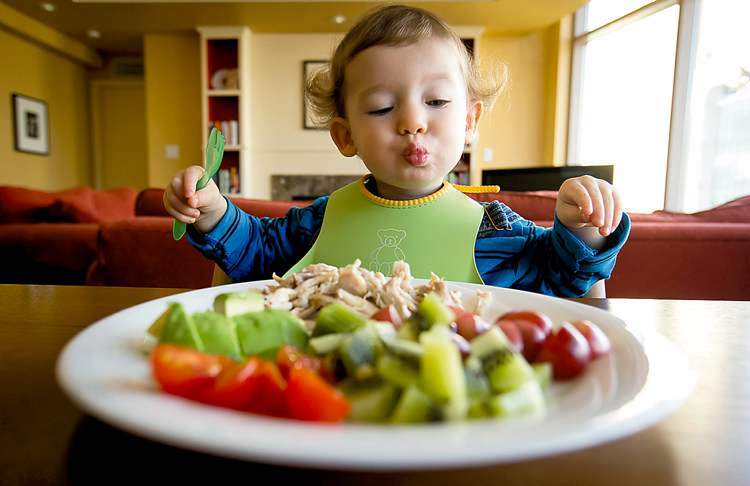
A daily dose of beef, pork or chicken to keep your six-month-old baby healthy?
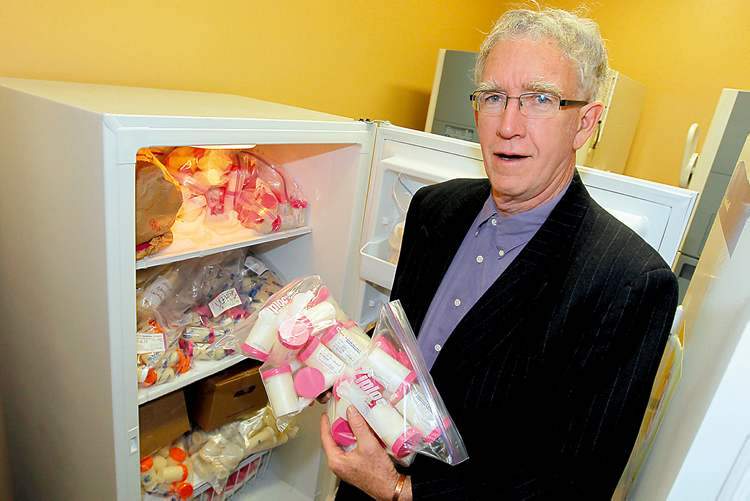
University of Manitoba nutrition researcher James Friel — who questions the federal government’s controversial new infant feeding guidelines — is about to study whether meat or iron-fortified cereal is the best first solid food to feed six-month-old infants.
The study comes on the heels of Health Canada’s latest guidelines advising doctors and parents that babies’ first solid foods include “daily or frequent consumption” of meat, poultry and fish. The rationale? To ward off iron-deficiency in infants, thereby keeping babies’ brains healthy.
The guidelines, which Health Canada released in the fall, have the nutrition community buzzing. In the past, the federal agency recommended iron-fortifed cereal, vegetables and fruit as babies’ first foods after the first six months of breastfeeding.
“That’s the big disconnect for me… that we tell adults to cut back on red meat. That’s one of our recommendations for lots of reasons,” says Friel, who is concerned about meat’s potential link to cancer and other diseases.
“And now we’re telling babies to make it one of their first foods. As a scientist I have so much challenge with that. I don’t see it.”
Friel sat on Health Canada’s nine-member advisory panel that helped shape the infant feeding recommendations. He resigned from the Ottawa-based committee over unease about what he calls the lack of scientific data to support feeding meat to infants so early in their development.
Health Canada did not answer questions about what evidence they used to shape their guidelines; and whether they took into account meat-disease link, citing a lack of time to formulate their answers.
Friel says discussion during the three meetings he attended in Ottawa became “heated.”
“I’m sitting on a national committee that is making recommendations for all Canadian newborns. I’m thinking, ‘There’s no data. There’s just not enough information.’ The decisions are being made emotional reasons and not scientific reasons,” says Friel, who works out of the Richardson Centre for Functional Foods and Neutracueticals where he specializes in human breast milk research.
He believes breast milk is one of the best foods for babies, a powerful elixir that provides them with nutrients and immune protection unlike anything else on the planet. He also believes babies should be breast-fed for as long as possible.
But like most other health professionals, Friel says the iron reserves in mother’s milk diminishes after about six months, so around that time, parents need to introduce supplementary food to their babies to prevent anemia and other nutrient deficiencies.
The question is what foods are best?
Friel’s study will examine 120 newborns that have been exclusively breast-fed.
The study — funded by the Canadian Institute for Health Research (CIHR), Canada’s federal research funding agency — will cost approximately $500,000, says Friel, who is in the process of recruiting infants to participate in his study.
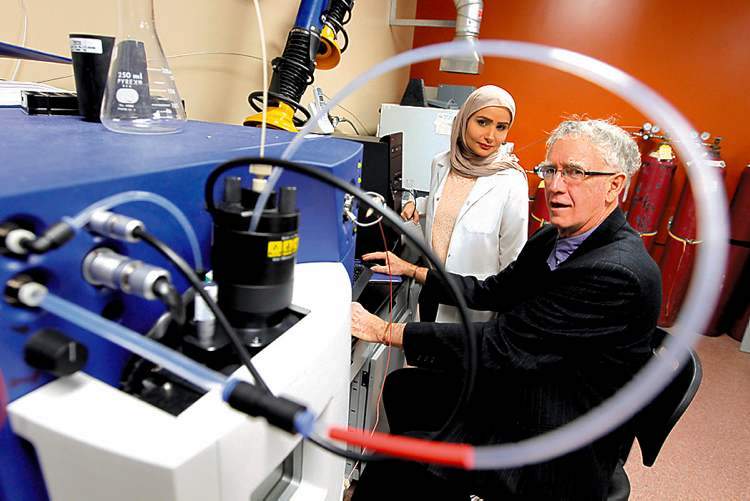
When the infants are ready to start eating complementary solid foods, they will be divided into three groups. One group will be given either meat, iron-fortified cereal, or iron-fortified cereal with fruit. Parents will be asked not to give their babies iron supplements or other cereals.
Friel and his research team plan to find out how the introduction of different solid foods affect the bacterial population of a baby’s gut and whether iron affects the production of free radicals in the colon. They will also measure each foods’ impact on blood iron levels.
Friel’s past research has found that adults consuming iron supplements had more free radical production in the colon. (Most agree that free radicals can contribute to cancer and inflammatory bowel diseases).
Friel’s main goal, he says, is to provide a much-needed study that looks into the effects of meat versus cereal on a baby’s health.
“We desperately need more data before we make these huge public health recommendations,” he says, noting that Health Canada used only one study to come up with their recommendations.
He says despite their apparent confidence, health professionals really aren’t certain about what infants should eat.
“We don’t know. Anyone who tells you they know–they’re just making it up. I’m telling you.”
Friel says he’s sure his passion about the issue of infant feeding won’t affect his study’s outcome.
“I can’t lose. Whatever we find will be information that is useful to parents,” he says.
“If the data comes out that babies in the meat group are the healthiest and the happiest, than this will be the first study that will show that. I have no problem with that.
“If the study shows the babies on the cereal do better in some way, then I will throw that back to Health Canada and they will have to deal with it.”
Winnipeg pediatrician Dr. Grant MacDougall says he has been advising parents to feed their babies meat along with other iron-rich foods such as cereal since the guidelines came out. He says parents aren’t shocked by the advice, thanks to public health nurses who are spreading Health Canada’s message.
“So by the time (parents) get to me — they’re here for the six-month visit — they’ve already heard it. Not too much surprise, actually.”
He says iron deficiency is common in his clinic and that it can lead to mild symptoms all the way to serious circulatory issues.
As well, he says iron deficiency is associated with learning disabilities that are “not reversible with treatment.”
But parents may be surprised to learn the main culprit for iron deficiency points to “the early introduction of cow’s milk” rather than “the late introduction of meat,” says MacDougall.
(Breast milk contains some iron, while cow’s milk contains virtually none. As well, the nutrients in cow’s milk can interfere with the body’s ability to get iron.)
MacDougall says the verdict is still out on whether meat or cereal is a better iron source for infants. He says he welcomes the results of Friel’s study.
“That’s great. We’ll see how that plays out. That answer’s not in yet.”
Have an interesting story idea you’d like Shamona to write about? Contact her at shamona.harnett@freepress.mb.ca
Research quest
The study: A U of M research team will examine 120 breast-fed babies fed meat, iron-fortified cereal or iron-fortified cereal with fruit.

What scientists are looking for: Blood levels of iron, bacterial population in the gut and whether some iron-rich foods generate free radicals in the colon.
Why now? Health Canada recently released controversial new infant feeding guidelines. The guidelines call for parents to feed their six-month-old babies meat daily as their first solid food. Traditionally, parents feed their babies iron-enriched cereal, vegetables and fruits as first foods. Health Canada believes introducing meat into a baby’s diet will help ward off iron deficiency, also called anemia.
The controversy: Some question the wisdom of giving babies daily helpings of meat when experts advise adults to limit their meat intake considering the meat-disease link.