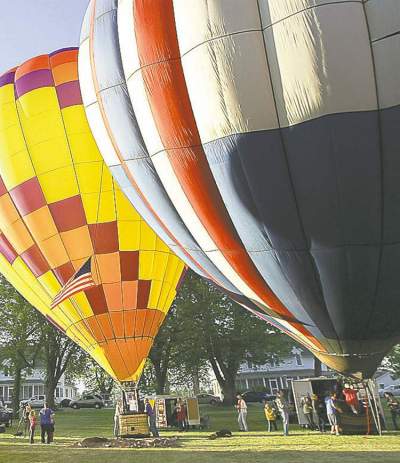
Sky-high balloons anchored to earthly history

Advertisement

Advertise with us

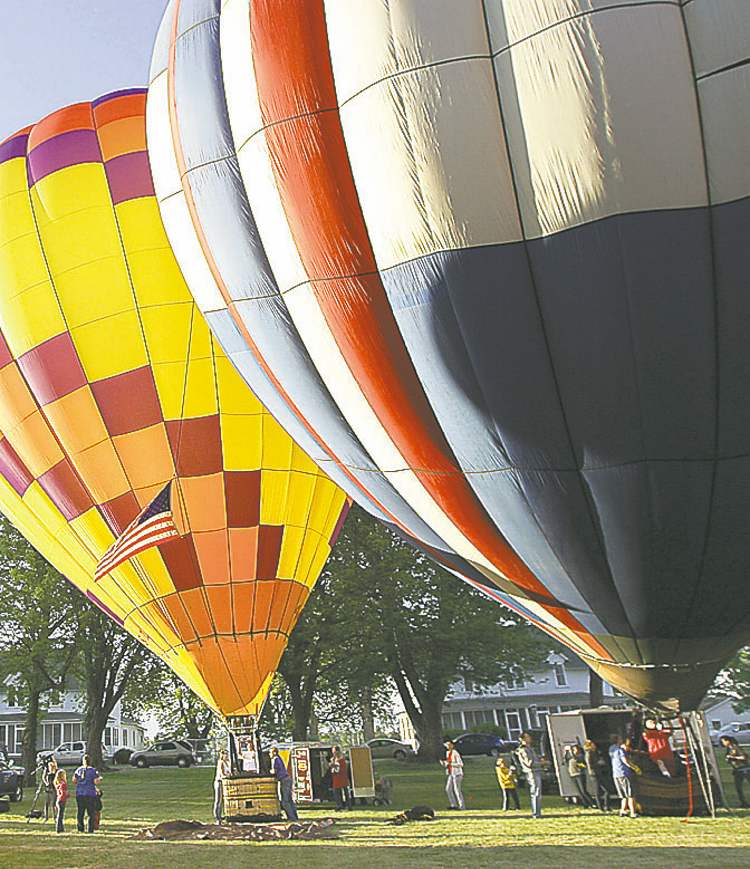
One might be excused for thinking of a balloon in the sky, its basket high above the horizon, as a uniquely distant and detached thing.

Read this article for free:


or

Already have an account? Log in here »

To continue reading, please subscribe:

Subscribe and receive a limited-edition Free Press branded hat or tote.

Digital Subscription

One year of digital access for only $205*

  • Enjoy unlimited reading on winnipegfreepress.com
  • Read the E-Edition, our digital replica newspaper
  • Access News Break, our award-winning app
  • Play interactive puzzles

*First annual payment billed as $205.00 + GST for one year. This annual subscription will automatically renew at $233.00 + GST every 52 weeks (10% off the regular annual price of $259.35). Offer available to new and qualified returning subscribers only. Cancel any time.

To continue reading, please subscribe:

Add Free Press access to your Brandon Sun subscription for only an additional

$1 for the first 4 weeks*

  • Enjoy unlimited reading on winnipegfreepress.com
  • Read the E-Edition, our digital replica newspaper
  • Access News Break, our award-winning app
  • Play interactive puzzles
Start now

*Your next Brandon Sun subscription payment will increase by $1.00 and you will be charged $17.95 plus GST for four weeks. After four weeks, your payment will increase to $24.95 plus GST every four weeks.

Opinion

Hey there, time traveller!
This article was published 25/05/2013 (4886 days ago), so information in it may no longer be current.

One might be excused for thinking of a balloon in the sky, its basket high above the horizon, as a uniquely distant and detached thing.

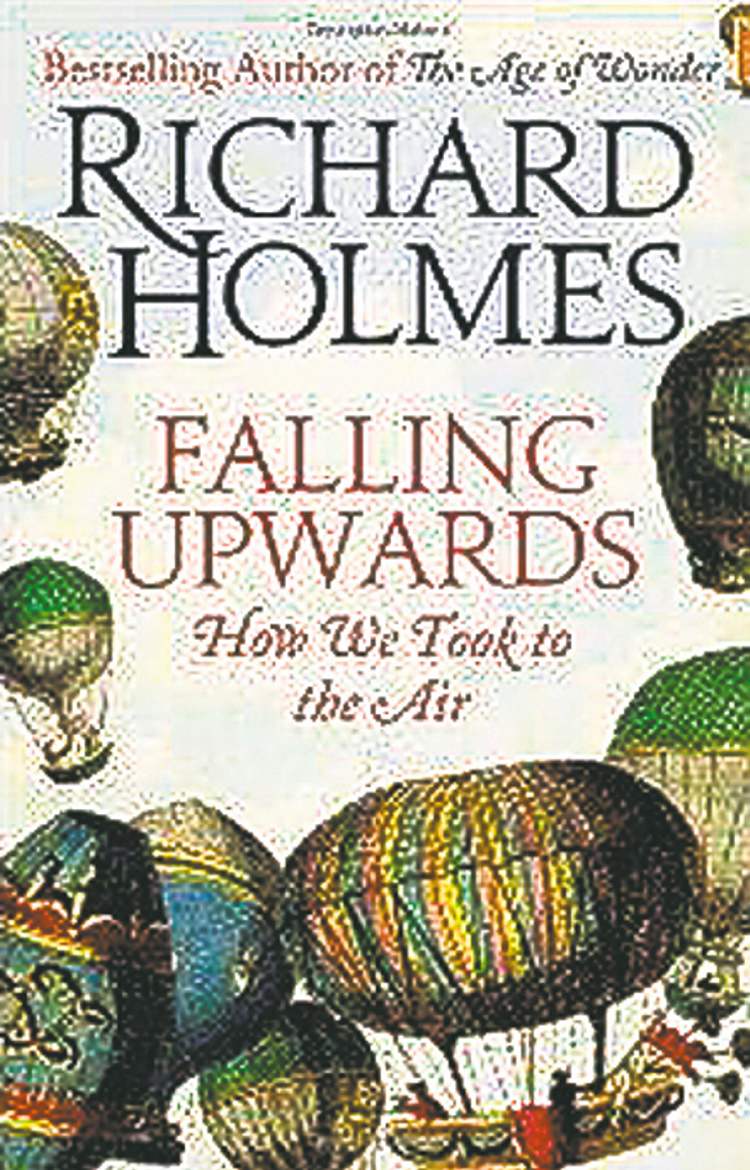
After all, a launched balloon seems above and apart from the grind of daily life. Falling Upwards, a fascinating new history of the dangerous early days of balloon flight, challenges this notion. Its author, British academic Richard Holmes, is intrigued by pioneers of ballooning and by their journeys to hazardous heights.

His accounts of these journeys show that balloons are best understood as tethered to earth, sometimes literally but always figuratively. Connecting ballooning to a wide range of political, technological and cultural developments, Holmes reminds us that balloons are anchored to history and that they bear the significant weight of the needs and desires of the innovative societies that built and launched them.
MCT
Richard Holmes tells engaging tale of balloons.
MCT Richard Holmes tells engaging tale of balloons.

Holmes is a biographer who specializes in the Romantic era, the age of Keats, Coleridge and Wordsworth. His recent bestseller, The Age of Wonder, won Britain’s Royal Society Prize for science books, appealing to a wide readership with its engaging discussion of connections between literary and scientific developments. Holmes takes a similar approach in this book; his ability to mix the cultural and the scientific is on show throughout.

For instance, in a gutsy preface, Holmes shares some of the extraordinary things that have been said and written about ballooning, gathering together the bon mots of such major figures as Charles Dickens, Victor Hugo, George Sand, Benjamin Franklin and Charles Darwin. It’s a hard act to follow: these quotations create an appetite in readers for both poetic prose and carefully contextualized information. Holmes delivers on both counts.

His opening chapter is structured by a selection of engaging anecdotes, some from the recent past. One concerns a priest from Brazil who lost his life in 2008 to an ill-fated fundraising effort involving a chair and a thousand helium party balloons. Another describes the 1979 escape from East Germany of two families who worked together to secretly build a hot-air balloon. Huddled together on a flimsy platform, their only guardrail made of clothesline, they launched their homemade balloon under the cover of darkness and, with the youngest passenger in his mother’s arms, floated across the heavily guarded border to land safely in the West.

While recent history plays a part, the focus of the book is the first century and a half of ballooning, a practice that took on cultural prominence in the 1780s with widely reported on ascents of manned, gas-filled balloons. In the decades that followed, balloons were launched in pursuit of the thrill of flight but were also launched for more pragmatic reasons.

Pleasure, science and politics all play a role in the history of the balloon, a fact suggested by the payloads of early balloons, which consisted of things as varied as cases of champagne, fragile scientific and photographic equipment, bags of smuggled letters and propaganda pamphlets.

The book is illustrated and contains several stunning images of early ballooning. There are some wonderfully fanciful engravings but the photographs the book contains are particularly memorable.

Among them are a pair of photographs taken of a crash that grounded an ill-fated attempt to reach the North Pole by balloon. In 1897, a trio of Swedish adventurers set out to conquer the pole but things went badly, as is often the way with polar expeditions, and their remains were discovered three decades later.
Among the carefully wrapped up belongings found near their bodies were sealed tins of exposed film. The photographs produced from them were taken by the youngest member of the trio, Nils Strindberg, and they are haunting.

They show Strindberg’s fellow explorers examining their grounded balloon against a backdrop of white snow and low cloud, a painful portrait of the landscape that would claim their lives weeks later.

Holmes focuses on the dangers faced by others, but he took a noteworthy risk of his own when he decided to write a history of ballooning that is both surprisingly poetic and very personal. Achieving something that the cultural history genre aspires to but rarely achieves, Falling Upwards traces what might be dismissed as a fad but in doing so manages to transform our understanding of an age.

Vanessa Warne teaches English at the University of Manitoba.

Report Error Submit a Tip

More Stories

Today’s horoscope

Georgia Nicols 4 minute read Preview

Today’s horoscope

Georgia Nicols 4 minute read Yesterday at 2:00 AM CDT

MOON ALERT: After 3:30 a.m. there are no restrictions to shopping or important decisions. The moon is in Libra.

ARIES (March 21-April 19)

You will have to go more than halfway when dealing with others, which is no biggie. This simply requires you to be present, accommodating and willing to go along to get along. Be aware that a partner, spouse or close friend might surprise you.

TAURUS (April 20-May 20)

Read
Yesterday at 2:00 AM CDT

A dozen straight titles for Indigenous trainers at Downs

GEORGE WILLIAMS 6 minute read Preview

A dozen straight titles for Indigenous trainers at Downs

GEORGE WILLIAMS 6 minute read Yesterday at 9:49 PM CDT

THAT’S a wrap!

The 69th season of live racing at Assiniboia Downs came to a close on Wednesday and for the 12th consecutive year the training title was won by an Indigenous horseman.

Trainer Jerry Gourneau of the Turtle Mountain Band of Chippewa in North Dakota won his sixth trainer title at the Downs with a record of 54-45-43 from 280 starts and purse earnings of US$559,191.

And for the eighth straight year, Gourneau’s main owner, former champion race car driver Henry S. Witt, Jr. won the owner title at the Downs. He compiled a record of 46-41-40 from 242 starts and purse earnings of US$535,983.

Read
Yesterday at 9:49 PM CDT

Stuart-Stevenson tandem gives Jets time for best Hellebuyck trade deal

Mike McIntyre and Ken Wiebe 8 minute read Preview

Stuart-Stevenson tandem gives Jets time for best Hellebuyck trade deal

Mike McIntyre and Ken Wiebe 8 minute read Updated: Yesterday at 7:30 PM CDT

A weekly lap around the NHL by Free Press hockey writers Ken Wiebe and Mike McIntyre

The New York Islanders are first-overall. The Calgary Flames are in the league basement.

We’re talking about goaltending, specifically the metric of “goals against above expected” as tracked by the Money Puck website which factors in shot quality and location and is a much better measure than traditional numbers such as goals-against-average and even save percentage, which can be heavily influenced by team factors.

In a nutshell, you want to be as high as possible on this list, suggesting your masked men are doing their job by stopping everything they should — and hopefully a few more. The lower you are in the 32-team league, the more likely you have a leaky crease.

Read
Updated: Yesterday at 7:30 PM CDT

Powerful allegory, magic wonder as ballet takes on Stravinsky

Holly Harris 5 minute read Preview

Powerful allegory, magic wonder as ballet takes on Stravinsky

Holly Harris 5 minute read Yesterday at 6:50 PM CDT

The Royal Winnipeg Ballet opened its mainstage season with fire and ice Thursday, as it paid homage to Russian composer Igor Stravinsky with Stravinsky Stories.

Local balletomanes may remember Alexei Ratmansky as a principal dancer during the early 1990s. The internationally renowned dance artist returns in a full-circle moment to stage The Fairy’s Kiss, the 50-minute work his first collaboration with the RWB in more than 30 years. He began flexing his choreographic muscles in its downtown studios with an earlier, reimagined incarnation in 1994, based on Hans Christian Andersen’s fairy tale The Ice Maiden, in turn set to Stravinsky’s own tribute to Tchaikovsky’s lushly romantic ballet scores.

Its narrative follows the journey of a Young Man (newly minted principal dancer Skylar Campbell, with all leads alternating) saved — and kissed — by a Fairy (principal dancer Elizabeth Lamont, who rips off a dizzying set of “fouettes”) after his Mother (former principal dancer Vanessa Léonard adding her own gravitas) perishes in a blizzard.

After falling in love with his fiancée (principal dancer Alanna McAdie, infusing her character with innocent youthfulness grounded by intricate footwork), he is tricked on his wedding day by the now disguised Fairy who reveals her true identity — and his ultimate destiny.

Read
Yesterday at 6:50 PM CDT

Sky-high balloons anchored to earthly history

Reviewed by Vanessa Warne 4 minute read Preview

Sky-high balloons anchored to earthly history

Reviewed by Vanessa Warne 4 minute read Saturday, May. 25, 2013

One might be excused for thinking of a balloon in the sky, its basket high above the horizon, as a uniquely distant and detached thing.

After all, a launched balloon seems above and apart from the grind of daily life. Falling Upwards, a fascinating new history of the dangerous early days of balloon flight, challenges this notion. Its author, British academic Richard Holmes, is intrigued by pioneers of ballooning and by their journeys to hazardous heights.

His accounts of these journeys show that balloons are best understood as tethered to earth, sometimes literally but always figuratively. Connecting ballooning to a wide range of political, technological and cultural developments, Holmes reminds us that balloons are anchored to history and that they bear the significant weight of the needs and desires of the innovative societies that built and launched them.

Holmes is a biographer who specializes in the Romantic era, the age of Keats, Coleridge and Wordsworth. His recent bestseller, The Age of Wonder, won Britain's Royal Society Prize for science books, appealing to a wide readership with its engaging discussion of connections between literary and scientific developments. Holmes takes a similar approach in this book; his ability to mix the cultural and the scientific is on show throughout.

Read
Saturday, May. 25, 2013

Get to know your Jet: Mario Ferraro

Mike McIntyre 8 minute read Preview

Get to know your Jet: Mario Ferraro

Mike McIntyre 8 minute read Thursday, Oct. 8, 2026

A one-on-one conversation with a Winnipeg Jet about the stuff you don't always hear in the media scrum

Read
Thursday, Oct. 8, 2026