Pro-aboriginal polemic a challenge to decipher
Advertisement
Read this article for free:
or
Already have an account? Log in here »
To continue reading, please subscribe:

Digital Subscription
One year of digital access for only $205*
- Enjoy unlimited reading on winnipegfreepress.com
- Read the E-Edition, our digital replica newspaper
- Access News Break, our award-winning app
- Play interactive puzzles
*First annual payment billed as $205.00 + GST for one year. This annual subscription will automatically renew at $233.00 + GST every 52 weeks (10% off the regular annual price of $259.35). Offer available to new and qualified returning subscribers only. Cancel any time.
To continue reading, please subscribe:
Add Free Press access to your Brandon Sun subscription for only an additional
$1 for the first 4 weeks*
- Enjoy unlimited reading on winnipegfreepress.com
- Read the E-Edition, our digital replica newspaper
- Access News Break, our award-winning app
- Play interactive puzzles
*Your next Brandon Sun subscription payment will increase by $1.00 and you will be charged $17.95 plus GST for four weeks. After four weeks, your payment will increase to $24.95 plus GST every four weeks.
Read unlimited articles for free today:
or
Already have an account? Log in here »
Hey there, time traveller!
This article was published 24/08/2013 (4772 days ago), so information in it may no longer be current.
This locally published left-wing history lesson outlines Canadian aboriginal difficulties over several generations from coast to coast to coast.
Author Peter Kulchyski, a University of Manitoba native studies professor, has long taken an aggressive stand on behalf of aboriginal rights in journals like Canadian Dimension, Briarpatch and the Journal of Canadian Studies.
Here he examines documents ranging from elements of Canada’s constitution to the United Nations Declaration on Human Rights.
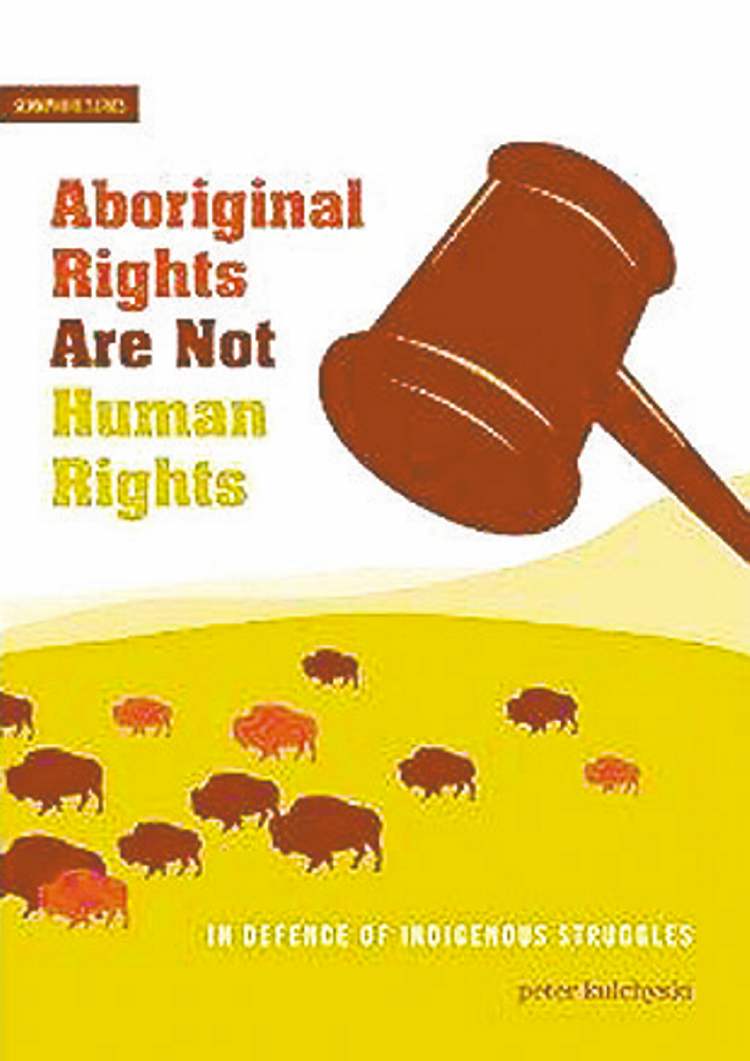
Alas, from its opening pages, Aboriginal Rights Are Not Human Rights is exasperating, largely because the material is a challenge to decipher.
Kulchyski’s decision to use limited capitalization and punctuation leaves the reader little choice but to work through the text with a pencil in hand to sort out sentences — and to separate lengthy chunks of material into paragraphs.
Does he think the conventions of English typography are to be disregarded as the tools of running-dog capitalists?
A further stylistic interference is his tendency to drop terms into his text without warning. For example, he refers to “undrip” (a term that turns out to be an acronym for United Nations Declaration on the Rights of Indigenous Peoples).
He is also inclined to sarcasm and bombast, especially when he is writing about some of his favourite bogeymen, like Manitoba Hydro.
Kulchyski has proved in the past, in books like The Sound of a Drum, that he can write forcefully. What is unfortunate about his style this time around is it diminishes the impact of his viewpoint and argument. The reader may find signs of an impressive perspective but will have difficulty untangling it.
He argues that indigenous cultures have developed uniquely, largely through struggle against domination by the state (for which he uses the term totalization).
As Kulchyski notes, when the Canadian Constitution was repatriated, aboriginal rights were included. He cites Section 35 as establishing the legal status of aboriginal rights and declaring that they cannot be overridden by human rights.
One of the most interesting sections is the one labelled “socialism and native americans.” Here Kulchyski observes the contrast between the strength of Canadian socialists’ support for solidarity around the world and the “less inspiring record of socialist support for indigenous struggles in their own backyard.”
Demonstrations against imperial ventures in Africa and Latin America seem to attract all kinds of activists. On the other hand, what he calls colonialism in Canada’s own Far North appears, at times, to have drawn rather tepid responses.
Kulchyski does give credit to some earlier activists, such as those who organized around issues involved with Haida Gwai, Grassy Narrows and the Lubicon Cree. He includes himself as one of those earlier campaigners.
He speculates the reason for the lack of “a mass outpouring of support,” such as has arisen in the past 10 years, has been the failure of the political left to appreciate the “particularity of oppression.” He insists “the left and aboriginal people in Canada have a lot to say to each other if they could really start talking.”
Kulchyski, however, should know he is more likely to find a receptive audience if he spoke in a language people understand.
Ron Kirbyson is a Winnipeg writer with a longtime interest in aboriginal issues.