Lauded Manitoba author chronicled life in the Interlake
Advertisement
Read this article for free:
or
Already have an account? Log in here »
To continue reading, please subscribe:

Digital Subscription
One year of digital access for only $205*
- Enjoy unlimited reading on winnipegfreepress.com
- Read the E-Edition, our digital replica newspaper
- Access News Break, our award-winning app
- Play interactive puzzles
*First annual payment billed as $205.00 + GST for one year. This annual subscription will automatically renew at $233.00 + GST every 52 weeks (10% off the regular annual price of $259.35). Offer available to new and qualified returning subscribers only. Cancel any time.
To continue reading, please subscribe:
Add Free Press access to your Brandon Sun subscription for only an additional
$1 for the first 4 weeks*
- Enjoy unlimited reading on winnipegfreepress.com
- Read the E-Edition, our digital replica newspaper
- Access News Break, our award-winning app
- Play interactive puzzles
*Your next Brandon Sun subscription payment will increase by $1.00 and you will be charged $17.95 plus GST for four weeks. After four weeks, your payment will increase to $24.95 plus GST every four weeks.
Read unlimited articles for free today:
or
Already have an account? Log in here »
Longtime Manitoba author, editor and professor David Arnason died on Monday at age 86.
The oldest of seven children, Arnason was born in Gimli, where he lived at the time of his death.
“He was surrounded by people who loved him,” his sister Maureen Arnason said.
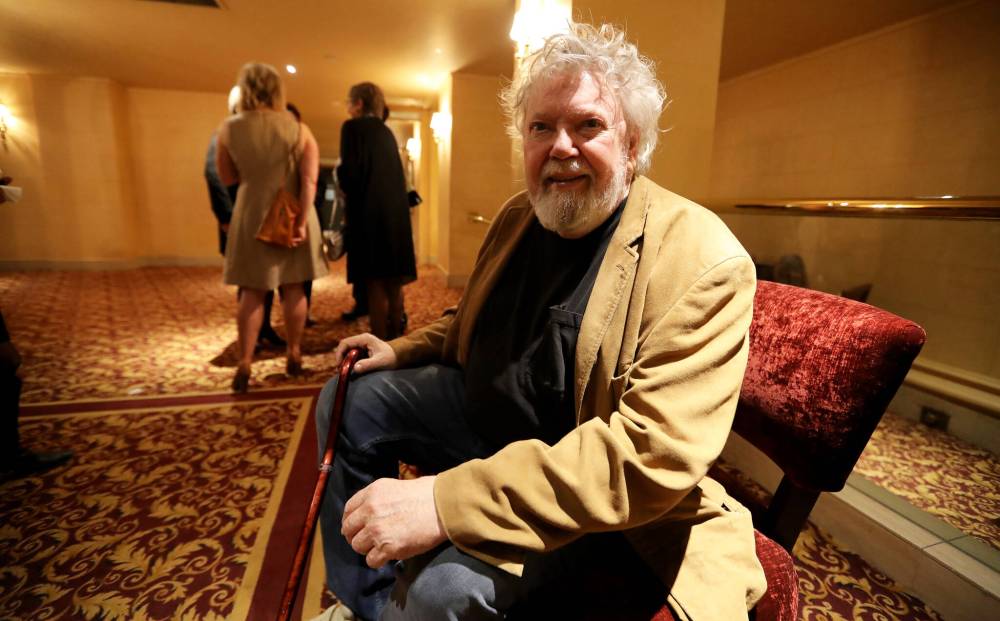
Trevor Hagan / Free Press files
Manitoba author, editor and professor David Arnason, pictured in 2017, has died at age 86.
A novelist as well as a writer of short fiction, poetry and non-fiction, Arnason wrote extensively about life in the Interlake.
“This was his hometown,” Maureen Arnason said. “He wrote a lot about the Icelandic settlers and their impact on the whole area. It taught a lot of people about this area, things they didn’t know. People always say they learned so much from David, from the things he wrote. The knowledge he had and the research he did was amazing.”
Among his works are the novel King Jerry, which was shortlisted for the Stephen Leacock Medal for Humour; the poetry collection Marsh Burning; the fairy-tale collection The Dragon and the Dry Good Princess; and The Imagined City: A Literary History of Winnipeg, which won two Manitoba Book Awards.
In 2017, Arnason was honoured with a lifetime achievement award by the Manitoba Book Awards.
“The first book he ever wrote, Marsh Burning, was the most radical he ever wrote,” said poet and professor Dennis Cooley, who first met Arnason in the early 1970s when they were both new at the University of Manitoba; they remained close up until the end.
“He drew on his intimate knowledge of the Interlake. It was a spectacular book. It drew on Icelandic myths, and rewrote them. He was always proud of that heritage. He was a very creative and inventive man. He loved to play with possibilities.”
The impact Arnason had on Manitoba’s literary scene was widespread, stemming not only from his writing, but his work as an editor, publisher and professor. Arnason had a lengthy tenure at the U of M where he taught and, for a time, chaired both the departments of English and Icelandic language and literature.
“People always say they learned so much from David, from the things he wrote.”
“David Arnason was a tireless promoter of Prairie writing locally, nationally and internationally,” Alison Calder, associate head of the department of English, theatre, film and media at the U of M, wrote in an email to the Free Press.
“He was a particular champion of emerging writers and many writers from the Prairie got their start in a publication or venue that Arnason initiated.”
“As a longtime head of the English department, he was very canny at getting the things that he thought the English department wanted,” said professor and author George Toles, who worked alongside Arnason at the U of M for many years. “I think he thought of himself as a rebel outside, even when he was deeply inside the administration. That role certainly fit him well.”
“He’s like one of the characters in his own tall tales. He was such a presence,” said Chris Hall, co-owner of McNally Robinson Booksellers, who studied English under Arnason at the U of M before becoming a bookseller. “He was involved in getting Canadian lit taught in high schools and universities, and of course contributed his own work to it.”
“He was very committed to teaching. Academics with such commitment to enthusiastic support of up and comers are by no means common,” Toles added.
Arnason also co-founded the Journal of Canadian Fiction, Winnipeg publisher Turnstone Press and the now-defunct Queenston House Press.
“He had that amazing presence in so many ways, including the fact he was, physically, a big man. There’s almost no place where he was not known and respected,” said Cooley, who was also among the founding editors at Turnstone Press.
“David Arnason was a tireless promoter of Prairie writing locally, nationally and internationally.”
“He was a guiding spirit, in my many ways. He was a tremendously generous man. He was so open to new ideas. He was so enthusiastic about everything,” said David Carr, former director of University of Manitoba Press, who met Arnason in the late 1970s when he volunteered with, and later became an employee, of Turnstone Press.
Matt Joudrey, publisher of At Bay Press, said Manitoban publishers would not be where they are today without the early contributions of Arnason and his contemporaries, beginning in the 1970s.

“I truly believe that they helped lay the foundations, especially in Manitoba, for what we know as the publishing landscape today. They set up that groundwork,” Joudrey said.
While Arnason had been in poor health in recent years, Maureen Arnason said that his extensive family remained close and enjoyed the time they were able to spend with him in a place he so loved.
“He was an inspiration to all of us in the family. Everybody in the family looked up to him as the big brother who was absolutely brilliant and so talented,” she said.
“David loved the lake. He loved his cottage. So for him to be able to look again over the lake was very special.”
“There’s almost no place where he was not known and respected.”
Arnason is survived by his son Vincent and daughter Gail, three grandchildren and two great-grandchildren, among others in his extended family.
— with files from Ben Sigurdson
sheldon.birnie@winnipegfreepress.com