

Sinclair alert, but in pain, inquiry told
Clinic nurse testifies he understood he needed to give note to ER staff

Advertisement
Read this article for free:
or
Already have an account? Log in here »
To continue reading, please subscribe:
Monthly Digital Subscription
$1 per week for 24 weeks*
- Enjoy unlimited reading on winnipegfreepress.com
- Read the E-Edition, our digital replica newspaper
- Access News Break, our award-winning app
- Play interactive puzzles
*Billed as $4.00 plus GST every four weeks. After 24 weeks, price increases to the regular rate of $19.95 plus GST every four weeks. Offer available to new and qualified returning subscribers only. Cancel any time.
Monthly Digital Subscription
$4.99/week*
- Enjoy unlimited reading on winnipegfreepress.com
- Read the E-Edition, our digital replica newspaper
- Access News Break, our award-winning app
- Play interactive puzzles
*Billed as $19.95 plus GST every four weeks. Cancel any time.
To continue reading, please subscribe:
Add Free Press access to your Brandon Sun subscription for only an additional
$1 for the first 4 weeks*
*Your next subscription payment will increase by $1.00 and you will be charged $16.99 plus GST for four weeks. After four weeks, your payment will increase to $23.99 plus GST every four weeks.
Read unlimited articles for free today:
or
Already have an account? Log in here »
Hey there, time traveller!
This article was published 22/08/2013 (4592 days ago), so information in it may no longer be current.
Brian Sinclair showed a clinic’s nurse he understood he needed to hand a note explaining his condition to Health Sciences Centre emergency staff, an inquiry heard Wednesday.
Sinclair was alert, but in pain, when the Health Action Centre sent him in a cab to HSC to get treatment for his blocked urinary catheter, the inquiry was told.
Thirty-four hours later, when Sinclair was discovered dead in the hospital’s emergency waiting room from an untreated bladder infection, the note was still in his pocket.
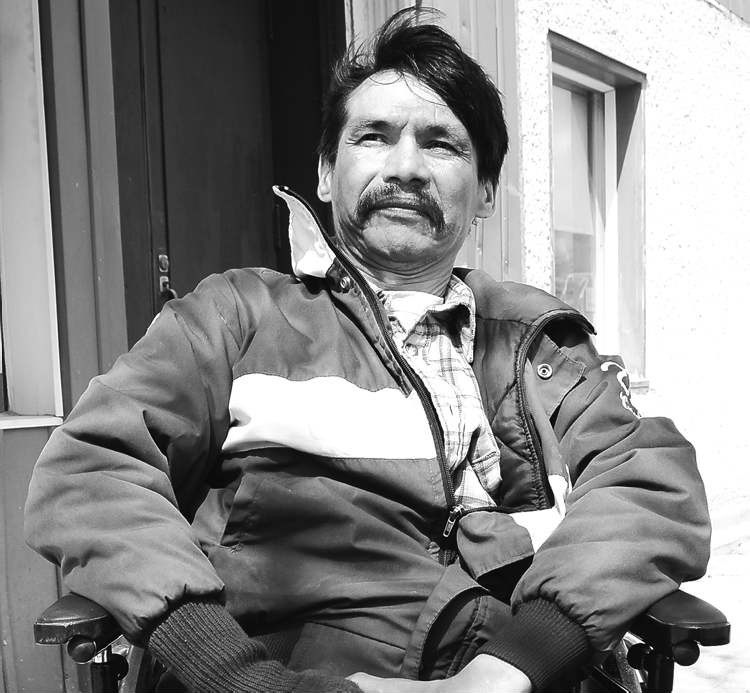
Dana Connolly, a nurse at the HAC at the time of Sinclair’s death, testified at the inquest looking into Sinclair’s death that while he was sick and complained about pain, if she and a doctor didn’t believe he was medically stable at the time, they would have called an ambulance instead of agreeing on a cab.
Connolly said she believed the hospital was the best place for Sinclair to go to have the catheter removed and replaced and be treated for infection on Sept. 19, 2008.
“I did not feel this was a safe procedure to do in our clinic,” she said.
“If it was done at the hospital, there would be appropriate resources if something happened.”
Connolly said the clinic also didn’t have a lift that could have got Sinclair out of his wheelchair and into a bed for the procedure.
But Connolly said even though a cab was called, Sinclair wasn’t supposed to be alone when he entered the hospital.
She said she told a clinic aide “(Sinclair) needs to go from here to HSC and ask for the driver to go right up to the triage desk.
“If the driver doesn’t agree to that, then other plans would be made.”
Before Sinclair left, Connolly said, she asked him what he should do when he got to the hospital. She said he pulled the doctor’s note out of his pocket.
Sinclair died Sept. 21, 2008, due to a bladder infection caused by a blocked catheter after sitting untreated in the HSC’s emergency waiting room for 34 hours.
Connolly said she was first told about Sinclair’s death when she got to work the Tuesday after he died. She said workers at the clinic were instructed not to speak to each other about it.
She said when she got home, she called the Canadian Nurses Protective Society in Ottawa for legal advice and to ask if it were a good idea for her to write down what happened.
Connolly said she wrote a three-page document — filed in court as an exhibit — after being told the document could be used in court.
In the letter, Connolly wrote Sinclair was “unkempt and malodorous” when he arrived at the clinic, but also “bright, alert, orientated and operated his wheelchair appropriately into the exam room.
‘He was competent and not confused. He spoke appropriately and was able to discuss his concerns with me’
— nurse Dana Connolly
“He was competent and not confused. He spoke appropriately and was able to discuss his concerns with me.”
Connolly said Sinclair told her that earlier that day, he had bumped into a home-care nurse coming to change his catheter, but he said he couldn’t do it then because he was on his way to Siloam Mission to volunteer.
The nurse said Sinclair told her as the day went on he began to feel sick, so he began pushing his wheelchair to the hospital.
But when passing the HAC, he decided to go there because he was tired. He also told the nurse no urine had passed through the catheter in the past 24 hours.
Connolly said before Sinclair went to the hospital, she told him that after getting out of hospital he had to be available for his home-care nurses because “he was truly sick and needed to go to HSC emergency.

“I also told him that he had a huge heart and was an exceptional person to be volunteering at the Siloam Mission and helping people that were needier than he was. I told him that it hurt my heart to see him in such condition and that he needed to look after himself so that he could continue to help people, which I knew was important to him.”
Earlier, Alexandra Komenda, a home-care co-ordinator at HSC, said she assessed Sinclair at a “very high risk” if his home care became interrupted.
“I felt Brian was very high risk because he didn’t have a strong support structure as the majority of his care came from home care,” she said.
Komenda said there were no relatives available to care for Sinclair if home care weren’t available so it was up to the public trustee’s office — which was responsible for Sinclair’s affairs — to come up with a backup plan in co-ordination with home care.
kevin.rollason@freepress.mb.ca
Kevin Rollason is a general assignment reporter at the Free Press. He graduated from Western University with a Masters of Journalism in 1985 and worked at the Winnipeg Sun until 1988, when he joined the Free Press. He has served as the Free Press’s city hall and law courts reporter and has won several awards, including a National Newspaper Award. Read more about Kevin.
Every piece of reporting Kevin produces is reviewed by an editing team before it is posted online or published in print — part of the Free Press‘s tradition, since 1872, of producing reliable independent journalism. Read more about Free Press’s history and mandate, and learn how our newsroom operates.
Our newsroom depends on a growing audience of readers to power our journalism. If you are not a paid reader, please consider becoming a subscriber.
Our newsroom depends on its audience of readers to power our journalism. Thank you for your support.
Kevin Rollason is a general assignment reporter at the Free Press. He graduated from Western University with a Masters of Journalism in 1985 and worked at the Winnipeg Sun until 1988, when he joined the Free Press. He has served as the Free Press’s city hall and law courts reporter and has won several awards, including a National Newspaper Award. Read more about Kevin.
Every piece of reporting Kevin produces is reviewed by an editing team before it is posted online or published in print — part of the Free Press‘s tradition, since 1872, of producing reliable independent journalism. Read more about Free Press’s history and mandate, and learn how our newsroom operates.
Our newsroom depends on a growing audience of readers to power our journalism. If you are not a paid reader, please consider becoming a subscriber.
Our newsroom depends on its audience of readers to power our journalism. Thank you for your support.
Advertisement Advertise With Us
Advertisement Advertise With Us
History
Updated on Thursday, August 22, 2013 9:50 AM CDT: Adds live blog