

‘Canada’s Alcatraz’ closing
Advertisement
Read this article for free:
or
Already have an account? Log in here »
To continue reading, please subscribe:
Monthly Digital Subscription
$1 per week for 24 weeks*
- Enjoy unlimited reading on winnipegfreepress.com
- Read the E-Edition, our digital replica newspaper
- Access News Break, our award-winning app
- Play interactive puzzles
*Billed as $4.00 plus GST every four weeks. After 24 weeks, price increases to the regular rate of $19.95 plus GST every four weeks. Offer available to new and qualified returning subscribers only. Cancel any time.
Monthly Digital Subscription
$4.99/week*
- Enjoy unlimited reading on winnipegfreepress.com
- Read the E-Edition, our digital replica newspaper
- Access News Break, our award-winning app
- Play interactive puzzles
*Billed as $19.95 plus GST every four weeks. Cancel any time.
To continue reading, please subscribe:
Add Free Press access to your Brandon Sun subscription for only an additional
$1 for the first 4 weeks*
*Your next subscription payment will increase by $1.00 and you will be charged $16.99 plus GST for four weeks. After four weeks, your payment will increase to $23.99 plus GST every four weeks.
Read unlimited articles for free today:
or
Already have an account? Log in here »
Hey there, time traveller!
This article was published 27/09/2013 (4600 days ago), so information in it may no longer be current.
TORONTO — Child killers, rapists, drunks, horse thieves and even boys and girls have all spent time within its high, foreboding walls. Hard time.
Within days, however, its cells will be empty and the historic Kingston Penitentiary, the country’s most notorious prison, officially closes.
Since its opening in June 1835, the lakeside “pen” some have dubbed Canada’s Alcatraz has been home to assorted miscreants and a veritable who’s who of the country’s worst criminals.
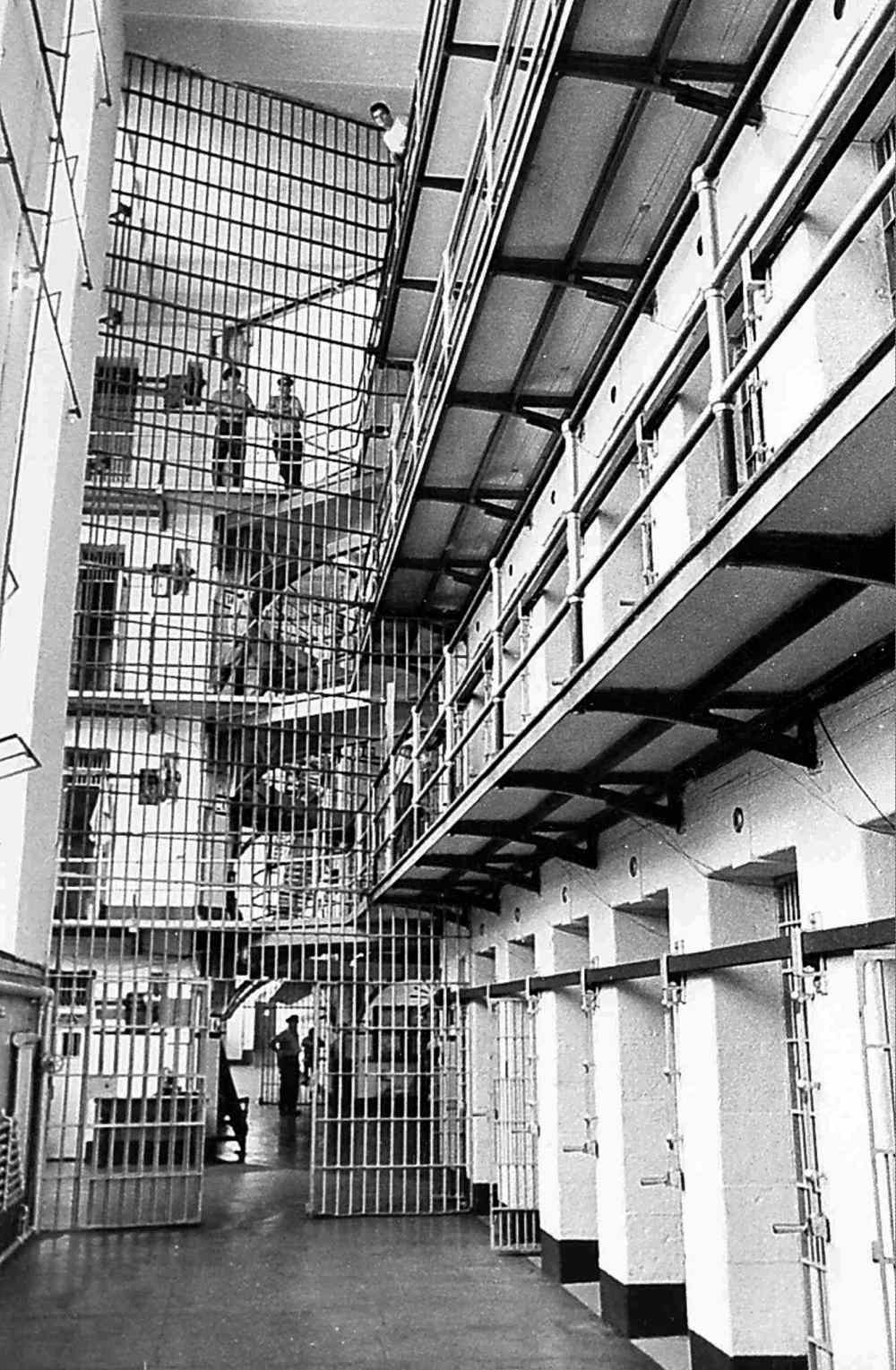
In recent times, the list includes serial child-killer Clifford Olson; Paul Bernardo, who raped and killed two schoolgirls; and Mohammad Shafia, who helped drown his three teenaged daughters.
Appropriately, perhaps, it’s long been known by prisoners as the Hall of Shame.
Lee Chapelle, a property offender who spent relatively short stints in “KP” in 2001 and 2008, said it was an old rundown dirty “dungeon” that stood out among the various prisons he’d been in.
“The moment you go through the gates, there is a darkness about it,” Chapelle said from Goderich, Ont.
“You feel the heaviness in the air.”
Many have come and gone, their names long forgotten. Some walked free having served their sentences. Some killed themselves knowing they would never be free. A few desperate souls managed to escape.
The penitentiary, among the oldest continuously used prisons in the world, is closing because the federal government says it is outdated and too expensive to run. Its future, perhaps as some kind of tourist attraction, is uncertain.
What is certain is if its tiny, windowless cells and thick stone walls could speak, they would tell stories of violence — perpetrated by, and on, those sent to the infamous Big House.
Through the decades, those walls have absorbed the swish of a cat-o’-nine-tails meeting bare backs and chests and the howls of excruciating pain from whipped inmates. Some were children, like Antoine Beauche, who was just eight years old when he was repeatedly lashed in 1845.
They have borne mute witness to corrupt and sadistic officials — perhaps the worst of whom was Francis Smith, son of the first warden, who starved and brutalized inmates for sport, bullied guards, sold prison supplies and pocketed the money.
The prison, modelled after one in New York State, has seen the tumult of savage riots in which inmates clubbed others to death; madness and evil; and the deafening silence of “the box,” an upright coffin in which hapless inmates were sealed for hours at a time.
Some of the stories were documented by investigators, others by historians such as J.A. Edmison in his book The History of Kingston Penitentiary.
Over the years, various commissions — the first within little more than a decade of its opening — have investigated conditions inside, each leading to improvements in how captives were treated, often after major inmate disturbances.
In August 1954, for example, the military and RCMP were needed to quell a riot involving 900 prisoners.
Correctional officers have described an atmosphere tense and infused with fear. Guards were frequently the target of prisoner urine, feces, spit, kicks and punches.
“More often than not, there was some type of conflict or confrontation over something as simple as feeding them,” said Mark Joyce, a correctional officer at the facility from 1996 to 2002.
In April 1971, about 500 inmates angry over lack of recreational time and other issues, rioted for four days, took six guards hostage, destroyed large parts of the prison, and killed two inmates.
Once again, armed troops from nearby CFB Kingston were needed to intervene.
“You walk in there and you feel like you’re walking into some weird tombs of hell or something,” said David Fairbairn, who delivered educational programming to inmates around that time.
In latter years, KP has been home to a treatment centre for mentally-ill inmates and been primarily a protective custody facility for those unable to survive in the general inmate population.
— The Canadian Press