Toronto circus story anything but broken
Advertisement
Read this article for free:
or
Already have an account? Log in here »
To continue reading, please subscribe:

Digital Subscription
One year of digital access for only $205*
- Enjoy unlimited reading on winnipegfreepress.com
- Read the E-Edition, our digital replica newspaper
- Access News Break, our award-winning app
- Play interactive puzzles
*First annual payment billed as $205.00 + GST for one year. This annual subscription will automatically renew at $233.00 + GST every 52 weeks (10% off the regular annual price of $259.35). Offer available to new and qualified returning subscribers only. Cancel any time.
To continue reading, please subscribe:
Add Free Press access to your Brandon Sun subscription for only an additional
$1 for the first 4 weeks*
- Enjoy unlimited reading on winnipegfreepress.com
- Read the E-Edition, our digital replica newspaper
- Access News Break, our award-winning app
- Play interactive puzzles
*Your next Brandon Sun subscription payment will increase by $1.00 and you will be charged $17.95 plus GST for four weeks. After four weeks, your payment will increase to $24.95 plus GST every four weeks.
Read unlimited articles for free today:
or
Already have an account? Log in here »
Hey there, time traveller!
This article was published 18/01/2014 (4611 days ago), so information in it may no longer be current.
A tale of loss, displacement and resiliency, Kathryn Kuitenbrouwer’s absorbing and thought-provoking third novel tells the tale of a Vietnamese teenage boy, his profoundly disabled sister and a performing bear.
Also interwoven into the story are a few lesser-known facts about Ontario’s past. In the 1960s, a chemical factory in the town of Elmira produced Agent Orange under contract with the U.S. military; from 1961 to 1971, the toxic herbicide was dropped on South Vietnam to defoliate jungles during the war.
As well, a bear-wrestling circuit once existed in Ontario, as did freak shows at the Canadian National Exhibition in Toronto. These events were finally banned in the 1970s.
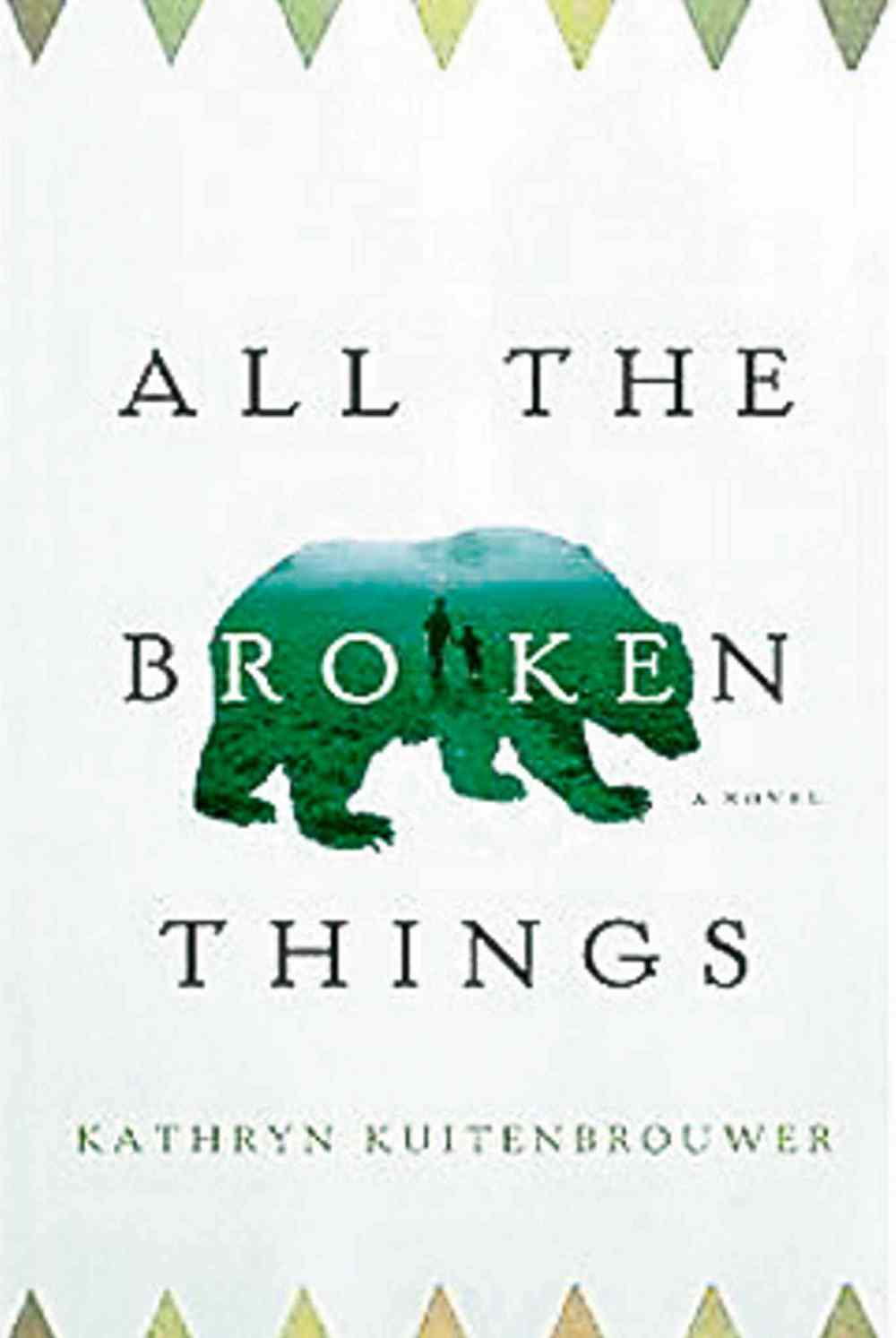
Kuitenbrouwer is a Toronto writer. Her 2003 short-story collection Way Up was shortlisted for the Danuta Gleed Award. Her first novel, The Nettle Spinner, a folk tale-like story about a tree planter, was nominated for the 2004 Books in Canada First Novel Award. This is her fourth book.
Though All the Broken Things also contains a fairy tale, the novel marks a departure for Kuitenbrouwer. For the first time, she writes about a teenage protagonist in a large urban setting.
The story takes place in the Junction area of Toronto in 1983-1984. The protagonist, Bo, is a 14-year-old boat person who came from Vietnam four years before with his mother, Rose, a pregnant widow.
Bo’s four-year-old sister, Orange, has genetic defects caused by her parents’ exposure to Agent Orange. She can’t walk or talk and is hideously deformed. Rose considers her daughter a shameful family secret.
One day, a man watches Bo win a schoolyard fight and offers him work as a bear wrestler at a carnival. He is then given a cub to train at home for future shows.
Things go well at first, until his boss develops a romantic relationship with Rose and wants to feature Orange in his freak show at the Canadian National Exhibition. Soon after, Bo comes home and finds his house deserted. He then takes to the streets with his pet bear to try to find Orange and save her.
The linear narrative is written from Bo’s point of view in spare, cinematic prose.
“Bo and Rose sat at the table and ate. She smelled of lemon floor wax and antiseptic and gin,” Kuitenbrouwer writers. “Always between them there were questions but never were these questions asked. For Bo it was as if the air thickened in the space between his thought and his voice. He could not ask about his father; he could not ask about the family they’d left behind.”
The well-chosen title refers to the “broken” lines of communication about problems that remain off-limits between Bo and his mother: Rose’s alcoholism, her attitude towards Orange, Bo’s fragmented childhood memories, and his reluctance to discuss his bullying at school.
Throughout the novel, Kuitenbrouwer tackles a number of significant social issues, including exploitation of animals, mental health among refugees, school bullying and treatment of the disabled.

One of the most touching scenes in the novel involves Orange’s first time at a pool and the sense of joy she experiences.
The well-rounded secondary characters contribute a lot to the story. Among them are the teacher who gently intervenes on Bo’s behalf, Bo’s friend Emily and a homeless man in High Park. Much to her credit, Kuitenbrouwer resists the temptation to sentimentalize their portrayal.
This unusual story is a compassionate page-turner that will appeal to readers of various ages and backgrounds.
Bev Sandell Greenberg is a Winnipeg writer and editor.
History
Updated on Saturday, January 18, 2014 8:56 AM CST: Tweaks formatting.