

U.S. customs to inspect cargo trucks in Canada
Pilot program hopes to ease flow of trade
Advertisement
Read this article for free:
or
Already have an account? Log in here »
To continue reading, please subscribe:
Monthly Digital Subscription
$1 per week for 24 weeks*
- Enjoy unlimited reading on winnipegfreepress.com
- Read the E-Edition, our digital replica newspaper
- Access News Break, our award-winning app
- Play interactive puzzles
*Billed as $4.00 plus GST every four weeks. After 24 weeks, price increases to the regular rate of $19.95 plus GST every four weeks. Offer available to new and qualified returning subscribers only. Cancel any time.
Monthly Digital Subscription
$4.99/week*
- Enjoy unlimited reading on winnipegfreepress.com
- Read the E-Edition, our digital replica newspaper
- Access News Break, our award-winning app
- Play interactive puzzles
*Billed as $19.95 plus GST every four weeks. Cancel any time.
To continue reading, please subscribe:
Add Free Press access to your Brandon Sun subscription for only an additional
$1 for the first 4 weeks*
- Enjoy unlimited reading on winnipegfreepress.com
- Read the E-Edition, our digital replica newspaper
- Access News Break, our award-winning app
- Play interactive puzzles
*Your next Brandon Sun subscription payment will increase by $1.00 and you will be charged $17.95 plus GST for four weeks. After four weeks, your payment will increase to $24.95 plus GST every four weeks.
Read unlimited articles for free today:
or
Already have an account? Log in here »
Hey there, time traveller!
This article was published 25/02/2014 (4452 days ago), so information in it may no longer be current.
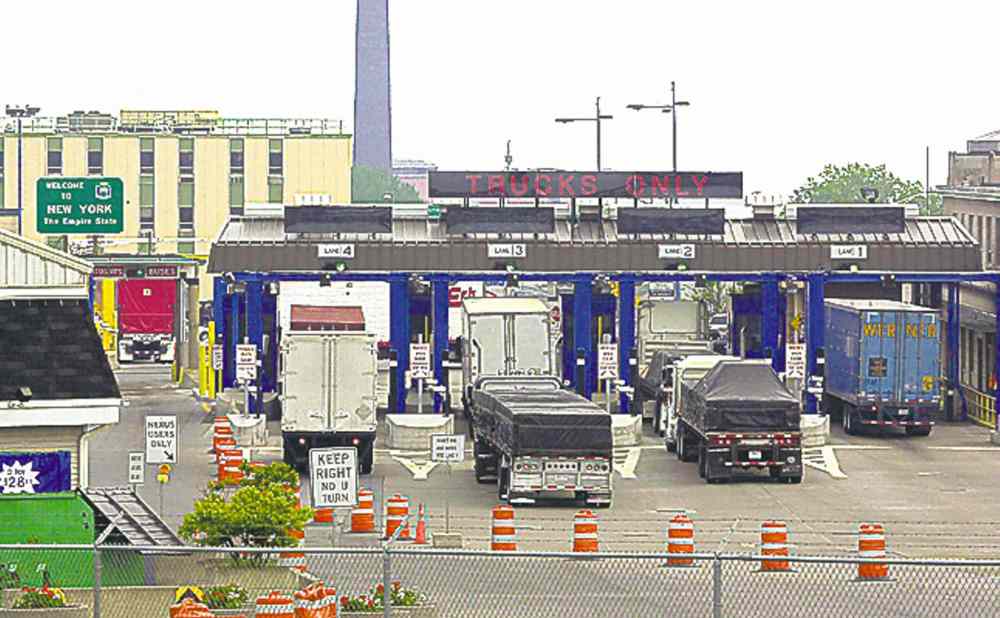
FORT ERIE, Ont. — Canada and the U.S. launched a pilot program Monday that allows American customs officers to inspect U.S.-bound cargo trucks in Canada, a move both countries hope will expedite the flow of trade and travel.
Authorities will watch to see whether pre-inspecting trucks on the roomier Canadian side of the Peace Bridge will reduce wait times and pollution-causing idling on the 86-year-old span between Fort Erie, Ont., and Buffalo, N.Y. The bridge handled 1.2 million truck trips and more than $40 billion in trade last year, making it the third-busiest truck crossing on the U.S.-Canada border. The three-lane span also saw more than 4.7 million passenger cars, more than any other port of entry.
With the U.S. side of the bridge lacking space to increase capacity, lawmakers have for several years wanted to shift some inspections to Canada. But they faced myriad jurisdictional and other obstacles, including objections to armed U.S. officers working in Canada, which only recently armed its border officers.
The test program is the second phase of a pilot called for in the Beyond the Border Action Plan signed by Prime Minister Stephen Harper and U.S. President Barack Obama in December 2011.
Phase 1 got underway in June at the Pacific Highway Crossing in British Columbia to test the feasibility of certain technology and procedures. The second phase will test the effect on wait times and border congestion.
Minister of Public Safety and Emergency Preparedness Steven Blaney, who was at the Peace Bridge Monday, along with U.S. Deputy Homeland Security Secretary Alejandro Mayorkas, said the program will enhance the movement of people and goods across the Canada-U.S. border.
“I’m very happy that Phase 2 is taking place in Fort Erie, where cross-border travel and trade is essential,” he said.
Under the voluntary program, trucks equipped with transponders are inspected in Canada. Once in the U.S., the pre-inspected vehicles are directed into an enforcement booth where drivers see either a green light, signalling they’ve been cleared, or a red light requiring them to stop for a secondary inspection. Under the system, which keeps enforcement on the U.S. side, drivers do not know until they get to the light whether they have been flagged.
U.S. authorities said relieving congestion on the bridge also would improve air quality in the nearby Buffalo neighbourhood, where high rates of childhood asthma have been documented.
Truck drivers said they hope taking the time to stop before crossing the bridge will pay off on the other side, but they noted the program does not address the need for more capacity on the aging span and worry the traffic backups will persist.
“We want it to work, but it’s important that this is a pilot,” said David Bradley, president of the Canadian Trucking Alliance. “Really what you’re talking about, one could argue, is two stops where there’s currently one. We have to make sure it works, that the guard at the other side is moving the traffic quickly enough so that it flows through.”
— The Associated Press, with files from The Canadian Press