

Politics of raw milk is not black and white
Advertisement
Read this article for free:
or
Already have an account? Log in here »
To continue reading, please subscribe:

Digital Subscription
One year of digital access for only $205*
- Enjoy unlimited reading on winnipegfreepress.com
- Read the E-Edition, our digital replica newspaper
- Access News Break, our award-winning app
- Play interactive puzzles
*First annual payment billed as $205.00 + GST for one year. This annual subscription will automatically renew at $233.00 + GST every 52 weeks (10% off the regular annual price of $259.35). Offer available to new and qualified returning subscribers only. Cancel any time.
To continue reading, please subscribe:
Add Free Press access to your Brandon Sun subscription for only an additional
$1 for the first 4 weeks*
- Enjoy unlimited reading on winnipegfreepress.com
- Read the E-Edition, our digital replica newspaper
- Access News Break, our award-winning app
- Play interactive puzzles
*Your next Brandon Sun subscription payment will increase by $1.00 and you will be charged $17.95 plus GST for four weeks. After four weeks, your payment will increase to $24.95 plus GST every four weeks.
Read unlimited articles for free today:
or
Already have an account? Log in here »
Hey there, time traveller!
This article was published 20/05/2014 (4471 days ago), so information in it may no longer be current.
GUELPH — Science-based evidence in food safety seriously compromises any argument for allowing raw milk to be freely sold to Canadians. Even a small amount of raw milk can seriously harm a child, a pregnant woman, the elderly, individuals with a compromised immune system, or anyone, for that matter; just one glass will do it.
Still, it appears support to legalize its distribution is growing in North America. In fact, Louisiana is currently considering loosening its laws to permit raw milk to be legally sold to consumers. In Canada, raw-milk crusader Michael Schmidt, despite a recent legal setback, seems to be making some inroads, and an increasing number of people support his cause.
Some have turned this debate into one about freedom of choice, while proponents of the status quo in Canada perceive this as a public-health matter. It is much more complicated than that, though.
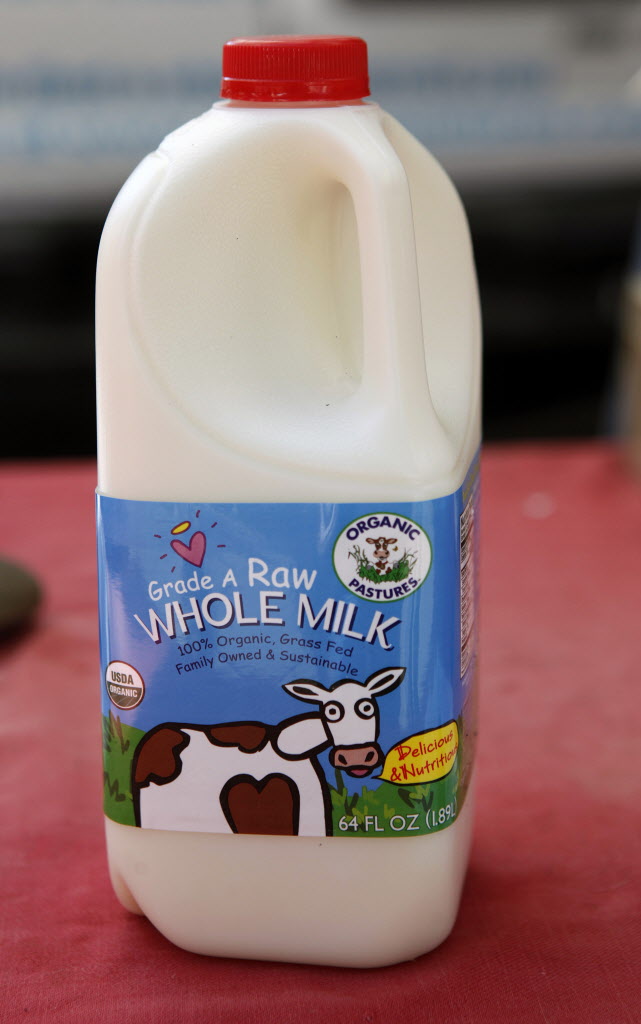
Since 1991, regulations require that milk be pasteurized in order to be sold in Canada. The Canadian Food Inspection Agency clearly states raw milk can harbour dangerous micro-organisms that can pose serious health risks, but such a claim is vigorously disputed by raw-milk advocates. They believe our current law breaches consumers’ right to choose and accept the fact that freedom always comes with certain risks, even in food. Some studies suggest pasteurization takes away some of milk’s nutritional benefits, which would support the view of pro-raw-milk groups. That said, the findings of many other studies are inconclusive. Thus, to draw any definitive conclusions would be premature. We do know more than we did in 1991, but much remains to be discovered by food scientists.
The ever-mounting media frenzy for stories about food safety and natural foods has clearly generated a great deal of confusion in consumers’ minds. Case in point: Results of a recent survey suggest several responding consumers are concerned about raw milk without being able to accurately describe what raw milk is. The risk-communication game is clearly getting problematical for governments and industry alike.
When it comes to raw milk, risk perceptions vary greatly between countries. In Europe, for example, consumers can buy raw milk from public vending machines, while many American states already allow for raw milk to be sold by retailers. This stands in contrast to Canada.
The politics of raw milk is always won or lost on the basis of trust. Since consumers tend to trust farmers, and Canadian farmers have a powerful lobbying group, the political nature of the raw-milk debate in our country is unique.
Dairy farmers, arguably Canadian agriculture’s most powerful lobby group, perceive any change to the current legislative regime as an economic threat. Even if raw milk would likely appeal to a marginal number of consumers, dairy farmers consider this a legitimate menace, however small.

Facing the influential dairy sector are small farm operators such as Michael Schmidt, who want some attention as well and are emphasizing the virtues of local, straight-to-consumer milk distribution. They, too, warrant the trust of consumers. As a result, the battle to gain the trust of the masses continues.
Nonetheless, raw milk might very well represent an opportunity for Canadian agriculture to recognize the diverse nature of markets. In other words, many modern consumers look for original, natural foods and more than ever seek different benefits. As such, economic growth and innovation in agri-food can occur only by embracing the power of differentiation. Raw milk might not provide such an opportunity, but it could with the proper use of technologies and cautionary policies.
Let’s not get ahead of ourselves, though. Given our regulatory regime in dairy, getting a bill to legalize raw milk through Parliament will continue to be an uphill battle.
Dr. Sylvain Charlebois is associate dean at the College of Business and Economics at the University of Guelph in Ontario.