Poetry: Sound play, imagery clash in fearless collection
Advertisement
Read this article for free:
or
Already have an account? Log in here »
To continue reading, please subscribe:

Digital Subscription
One year of digital access for only $205*
- Enjoy unlimited reading on winnipegfreepress.com
- Read the E-Edition, our digital replica newspaper
- Access News Break, our award-winning app
- Play interactive puzzles
*First annual payment billed as $205.00 + GST for one year. This annual subscription will automatically renew at $233.00 + GST every 52 weeks (10% off the regular annual price of $259.35). Offer available to new and qualified returning subscribers only. Cancel any time.
To continue reading, please subscribe:
Add Free Press access to your Brandon Sun subscription for only an additional
$1 for the first 4 weeks*
- Enjoy unlimited reading on winnipegfreepress.com
- Read the E-Edition, our digital replica newspaper
- Access News Break, our award-winning app
- Play interactive puzzles
*Your next Brandon Sun subscription payment will increase by $1.00 and you will be charged $17.95 plus GST for four weeks. After four weeks, your payment will increase to $24.95 plus GST every four weeks.
Read unlimited articles for free today:
or
Already have an account? Log in here »
Hey there, time traveller!
This article was published 28/06/2014 (4487 days ago), so information in it may no longer be current.
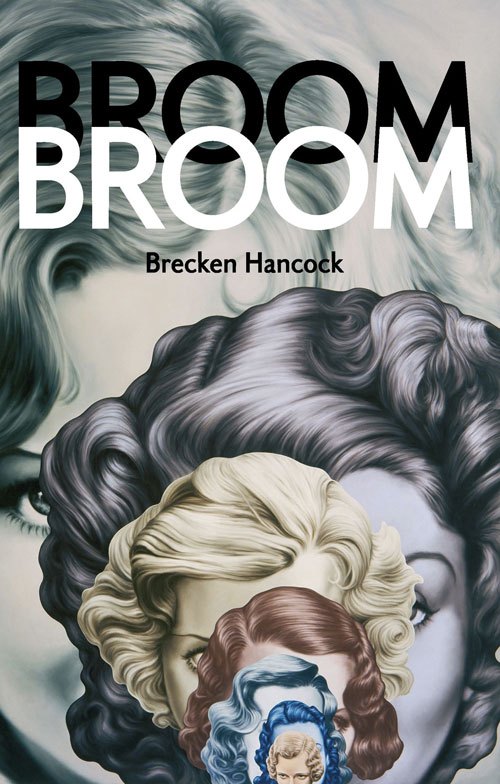
In an age of assured debuts, Brecken Hancock’s Broom Broom (Coach House, 72 pages, $18) might be the most bold. Reading like a visceral assault on now-clichés of feminist poetry, Hancock’s lines tilt domestic stereotypes into nightmare.
A long prose poem about the art of plumbing spans 6,600 years and transforms a simple household fixture (the bathtub) into something resembling a sarcophagus for humanity. Another poem offers “Evil Brecken,” her “Lover, lecher, what beckons — your bestie.”
The subtlety of the sound play in that line contrasts with the bombastic imagery elsewhere, in poems replete with “Castles of albino crows” and “Snow madonnas maquillaged in ash.” Inventive and fearless, Hancock sweeps the mild under her rug.
***
Reading Catherine Owen’s Designated Mourner (ECW, 112 pages, $19) is uncomfortable and feels wrong. Owen’s elegies for a deceased spouse, are discomforting in the truest sense.
This raw emotion is doubly impressive due to the actual polish of the poems. Owen oscillates between simple, stark expressiveness (“We were so perfect / at the Safeway”) and ornate imagery (“the dead have entered me and suddenly I am many crows / in one crow, feasting on the beautiful dropped prey of this hawk-life”).
“I want to stop writing poems for you now,” writes Owen, and the collection thus comes to operate like the designated mourner of its title, continuing to cry after it closes.
***
Nikki Reimer’s Downverse (Talonbooks, 118 pages, $17), by comparison, has lost its faith in the power of poetry to express any emotion without commodifying it. One of Reimer’s most affecting poems is, oddly, a list of “insurance outcomes:” “Life / The Principal Sum / Both Hands / The Principal Sum / … / Entire Sight of One Eye / Two-Thirds of the Principal Sum.”
In this way, life and limb are literally valued. Another poem sees Reimer expressing herself as we all do, through her monthly budget (she spends four per cent of her income on books and 0.3 per cent on the aforementioned life insurance policy). However cold such “expressions” feel, they are in fact as raw (in their way) as any properly “poetic” emotion, more indicative of the poet’s real concerns.
Reimer crashes different registers of found text against one another for startling, humorous effects. One poem juxtaposes that “perhaps what al-Qaida really needed was a fresh start under a new name” with “no matter what his name, or whether he is a stray, the street-savvy dog has captured the public’s imagination.”
Soon the poem announces that “we are focusing more on education when responding to chicken complaints” — whether silly, wry, or deadpan, Reimer plays black comedy off against an anguished frustration.
***
“I understand what this sentence is trying to say / I empathize with each of its letters” writes Gary Barwin in Moon Baboon Canoe (Mansfield, 88 pages, $17). In contrast to the skepticism of post-avant poets like Reimer, Barwin’s poetry expresses a near-religious faith in poetry’s transcendence, its ability to forge meaning rather than simply convert meaning into money.
Barwin is one of Canada’s best talents when it comes to soft, dense, delightful imagery. Not content to merely craft spry, inventive lines, he also takes time to untangle Canadian politics: “inside Stephen Harper / there’s a little dog // inside the dog / another dog // inside this dog / it’s Stephen Harper.”
The image gets twist-ier, but rest assured that “it’s Stephen Harper / all the way down.”
Winnipeg English professor Jonathan Ball (@jonathanballcom) lives online at www.jonathanball.com, where he writes about writing the wrong way.
History
Updated on Saturday, June 28, 2014 8:17 AM CDT: Formatting, adds book jacket.