

Ukrainians mark historic injustice in Canada
Advertisement
Read this article for free:
or
Already have an account? Log in here »
To continue reading, please subscribe:
Digital Subscription
One year of digital access for only $75*
- Enjoy unlimited reading on winnipegfreepress.com
- Read the E-Edition, our digital replica newspaper
- Access News Break, our award-winning app
- Play interactive puzzles
*Billed as $5.77 plus GST every four weeks. After 52 weeks, price increases to the regular rate of $19.95 plus GST every four weeks. Offer available to new and qualified returning subscribers only. Cancel any time.
Monthly Digital Subscription
$4.99/week*
- Enjoy unlimited reading on winnipegfreepress.com
- Read the E-Edition, our digital replica newspaper
- Access News Break, our award-winning app
- Play interactive puzzles
*Billed as $19.95 plus GST every four weeks. Cancel any time.
To continue reading, please subscribe:
Add Free Press access to your Brandon Sun subscription for only an additional
$1 for the first 4 weeks*
- Enjoy unlimited reading on winnipegfreepress.com
- Read the E-Edition, our digital replica newspaper
- Access News Break, our award-winning app
- Play interactive puzzles
*Your next Brandon Sun subscription payment will increase by $1.00 and you will be charged $17.95 plus GST for four weeks. After four weeks, your payment will increase to $24.95 plus GST every four weeks.
Read unlimited articles for free today:
or
Already have an account? Log in here »
Hey there, time traveller!
This article was published 22/08/2014 (4292 days ago), so information in it may no longer be current.
Words matter.
At first, Ottawa’s were calming following the outbreak of the First World War. People were told if they went about their business and caused no trouble they would be left alone, at peace.
Soon after, The War Measures Act was enacted. Tens of thousands of immigrants, lured earlier to the Dominion with promises of free land and freedom, found themselves suddenly branded “enemy aliens,” subject to arrest and other state-sanctioned indignities, not because of anything they had done wrong, but only because of who they were, where they had come from.
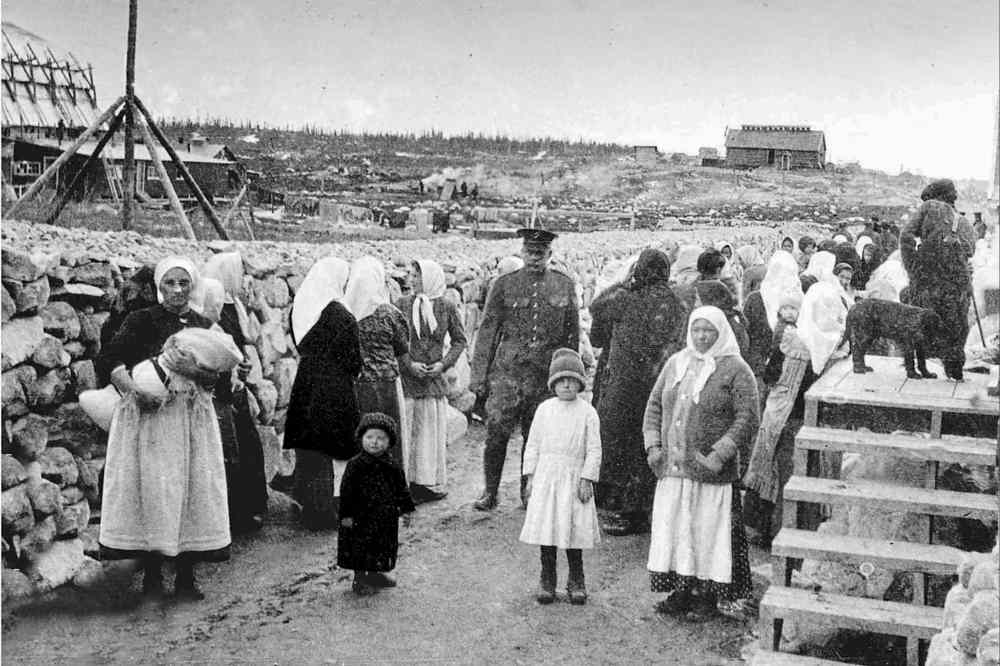
Under armed guard, Ukrainians and other Europeans were caged behind Canadian barbed wire in 24 internment camps, forced to do heavy labour for the profit of their jailers. In some cases women and children were sent away, too — to Spirit Lake in Quebec’s Abitibi region and to Vernon, B.C. One of the five “receiving stations” set up for processing “enemy aliens” was located in Winnipeg.
The first survivor I met, in 1978, was Nick Sakaliuk. In 1912 he had left Bukovyna, a western Ukrainian region then part of the Austro-Hungarian Empire, not wanting to soldier in the emperor’s army. When the Great War broke out he was working at the Canadian Car and Foundry Company in Montreal.
Fired by a “patriotic” boss, Nick became destitute. Searching for work, he tried leaving for the United States, a neutral power. Arrested, he was jailed at Montreal’s federal immigration building, then sent to Kingston’s Fort Henry, Canada’s first permanent internment camp. He arrived there Oct. 17, 1914. Later relocated to the Petawawa camp, and then to Kapuskasing’s, this “enemy alien” was finally paroled, ironically, for work in a munitions factory. No teacher or professor ever spoke to me about Canada’s first national internment operations. Instead it was this plain-hearted man who told me about what he and others like him endured.
In 1988, Mary Manko Haskett, another victim, recounted her story. She was Montreal-born, a British subject, six years old when imprisoned with her family at Spirit Lake. Her younger sister, Nellie, two-and-a-half years old, perished there. It was Mary who ennobled the Ukrainian Canadian redress campaign by insisting it must be “about memory, not money.” Mary wanted no compensation, never asked for any apology. All she wanted was for Canadians to remember what had been disremembered.
In the years following war, Ottawa’s men tried, at first, to tell us the internment operations never happened. When that didn’t work, they instructed us to forget this past injustice and move on. We often wondered why others raising historical grievances were never offered a similar prescription, not then, nor since. But we did not falter. We stayed true to Mary’s charge. And, in 2005, thanks to Inky Mark, a Chinese-Canadian MP whose family members paid the Head Tax, we secured passage of Bill C-331 – The Internment of Persons of Ukrainian Origin Recognition Act.
That led to the creation of the Endowment Council of the Canadian First World War Internment Recognition Fund, an inclusive body charged with hallowing the memory of all of the First World War’s “enemy aliens” through commemorative and educational initiatives. I take great satisfaction in recalling how two men working together, one of Chinese and the other of Ukrainian heritage, saw justice done, despite all the naysayers and thwarters. The country Inky and I share is one of which we are proud to be citizens.

Today, Aug. 22, 2014, 100 years after passage of The War Measures Act — the same Act deployed in the Second World War against our fellow Japanese-, Italian-, and German-Canadians, and against some Quebecois in 1970 — more than 100 plaques will be unveiled at 11 a.m. (local time) in more than 60 cities, starting in Amherst, N.S. then flowing west to Nanaimo, B.C., a first-ever event in Canadian history. Twenty-two of these plaques will be in Manitoba. We call this Project CTO (meaning One Hundred), a national wave of remembrance, beginning and ending at internment camp sites, sweeping from coast to coast, where a wave of repression once passed. These CTO plaques, inscribed with unpretentious words — “Recalling Canada’s first national internment operations, 1914-1920” — fulfil Mary’s dream.
That will do, because words do matter. I am glad I listened.
Lubomyr Luciuk, a professor of political geography at the Royal Military College of Canada, was the Project CTO Lead.